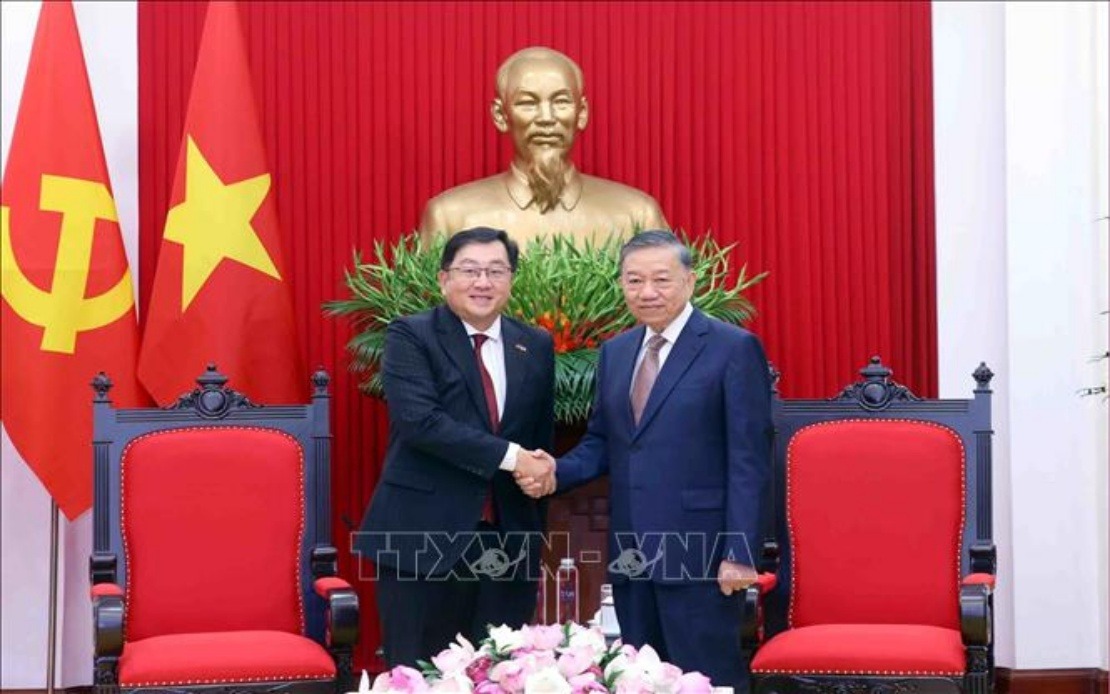
Vietnam and Malaysia are charting an ambitious course toward deeper strategic engagement, with Vietnamese President To Lam characterizing their bilateral relationship as increasingly dynamic during a meeting with outgoing Malaysian Ambassador Datuk Tan Yang Thai in Hanoi on Wednesday. The Vietnamese leader's remarks underscore a partnership that has moved beyond traditional diplomatic courtesies to encompass robust economic collaboration and substantive cooperation across multiple sectors. This assessment comes at a pivotal moment for both Southeast Asian nations, which are repositioning themselves within the region's evolving geopolitical landscape while capitalizing on shared economic opportunities.
At the heart of this flourishing relationship lies an impressive economic trajectory. Two-way trade between Vietnam and Malaysia surged to US$10.8 billion during the first six months of 2026, representing a remarkable 40 per cent increase compared to the same period the previous year. This growth reflects not merely cyclical economic improvement but rather structural shifts in how the two nations are integrating their economies. Malaysia continues to play a significant role in Vietnam's inbound investment ecosystem, retaining its position as the third-largest source of foreign direct investment among ASEAN nations and the tenth-largest globally among 154 countries and territories channelling capital into Vietnam. Such investment levels underscore Malaysian investor confidence in Vietnam's economic trajectory and regulatory environment.
President Lam's emphasis on Malaysia's central importance to Vietnam's broader foreign policy agenda reveals strategic thinking that extends well beyond commercial transactions. By explicitly acknowledging Malaysia's place in Vietnam's diplomatic priorities, Lam signals recognition that the bilateral relationship carries implications for Vietnam's standing within ASEAN and its engagement with major regional powers. The frequent exchange of high-level visits through governmental, parliamentary, and party-to-party channels demonstrates institutionalized mechanisms designed to maintain political trust and facilitate candid dialogue on sensitive issues. For Malaysian policymakers and business leaders, this prioritization offers leverage in regional forums and potential advantages in securing Vietnamese cooperation on shared challenges.
The two nations have identified convergent interests in emerging economic sectors that will likely define Southeast Asian competitiveness in the coming decades. Digital economy development and green economic transition represent shared priorities, reflecting both countries' recognition that traditional manufacturing-driven growth models require supplementation with technology-intensive and environmentally sustainable alternatives. Energy and electricity connectivity initiatives similarly suggest practical collaboration designed to enhance regional supply chain resilience and reduce dependence on distant suppliers. Maritime cooperation, mentioned explicitly by President Lam, carries particular significance given both nations' substantial coastlines and stakes in regional sea lanes critical to global trade.
The appointment and departure of ambassadors typically mark routine diplomatic transitions, yet President Lam's warm reception of Ambassador Tan Yang Thai and his explicit commendation of the diplomat's contributions reveals the value Vietnam places on continuity in bilateral management. By congratulating Tan on his service and wishing him success in his subsequent posting, while simultaneously expressing confidence in his ongoing contributions to Malaysian diplomacy generally, Lam elevated what might otherwise be a ceremonial farewell into an affirmation of personal diplomatic relationships that transcend individual tenure. This approach acknowledges that significant progress in bilateral affairs depends not only on institutional frameworks but also on the quality of interpersonal relationships among senior officials.
President Lam's invitation to His Majesty Sultan Ibrahim and Prime Minister Datuk Seri Anwar Ibrahim to visit Vietnam carries strategic weight beyond ceremonial protocol. Such high-level visits facilitate direct dialogue among top decision-makers, enabling discussions on matters that benefit from personal engagement and confidentiality. The reciprocal invitation from Malaysia's side, extended through Ambassador Tan, suggests both nations recognize mutual benefits from such engagement. For a regional publication covering Malaysian affairs, the significance lies in understanding how such visits shape Malaysia's regional positioning and whether outcomes advance Malaysian interests in critical sectors like renewable energy, digital infrastructure, or security cooperation.
The framework both leaders have embraced—their Comprehensive Strategic Partnership—provides structured guidance for bilateral cooperation while permitting flexibility to address emerging challenges. This partnership model contrasts with more limited bilateral arrangements and suggests both nations view their relationship as comprehensive rather than narrowly sectoral. Within Southeast Asia's complex diplomatic environment, where nations must balance relationships with multiple powers while advancing their own development agendas, such comprehensive partnerships offer mechanisms for managing interdependence while preserving autonomy.
Americans and European observers of Southeast Asian affairs often overlook the significance of intra-ASEAN cooperation, yet relationships like that between Vietnam and Malaysia carry substantial implications for regional stability and economic integration. As ASEAN itself grapples with internal divisions and external pressure from major powers, the quality of bilateral relationships among member states determines the organization's coherence and effectiveness. Malaysia's experience in managing relationships with diverse regional partners—from Buddhist-majority Thailand to Muslim-majority Indonesia and increasingly secular Vietnam—positions it as a bridge-building nation within the association.
For Malaysian enterprises considering expansion into Vietnam or seeking joint venture partnerships, the current trajectory of bilateral relations offers favorable conditions. Government-level commitment to reducing barriers to trade and investment, combined with complementary economic structures, creates opportunities across manufacturing, technology, and renewable energy sectors. The emphasis on digital economy cooperation suggests both nations recognize that fourth industrial revolution technologies will increasingly determine competitive advantage, creating openings for Malaysian companies with technological capabilities to find partners among Vietnam's growing innovation ecosystem.
Peace and stability in maritime domains remain prerequisites for the economic cooperation both nations are cultivating. With numerous territorial and jurisdictional questions unresolved in Southeast Asian waters, Vietnam and Malaysia's commitment to maritime cooperation signals willingness to address complex issues through dialogue rather than confrontation. For Malaysian readers concerned with regional security, this cooperative posture offers reassurance that a major regional power is choosing institutional and diplomatic mechanisms over more assertive approaches.
The trajectory outlined by President Lam and Ambassador Tan suggests Vietnam-Malaysia relations will continue evolving in sophistication and scope. Whether measured through trade volumes, investment flows, or diplomatic engagement frequency, indicators point toward deepening interdependence. For Malaysia, maintaining the momentum of this relationship while simultaneously managing its complex regional relationships—including those with China, Thailand, and Indonesia—requires consistent diplomatic attention and clear articulation of national interests. The appointment of a successor to Ambassador Tan Yang Thai will signal whether Malaysia intends to maintain current momentum or redirect diplomatic resources toward other priorities.

