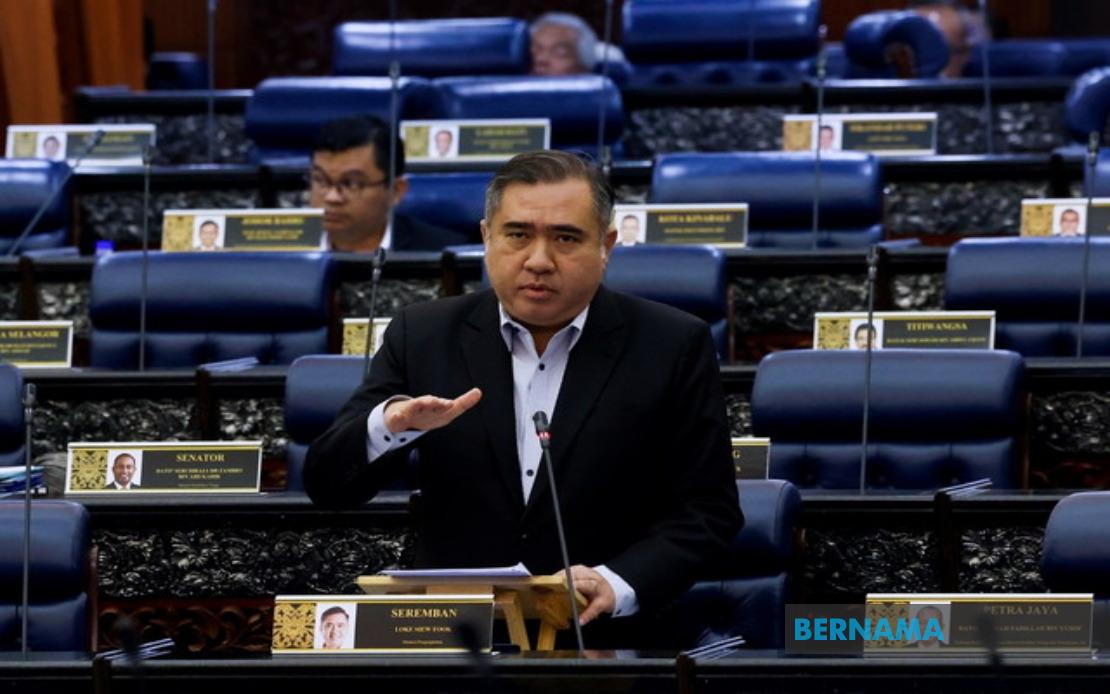
Malaysia's Transport Ministry has unveiled an ambitious legislative package aimed at protecting victims of road accidents and their families through mandatory compensation orders, whilst simultaneously tightening the noose around illegal street racing activities that have claimed multiple lives across the country. Minister Anthony Loke disclosed the initiative during parliamentary proceedings in Kuala Lumpur on July 14, signalling a significant shift in how Malaysia's legal system will address the devastating human and financial toll of serious traffic offences.
Under the proposed amendments to the Road Transport Act 1987, courts will gain new authority to impose compensation on drivers convicted of particularly grave traffic violations. Rather than treating dangerous drivers who cause deaths or catastrophic injuries as routine traffic offenders subject to standard penalties, the revamped legal framework will enable judges to tailor compensation awards based on the specific circumstances of each case. This approach recognises that victims and bereaved families deserve redress proportionate to their suffering, moving beyond the traditional model where punishment ends with fines or jail time without addressing the financial devastation accidents leave behind.
The compensation framework will consider multiple dimensions when determining awards. Judicial officers will weigh the severity of injuries or fatalities, calculate quantifiable losses incurred by victims and their dependents, and assess the convicted offender's financial capacity to pay. This multi-factor approach prevents outcomes where courts impose compensation awards that are either trivially small relative to genuine losses or so substantial they become impossible to enforce. The emphasis on offender's ability to pay demonstrates practical legislative thinking, ensuring compensation orders translate into actual payments rather than paper judgments.
Loke positioned these changes as reflecting the government's determination that drivers who cause deaths through reckless conduct will face consequences befitting their actions. The compensation mechanism specifically targets dangerous driving and illegal street racing—phenomena that have transitioned from minor traffic infractions to major public safety crises. By explicitly elevating these offences beyond ordinary traffic violations, the legislative reform acknowledges that illegal racing represents not merely a speeding violation but a deliberate choice to endanger multiple lives on shared public roads.
The government has concurrently advanced the Road Transport (Amendment) Bill 2026, which the Dewan Rakyat has already passed. This legislation introduces a new Section 42A establishing illegal racing as a distinct criminal offence. Significantly, this new provision allows authorities to prosecute street racers before accidents occur—a crucial expansion of law enforcement capacity. Previously, the legal system could only act after collisions, meaning authorities watched dangerous activities occur with impunity until tragedy struck. The reformed approach treats organised illegal racing itself as a criminal act regardless of whether it immediately causes accidents.
The penalty structure for illegal racing offences reflects escalating severity. First-time offenders face minimum fines of RM2,000 escalating to RM10,000, or up to two years imprisonment, or both sanctions imposed simultaneously. Repeat offenders confront considerably stiffer consequences: fines between RM5,000 and RM20,000 or imprisonment extending to five years, or both. This graduated penalty system aims to deter initial participation whilst ensuring those who persist despite consequences face increasingly serious imprisonment prospects. The potentially substantial jail sentences signal legislative intent to treat serial illegal racers as serious criminal offenders.
Enforcement efforts have already mobilised under these principles. Recent operations in Johor demonstrate operational intensity, with authorities apprehending 16 individuals and impounding 260 motorcycles connected to illegal racing activities. These enforcement sweeps complement legislative changes, creating concurrent pressure through both legal reform and active police operations. The visible seizure of motorcycles sends clear messages within racing communities that vehicles facilitating illegal activities face permanent loss, imposing economic consequences beyond potential criminal penalties.
The tragic Jalan Renggam-Simpang Renggam accident in Johor on June 1, which claimed five lives, exemplifies why this legislative overhaul matters urgently. The Attorney-General's Chambers directed that investigations proceed under Section 302 of the Penal Code—the culpable homicide provision—rather than treating the deaths as mere traffic infractions. This prosecutorial choice, enabled by legislative reforms, demonstrates how reframed legal structures elevate accountability for fatal accidents. The message crystallises: driving behaviours that cause multiple deaths will trigger serious criminal prosecution with corresponding prison sentences, not merely traffic court fines.
Loke characterised road safety as a national agenda transcending any single ministry's purview, requiring coordinated action spanning government agencies, traditional community leaders, and public participation. This holistic framing acknowledges that legislative fixes and enforcement operations alone cannot eliminate the annual toll exceeding 6,000 deaths on Malaysian roads. Behavioural transformation and cultural shifts toward road safety consciousness demand sustained public awareness campaigns, community engagement, and individual responsibility internalisation. The minister essentially argued that sustainable reduction in road fatalities requires complementary efforts across multiple intervention points simultaneously.
The minister explicitly cautioned against politicising road safety issues, appealing for non-partisan consensus that the underlying objective—making Malaysian roads safer—supersedes political calculations. This appeal reflects awareness that road safety historically becomes entangled with partisan debates about enforcement intensity, ministerial competence, and electoral positioning. By framing road safety as a universal social good transcending political division, Loke sought to create space for sustained, long-term policy implementation without the policy reversals that typically accompany political transitions.
For Malaysian road users, the legislative changes represent a fundamental recalibration of legal consequences for dangerous driving. The compensation mechanism provides pathways for accident victims to recover financial losses through courts, reducing reliance on civil litigation or insurance claims alone. The stricter illegal racing penalties and pre-accident prosecution authority broaden police enforcement options considerably. Together, these reforms constitute substantial movement toward treating Malaysia's roads as public spaces where severe consequences attach to conduct endangering others—a conceptual shift with potential ripple effects across driving culture and social norms around vehicle operation.

