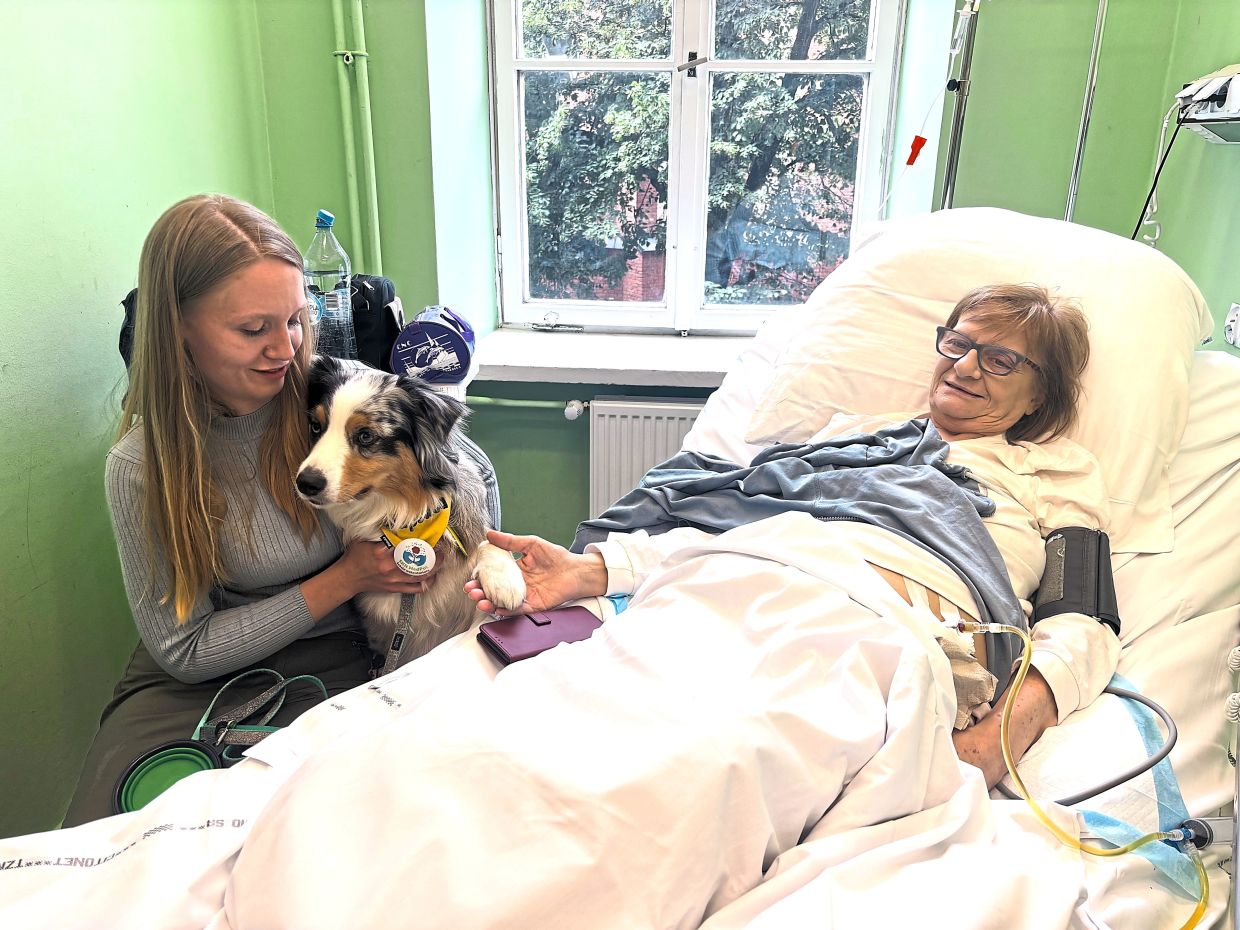
Poland is moving toward landmark legislation that would formally guarantee terminally ill patients access to their pets during stays in hospices and palliative care facilities. The proposed law, introduced to parliament by a member of Prime Minister Donald Tusk's centrist party, seeks to codify a practice that already occurs informally in many medical settings but lacks legal protection. The initiative emerged from the experiences of doctors and patients at Warsaw's palliative medicine facilities, where the emotional and therapeutic impact of human-animal bonds has become increasingly evident in caring for the dying.
Dr Tomasz Dzierzanowski, director of the Palliative Medicine Clinic at the Medical University of Warsaw, has championed the effort after witnessing repeatedly how companion animals provide profound comfort to patients facing their final chapter. His clinical experience revealed a critical gap in end-of-life care: while medical interventions address physical suffering, the emotional and spiritual dimensions of dying often go unattended. Dzierzanowski's argument centres on what he describes as an "epidemic of loneliness" afflicting contemporary Polish society—a phenomenon that manifests starkly in hospital wards where isolation compounds the difficulties of terminal illness.
The doctor points to two overlapping populations vulnerable to profound loneliness in palliative settings. Elderly patients frequently find themselves outliving their contemporaries, arriving at hospices without the network of friends that sustained earlier generations. Simultaneously, younger terminally ill patients often lack deep social bonds, having substituted virtual connections and social media interaction for the kind of meaningful friendships that once provided emotional anchoring. For these isolated individuals, a familiar pet represents not merely companionship but a tangible link to home, identity, and the life being left behind.
Dzierzanowski's commitment to formalizing pet visitation crystallized around a specific patient named Waldemar, a cancer sufferer whose primary concern centred not on his own mortality but on the welfare of his two cats. When the doctor arranged for the animals to be brought into the ward, Waldemar's tearful reaction and the cats' visible emotional engagement with their owner sparked recognition that this issue demanded systematic institutional attention. The moment—observed by other patients and hospital staff—revealed the transformative potential of preserving these bonds during the dying process.
Ewa Lutka-Krawczyk embodies the human stakes involved in this legislative push. The 70-year-old was diagnosed with gallbladder cancer and subsequently admitted to the palliative ward where Dzierzanowski works. Her principal worry upon receiving her dire prognosis was not for herself but for Gaja, a shelter dog she had adopted three years prior and with whom she shared a profound attachment. When separated from her owner, the animal ceased eating—a visceral manifestation of their interconnected emotional state. Lutka-Krawczyk's case demonstrates that the bonds between terminally ill patients and their animals often involve rescue narratives; she had given Gaja shelter, and now faced the anguish of potentially abandoning the dog.
The legislative framework has gained traction through Katarzyna Piekarska, the parliamentarian who introduced the measure. Piekarska emphasizes that the law responds to an existing reality: animals already visit palliative wards across Poland, but without consistent legal backing or standardized protocols. Formalizing the practice through legislation would establish clear procedures, protections, and guidelines while removing administrative ambiguity that currently forces informal arrangements on a case-by-case basis. The bill now resides in parliament's health committee, where it faces evaluation before proceeding to broader debate.
Within Dzierzanowski's clinic, the therapeutic mechanism extends beyond emotional reunion. Registered therapy animals, including Kluska, an Australian shepherd whose name means "dumpling" in Polish, make regular rounds alongside their handlers. During these visits, patients—whether reuniting with their own pets or encountering therapy animals—experience measurable shifts in affect and engagement. Wojciech Zelik, a 58-year-old admitted with a tumour, lifted himself from his bed to interact with visiting therapy dogs, his attention redirected toward simple pleasures like stroking fur and observing animal tricks. For patients whose bodies have become sources of pain and limitation, such moments of gentle physical contact with animals represent accessible pathways to pleasure and normalcy.
The benefits permeate the entire palliative ward ecosystem. Staff members—nurses, cooks, and ancillary workers—demonstrate visible stress relief during animal visits, crouching in corridors to offer affection or sharing food with visiting dogs. Malgorzata Brzozowska, a medical student facilitating therapy dog visits, notes that the calming effect extends equally to the animals themselves. When patients are visited by their own longtime companions, the animals' behaviour shifts noticeably; they appear to comprehend the separation and reunion dynamic, their stress levels declining when reunited with their owners.
The psychological mechanism underlying these interactions operates across multiple registers simultaneously. For patients, pets anchor identity to a pre-illness self and home environment; the animals carry memories and routines from ordinary life into the medicalized space of the palliative ward. For animals, the reunion alleviates the anxiety and confusion of unexplained separation. For hospital staff, interaction with animals provides momentary relief from the psychological weight of accompanying patients toward death—a professional burden that can precipitate compassion fatigue without adequate emotional outlets.
From a broader health policy perspective, Poland's proposed legislation addresses questions increasingly relevant across Southeast Asian and global healthcare systems as societies grapple with aging populations and end-of-life care challenges. The initiative recognizes that terminal care extends beyond managing physical symptoms to encompassing existential, emotional, and relational dimensions of dying. By formally protecting pet visitation, Polish law would acknowledge that palliative medicine's highest purpose includes enabling patients to maintain the relationships and connections that constitute their humanity.
The pathway toward legislative adoption remains contingent on parliamentary health committee deliberations and broader political alignment. Yet the proposal reflects shifting understanding of what constitutes humane end-of-life care. Rather than isolating dying patients within sterile medical environments, the legislation seeks to preserve the networks of care and companionship that sustain human meaning-making. For patients like Lutka-Krawczyk, awaiting reunion with Gaja, the formal right to pet visitation represents recognition that dying itself—managed with dignity and surrounded by loved ones, whether human or animal—constitutes a final expression of personhood worthy of institutional protection.

