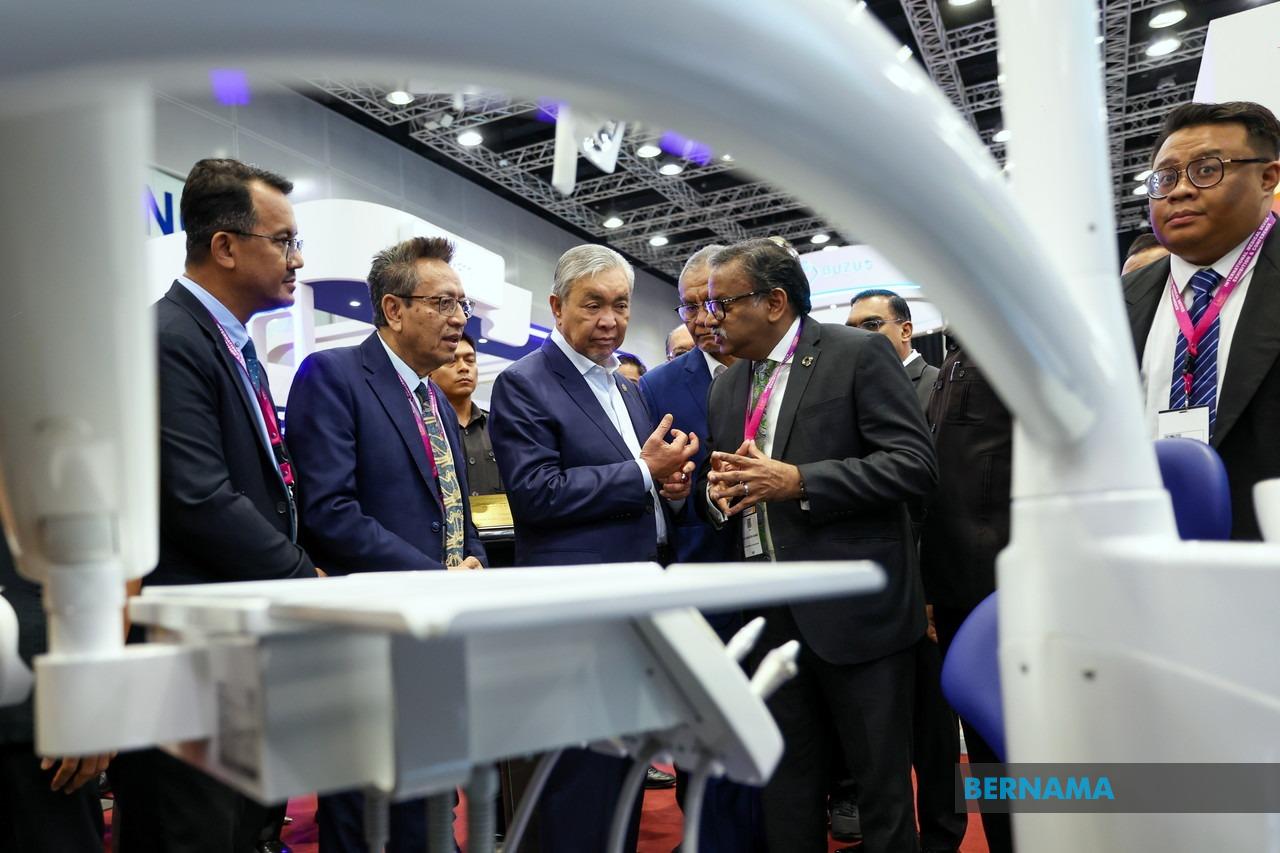
Malaysia is positioning itself for significant expansion in medical technology manufacturing, with Deputy Prime Minister Datuk Seri Dr Ahmad Zahid Hamidi announcing an ambitious RM50 billion export target by 2030. The figure represents a substantial increase from the RM34.54 billion achieved in the previous year, signalling the government's determination to capitalise on the country's existing manufacturing infrastructure and international reputation. Speaking at the closing ceremony of the International Medical Device Exhibition and Conference (IMDEC) 2026, Ahmad Zahid outlined a three-pillar strategy designed to transform Malaysia's position within the global medical technology sector over the next few years.
The first pillar centres on export growth, but with a crucial caveat: future expansion must increasingly originate from premium-priced goods rather than volume-based commodity products. Ahmad Zahid acknowledged that Malaysia possesses the fundamental prerequisites for success—an established manufacturing ecosystem, preferential market access arrangements, and accumulated trust among multinational partners. However, the nation must now transition beyond these foundational advantages towards developing and exporting higher-complexity medical devices that command greater profit margins and represent more advanced technological capabilities. This strategic pivot reflects a broader recognition that remaining competitive requires moving up the value chain, particularly as competing nations strengthen their own manufacturing bases.
The second strategic objective focuses on nurturing homegrown innovation champions. The government envisions developing at least 10 Malaysian MedTech companies capable of competing effectively at regional and global levels. This ambition differs fundamentally from the historical pattern of relying primarily on multinational corporations establishing regional operations within Malaysia. Instead, the policy seeks to create Malaysian-owned enterprises that develop proprietary technologies, retain intellectual property rights domestically, and establish themselves as international competitors. Ahmad Zahid stressed that while Malaysia will continue attracting leading foreign MedTech manufacturers, simultaneous emphasis must be placed on incubating and supporting local firms that can eventually operate independently on the world stage.
The third pillar addresses workforce quality and composition. Ahmad Zahid proposed that at least 50 per cent of employment opportunities generated by new MedTech investments by 2030 should comprise managerial, technical, and supervisory positions. Currently, the sector's managerial, technical and supervisory employment index stands at 33.1 per cent—indicating substantial room for improvement. This target reflects a fundamental principle articulated by the Deputy Prime Minister: while financial capital may flow into Malaysia, the nation must ensure that advanced capability and high-value expertise remain rooted domestically. Without this focus, Malaysia risks remaining a manufacturing location rather than becoming a true innovation hub where strategic decision-making and technological development occur.
A critical component of Ahmad Zahid's vision addresses the timing of workforce development. Currently, companies typically approach educational institutions and training providers only after they have established operations and face immediate labour shortages. Ahmad Zahid advocated for reversing this sequence, urging international MedTech firms to engage with Malaysia's educational and vocational institutions well before making investment decisions. This proactive collaboration would allow education providers to design curriculum and apprenticeship programmes aligned with industry needs, ensuring graduates possess immediately relevant skills. By involving employers in defining future skill requirements and providing industrial exposure opportunities, Malaysia can build a talent pipeline prepared for employment in advanced MedTech roles, rather than scrambling to address capability gaps after companies arrive.
Recent investment data underscore the sector's momentum. During 2025 alone, RM4 billion in new medical device investments received government approval across 46 distinct projects, collectively creating nearly 3,400 employment opportunities. This investment activity reflects growing confidence among both Malaysian and foreign enterprises regarding the country's capacity to support MedTech development. The approval of such substantial capital commitments, distributed across numerous projects rather than concentrated in one or two ventures, suggests diversification across different medical device categories and specialisations.
The global context further reinforces Malaysia's strategic imperative. The worldwide medical device industry, valued at more than USD572 billion in the most recent year, is projected to exceed USD1 trillion by 2034. This near-doubling of market size within a decade creates significant opportunities for nations positioned to capture market share. Malaysia's existing manufacturing expertise and regional location within Southeast Asia—home to rapidly growing healthcare sectors—provides competitive advantages if the nation can successfully upgrade its technological capabilities and retain skilled workers.
IMDEC 2026, the platform where Ahmad Zahid unveiled these ambitions, attracted more than 160 exhibitors and over 50 regional and international speakers addressing regulation, innovation, and healthcare transformation. The conference's scale and composition demonstrate Malaysia's established position as a serious player within the Asian MedTech ecosystem, with both established multinational corporations and emerging enterprises participating. This gathering provided an appropriate venue for articulating forward-looking strategies to an audience of decision-makers and industry leaders already engaged with or considering Malaysian opportunities.
For Malaysian stakeholders, Ahmad Zahid's tripartite strategy carries several implications. Local entrepreneurs with MedTech capabilities now have clear governmental support for scaling their ventures. Educational institutions receive guidance regarding workforce development priorities. Multinational companies contemplating Malaysian expansion understand that government policy actively encourages technology transfer and local capability building alongside profit generation. The emphasis on high-value employment suggests that Malaysia is consciously steering away from becoming merely another low-cost manufacturing destination, instead positioning itself as a location where advanced work and strategic decisions occur.
The strategy also reflects broader regional dynamics within Southeast Asia. Countries throughout the region are competing to attract medical technology investments and establish themselves as MedTech hubs. Malaysia's explicit focus on intellectual property retention, local champion development, and high-skill job creation differentiates its approach from competitors who may emphasise low-cost labour or regulatory permissiveness. This positioning appeals to multinational firms seeking genuine long-term partnerships rather than temporary cost arbitrage arrangements.
Implementing these ambitions will require sustained coordination between government agencies, educational institutions, and private sector partners. The National Technical and Vocational Education and Training Council, which Ahmad Zahid chairs, will play a central role in ensuring workforce development pathways align with industry requirements. Success will ultimately depend on translating these policy targets into concrete investments, company formations, and employment creation over the coming years.

