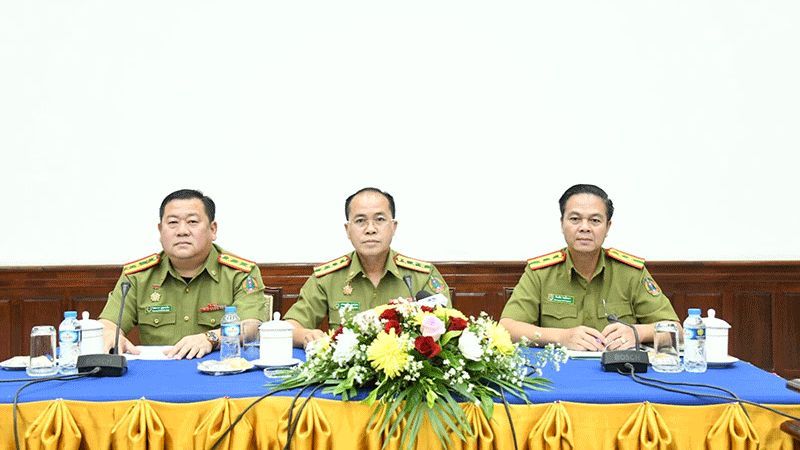
Laos has formally indicted the operator of a privately owned distillery and multiple employees of Nana Backpackers Hostel in connection with the deaths of six international visitors in the popular tourist destination of Vang Vieng during November 2024. The charges, officially announced at the Ministry of Public Security headquarters in Vientiane, represent a significant milestone in an investigation that has drawn intense scrutiny from multiple foreign governments and international media attention to Laos's tourism safety record.
The six victims spanned multiple nationalities and continents: American tourist James Louis Hutson, Danish nationals Freja Vennervald Sorensen and Anne-Sofie Orkild Coyman, Australian pair Bianca Jones and Holly Bowles, and British national Simone White. The deaths, concentrated over a brief period in mid-November, prompted immediate diplomatic engagement and raised questions about oversight of local food and beverage production in a nation heavily dependent on backpacker tourism.
Investigators identified methanol—a toxic form of alcohol that can cause blindness, organ failure, and death—in drinks manufactured at a distillery located in Xaimoungkhoun village, Xaxaithong district, with concentrations exceeding permitted safety thresholds. The Australian Embassy subsequently confirmed that methanol was detected in blood samples from the two Australian women who died at Aek Udon Hospital in Thailand, providing direct forensic evidence linking contaminated alcohol to at least some of the fatalities. The distillery owner faces charges under Article 275 of the Penal Code for manufacturing and distributing consumer goods injurious to health, alongside a second charge under Article 297 relating to operating an unlicensed business.
However, a critical limitation undermines the prosecution's ability to establish causation in five of the six cases. The absence of autopsy procedures means Lao authorities cannot definitively prove that methanol poisoning caused the deaths of Hutson, the two Danish nationals, Simone White, or one of the Australian victims. Although methanol was chemically detected in two victims, the legal threshold required by Lao law to attribute responsibility to a specific individual has not been met in most instances. This evidentiary gap reflects broader challenges within the Lao legal system regarding forensic capacity and the intersection of international public health standards with domestic prosecution requirements.
The investigation also uncovered a second line of culpability involving the hostel itself. After Hutson died in Room 205 on November 13, 2024, staff members transported his body to Vang Vieng District Hospital before notifying police—a critical procedural violation that contaminated the crime scene and prevented law enforcement from conducting proper investigative examination of the room. This action triggered charges against the hostel owner and ten staff members under Article 383 of the Penal Code for destruction of evidence. The Vang Vieng District Court secured convictions against all ten defendants, though the provincial prosecutor's office subsequently appealed the sentences, arguing they were insufficiently harsh and petitioning the Vientiane Province People's Court to impose stricter penalties.
The trajectory of the first American victim's death illustrates how investigative constraints shaped the legal outcome. Police discovered multiple items within Hutson's room, including bottles and glasses containing liquor and soft drinks, water, pharmaceutical products, and a handwritten note suggesting suicide. Because Hutson's family declined an autopsy and the body was released for funeral rites, investigators could not determine whether his death resulted from methanol poisoning, overdose, or the circumstances suggested by the note. This outcome highlights how family wishes, combined with limited autopsy capacity in Laos, create legal evidentiary gaps that frustrate efforts to establish comprehensive causation across multiple cases.
The two Danish nationals presented clinical symptoms consistent with acute poisoning. Witnesses documented breathing difficulty, vertigo, and gastrointestinal distress preceding their admission to Vang Vieng District Hospital, followed by transfer to Hospital 103 in Vientiane where both died. Yet without autopsy evidence, prosecutors cannot legally attribute their deaths to methanol contamination despite the symptomatic presentation. Similarly, the two Australian women—who checked into Nana Backpackers on November 9—became seriously ill despite investigators being unable to comprehensively trace their food and beverage consumption throughout their stay. They received treatment at Vang Vieng District Hospital before successive transfers to Settathirath Hospital in Vientiane and ultimately to Thailand's Aek Udon Hospital, where they expired. The movement between jurisdictions further complicated evidence collection and continuity of investigation.
Simone White's case followed yet another trajectory. After losing consciousness, she was transferred on November 13 from Mahosot Hospital to Kasemrad International Hospital in Vientiane, where she remained until her death on November 21. The extended timeline between acute illness and mortality makes establishing direct causation more legally challenging, even had autopsy evidence been available.
The Vientiane Province Police Command has made clear that investigations remain active despite the indictment. Deputy Chief Colonel Khamfong Vongdalasane emphasized that authorities intend to accumulate additional comprehensive, objective, and verifiable evidence while working collaboratively with foreign embassies whose nationals died. The press briefing itself—attended by representatives from the Ministry of Public Security, Ministry of Foreign Affairs, and diplomatic missions from the deceased tourists' nations—signals Laos's recognition that the case carries significant international dimensions affecting the nation's tourism reputation and bilateral relationships.
The outcome carries profound implications for Laos's tourism industry and regulatory environment. Vang Vieng has long attracted backpackers seeking adventure activities and inexpensive accommodation, generating substantial foreign exchange earnings for a developing economy. The concentration of deaths among young Western tourists—combined with international media coverage of methanol-adulterated alcohol—threatens to damage the destination's safety reputation precisely at a moment when regional tourism is recovering post-pandemic. Neighboring Thailand and Vietnam have similarly grappled with methanol poisoning incidents in tourist zones, suggesting a systemic challenge across mainland Southeast Asia regarding illicit and informally produced spirits.
The distillery's indictment addresses production-side accountability, but questions persist regarding distribution, point-of-sale oversight, and whether the Nana Backpackers Hostel knowingly served contaminated alcohol or purchased drinks without adequate quality verification. The hostel remains shuttered as legal proceedings advance, with the owner and ten staff members barred from departing Laos pending trial completion. This prohibition reflects standard practice but also underscores the gravity with which authorities are treating the evidence destruction charge.
Moving forward, the case will test the robustness of Lao judicial institutions under international scrutiny. The submission of charges to the Vientiane Province People's Court initiates formal trial proceedings where the distillery owner will face substantial penalties if convicted. Prosecutors initially pursued food safety violation charges but pivoted to the broader consumer goods harm statutes, suggesting strategic recalibration based on available evidence. The eventual court decisions will reflect not only Lao legal interpretation but also the pressure exerted by diplomatic representation from six nations with deceased citizens.
For Malaysia and other Southeast Asian nations with substantial tourism sectors and informal alcohol production, the Vang Vieng incident underscores the importance of robust regulatory frameworks governing beverage manufacturing, particularly in rural areas beyond major urban centers where formal inspection capacity may be limited. The gap between detecting methanol contamination and securing convictions based on that evidence reveals how technical findings do not automatically translate into legal liability without supporting autopsy and forensic documentation—a lesson relevant across the region.

