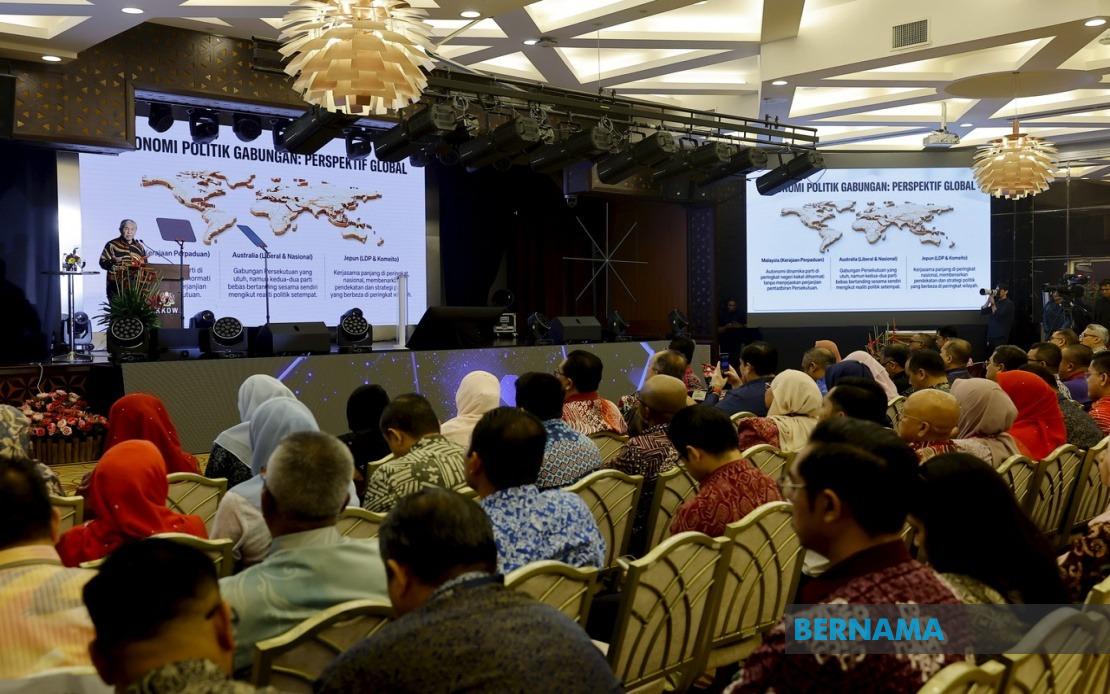
Deputy Prime Minister Datuk Seri Dr Ahmad Zahid Hamidi has unveiled an ambitious expansion of Malaysia's early childhood intervention services for children with special needs, signalling the government's commitment to inclusive education in underserved communities. Speaking during a ministry gathering in Putrajaya on August 6, Ahmad Zahid, who also leads the Rural and Regional Development Ministry, announced that the Community Development Department (KEMAS) intends to establish at least one Tabika Tunas Istimewa facility in every district nationwide by 2027, dramatically scaling up what has historically been a limited provision. This expansion represents a substantial policy shift toward making specialised early intervention accessible beyond urban centres, where such services have traditionally concentrated.
The current operational footprint of the Tabika Tunas Istimewa Programme consists of just 19 active classes across Malaysia. To realise the 2027 target, KEMAS will need to introduce up to 132 additional classes through a combination of newly constructed facilities and comprehensive upgrades to existing infrastructure. This sevenfold multiplication of capacity signals genuine resource commitment and reflects growing recognition that early childhood development intervention yields long-term benefits for children with developmental delays and disabilities. By embedding these services within district-level systems, KEMAS addresses a critical gap in rural and semi-urban Malaysia, where families currently lack affordable, accessible options for specialised early education and therapeutic support.
Affordability remains central to the programme's design philosophy. Ahmad Zahid confirmed that monthly fees will remain capped at RM100, a pricing structure deliberately maintained to ensure that cost barriers do not prevent disadvantaged families from accessing intervention services. This commitment to affordability is particularly significant given the typical private-sector pricing for equivalent services, which often exceeds RM500 monthly. For rural and lower-income households, this substantial subsidy removes a primary obstacle to early intervention, which developmental research consistently shows produces measurable improvements in school readiness, social integration, and long-term educational outcomes. The decision to freeze fees despite expansion signals that the government treats special needs education as a public good rather than a market commodity.
Ahmad Zahid framed the Tabika Tunas Istimewa expansion within a broader developmental philosophy that prioritises tangible, life-changing impacts for ordinary Malaysians. He articulated that governmental performance should ultimately be assessed not through abstract metrics but through observable improvements in citizens' circumstances and quality of life. This rhetorical positioning aligns the special needs kindergarten initiative with larger rural development priorities, including income generation, economic opportunity creation, and community transformation. By connecting early childhood intervention to rural economic development discourse, Ahmad Zahid signals that investing in special needs services represents not merely social welfare but human capital development essential to Malaysia's competitive future.
Beyond the Tabika Tunas Istimewa announcement, Ahmad Zahid disclosed that all Regional Development Authorities (LKW) have been assigned performance targets requiring an optimal return on assets between four and six percent. This financial discipline requirement reflects government determination to ensure that public assets generate measurable returns benefiting communities rather than languishing underutilised. LKWs have been instructed to prepare comprehensive Asset Activation Plans within a 100-day timeframe, compelling these bodies to conduct systematic audits of existing infrastructure and develop strategies for enhanced utilisation. This approach balances developmental ambitions with fiscal responsibility, signalling that rural development investment must demonstrate concrete economic productivity.
The government has simultaneously prioritised cooperative sector strengthening through the Rural Economic Council Executive Committee's (MEXCLUB) decision to establish a dedicated task force supporting village cooperatives. This initiative focuses on governance enhancement, brand development, market access expansion, and strategic networking capacity building. Cooperatives represent crucial economic institutions within rural Malaysia, often serving as the primary commercial platforms for smallholder producers and artisans. By providing targeted support across governance, marketing, and strategic dimensions, the task force addresses systematic bottlenecks that have historically constrained cooperative sector competitiveness. This multifaceted approach recognises that rural economic transformation requires not merely capital injection but comprehensive institutional strengthening.
For Malaysian families with children displaying developmental delays or disabilities, the Tabika Tunas Istimewa expansion carries profound implications. Early intervention during the critical 0-6 year period substantially improves developmental trajectories, school integration prospects, and long-term educational attainment. Rural and lower-income families have historically borne disproportionate burdens accessing such services, often forced into costly private provision or relying on informal family-based strategies lacking professional guidance. The proposed expansion directly addresses this inequality through deliberate geographical redistribution of specialised services and maintained affordability. For such families, the availability of subsidised, accessible early intervention represents transformative opportunity to ensure their children access developmental support comparable to their urban, wealthier counterparts.
The initiative also reflects Malaysia's evolving approach to inclusive development and disability inclusion policy. Rather than concentrating specialised services within capital-region institutions accessible primarily to educated urban populations, the decentralised model acknowledges that developmental delays and disabilities exist proportionally across all communities and deserve equivalent intervention regardless of geographical location or economic status. This universalising logic, embedded in the district-level distribution target, represents advancement beyond charity-based or residualised approaches toward treating special needs early education as ordinary public service infrastructure comparable to primary schooling or primary health care.
Implementation success will hinge on several critical factors beyond infrastructure development. Teacher recruitment and training represent substantial challenges, particularly attracting qualified specialists to rural postings where career advancement opportunities may appear limited. KEMAS must develop comprehensive professional development pathways ensuring staff possess evidence-based skills in contemporary special needs pedagogy, therapeutic techniques, and family engagement practices. Coordination with existing primary healthcare systems, particularly maternity services and infant health screening programmes, proves essential for identifying children requiring early intervention and facilitating timely referral. Parental engagement and community awareness campaigns must overcome potential social stigma or misconceptions regarding developmental disabilities that may deter families from programme participation.
The financial sustainability of the expansion merits scrutiny. While the RM100 monthly fee structure is politically sustainable and socially appropriate, it generates negligible revenue relative to operational costs. Maintaining funding consistency across electoral cycles and competing budgetary pressures presents ongoing vulnerability. The government's commitment to Asset Activation Plans and LKW return-on-asset requirements, while financially prudent in principle, might inadvertently incentivise prioritisation of revenue-generating activities over developmental services. Balancing fiscal discipline with genuine commitment to special needs access will require careful policy design preventing financial metrics from eroding service accessibility.
Regionally, Malaysia's special needs kindergarten expansion potentially positions the country as a regional leader in inclusive early childhood development. Southeast Asian nations increasingly recognise special needs education's importance, yet implementation remains inconsistent and often dependent on private provision or international NGO support. Malaysia's commitment to government-provided, decentralised, affordable services offers a potentially replicable model for neighbouring countries grappling with comparable access challenges. This positioning could enhance Malaysia's regional development influence while demonstrating its commitment to inclusive, equity-oriented social policy.
The 2027 timeline, while ambitious, appears realistic given KEMAS's existing institutional capacity and the relatively straightforward nature of establishing kindergarten facilities compared to tertiary educational infrastructure. However, meaningful success ultimately depends less on numerical targets regarding facility establishment than on whether services actually reach intended beneficiaries and demonstrate measurable developmental impact. Ahmad Zahid's emphasis on game-changing initiatives and tangible community benefits suggests the government understands that expansion metrics prove meaningful only when translated into improved child development outcomes and enhanced family wellbeing. The coming years will reveal whether this commitment translates into sustained resource allocation and institutional priority or represents politically convenient rhetoric insufficiently backed by sustained implementation commitment.

