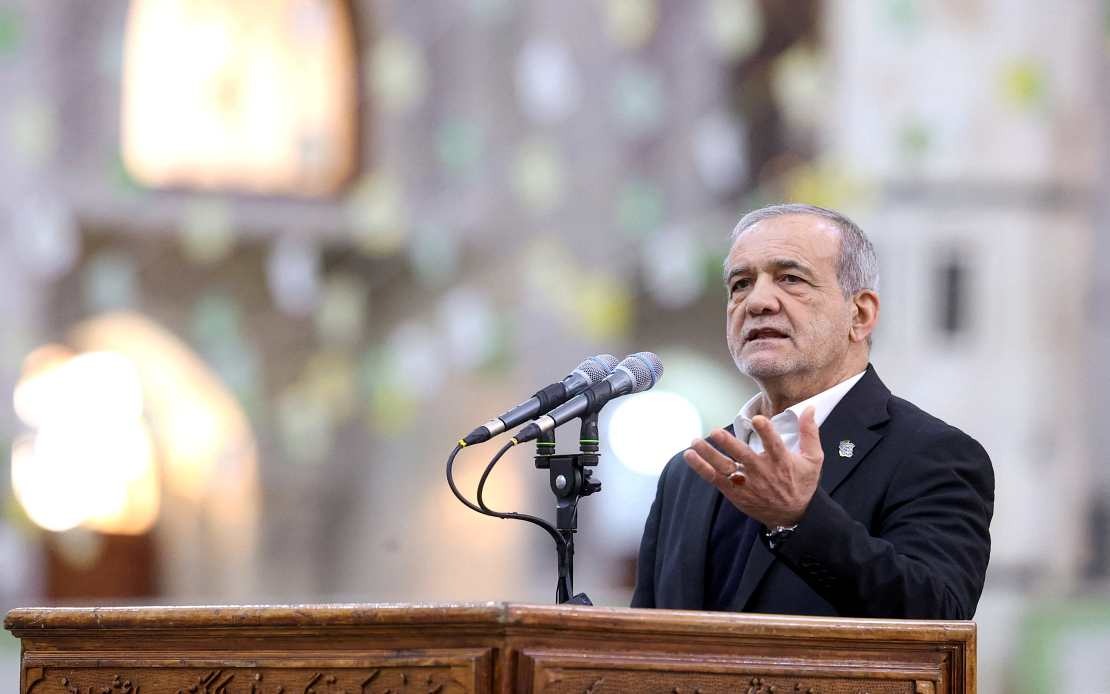
Iranian President Masoud Pezeshkian confirmed on Sunday that his country will recover US$6 billion in frozen assets currently held in Qatar as part of a preliminary accord with the United States. The statement marks a tangible economic concession emerging from nascent diplomatic engagement between Tehran and Washington, signalling momentum toward resolving months of escalating tensions that have threatened regional stability and critical maritime commerce.
Pezeshkian disclosed the asset recovery through Iran's state broadcaster IRIB, framing the funds as a direct benefit of initiating formal talks with American counterparts. "With the start of the talks, the US$6 billion we have in Qatar will be released," the Iranian leader stated, underscoring how initial engagement has already yielded measurable gains for Iran's economically isolated government. The frozen assets represent a substantial injection of capital into Iran's coffers, where foreign exchange reserves have been severely constrained by international sanctions spanning over a decade.
However, the Iranian president coupled the financial concession with a reaffirmation of Tehran's nuclear ambitions, declaring that uranium enrichment rights remain non-negotiable in any comprehensive settlement. "What is certain is that we will never give up our right to enrich uranium, and the other side will be forced to accept it," Pezeshkian asserted, signalling that while preliminary talks show promise, fundamental disagreements over Iran's nuclear programme persist. This statement reflects Iran's consistent position that domestic enrichment capabilities represent a sovereign right rather than a negotiable commodity, complicating prospects for lasting resolution.
The preliminary understanding emerged following a memorandum of understanding signed on Wednesday between the two nations, committing both sides to addressing the broader regional crisis that has destabilised the Middle East for months. The accord specifically targets reopening the strategically vital Strait of Hormuz, through which roughly one-third of the world's seaborne oil trades. Disruptions to this crucial waterway carry profound implications not only for regional economies but also for global energy markets and inflation pressures affecting economies worldwide, including Southeast Asian nations heavily dependent on imported petroleum.
Technical negotiations have convened in Burgenstock, Switzerland, where delegations from both countries are conducting detailed discussions on implementing the preliminary framework. The American delegation is led by Vice President JD Vance, while Iran's negotiating team comprises Parliament Speaker Mohammad Bagher Qalibaf and Foreign Minister Abbas Araghchi. The presence of high-ranking officials underscores the significance both governments attach to these talks, though the involvement of Pakistan as mediator indicates the complex web of regional interests that influence outcomes.
For Malaysia and the broader Southeast Asian region, the implications of Iran-US de-escalation warrant careful consideration. Maritime security in the Persian Gulf directly impacts shipping lanes utilised by Malaysian vessels and the stability of oil supplies feeding regional refineries and power generation facilities. An opened Strait of Hormuz would reduce shipping costs and insurance premiums that ultimately influence fuel prices at Malaysian pumps and manufacturing competitiveness. Conversely, any breakdown in negotiations could escalate tensions and potentially disrupt energy supplies upon which Malaysia's petrochemical industries and electricity generation depend.
The recovery of frozen assets also signals shifting dynamics in international financial architecture. Qatar's role as custodian of these Iranian funds reflects broader Middle Eastern financial integration, with Gulf states increasingly serving as intermediaries in regional disputes. For Malaysian financial institutions and policymakers, this development illustrates how Gulf banking centres navigate geopolitical tensions while maintaining commercial relationships across competing regional powers. The precedent of releasing frozen assets may also influence how other nations approach similar disputes involving financial sanctions and asset freezes.
The preliminary nature of the current accord requires emphasis, as significant obstacles remain unresolved. Iran's insistence on maintaining uranium enrichment capabilities contradicts longstanding Western concerns about proliferation risks, particularly given Iran's history of advancing nuclear programmes despite international monitoring. American negotiators must balance demands for verifiable nuclear constraints against Iranian assertions of sovereign rights, a tension that derailed the 2015 Joint Comprehensive Plan of Action and continues to complicate contemporary diplomatic efforts.
The financial component—the US$6 billion asset release—may serve as confidence-building momentum for subsequent negotiations addressing more contentious issues. This pattern of deploying economic incentives to sustain diplomatic engagement mirrors historical precedent, though success is far from guaranteed. The coming weeks will reveal whether the preliminary accord can evolve into a comprehensive settlement addressing nuclear safeguards, regional proxy conflicts, and sanctions relief, or whether fundamental incompatibilities reassert themselves as technical discussions progress.
For Malaysian observers, the Iran-US negotiations represent a case study in complex multilateral diplomacy affecting global stability. The outcome will influence energy security, maritime commerce, and regional balance of power across Asia. Whether the Burgenstock talks generate lasting resolution or constitute merely a temporary pause in broader geopolitical competition remains uncertain, making close monitoring of developments essential for understanding future regional trajectories and their economic ramifications throughout Southeast Asia.

