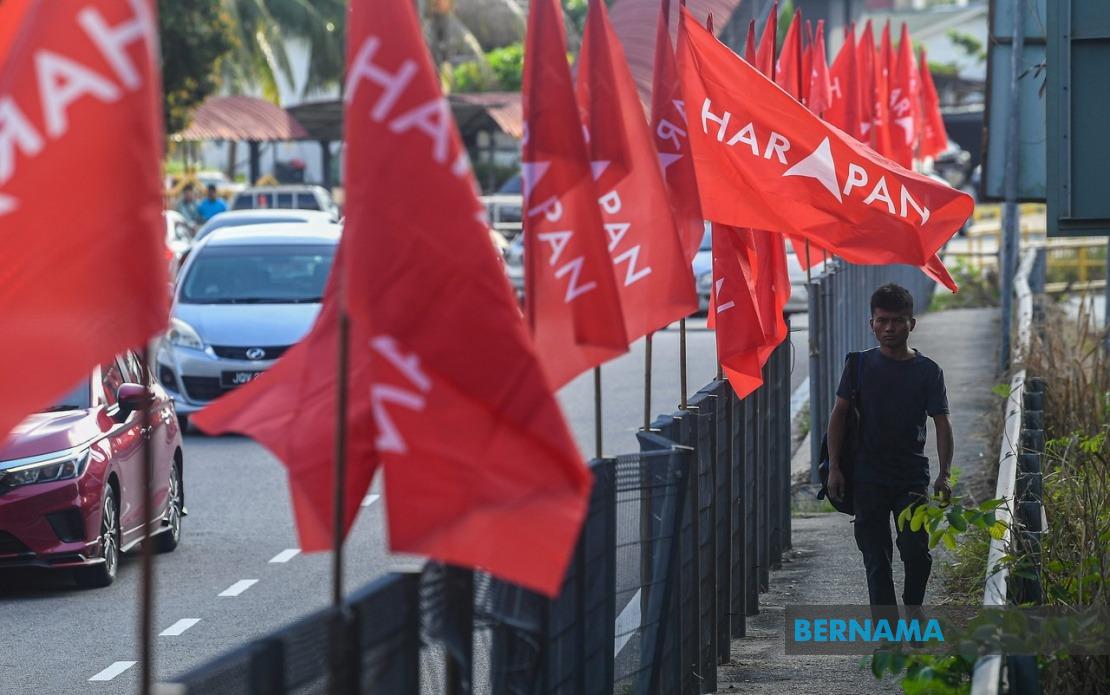
The Indian community's electoral influence in the Johor state election has emerged as a focal point in the coalition's campaign strategy, with PKR Central Leadership Council member Dr Gunaraj George characterising minority group support as essential for ensuring political continuity and economic progress. Speaking ahead of the July 11 polling, Dr Gunaraj, who represents Sentosa, framed the contest not merely as a choice between rival parties but as a referendum on governance stability versus political turbulence, drawing a direct line between electoral outcomes and the nation's economic trajectory.
Although comprising a numerically smaller population compared to other communities in the state, the Indian electorate holds disproportionate sway in a critical bloc of constituencies. Dr Gunaraj's analysis points to nearly 25 mixed and marginal State Legislative Assembly seats where Indian votes could realistically determine the winner, suggesting that even modest swings in support could reshape the overall composition of the state legislature. This concentration of influence in demographically diverse seats gives the community a negotiating and political leverage that belies its overall proportion of Johor's population, a dynamic familiar to seasoned Malaysian political analysts who recognise the mathematical reality of mixed electorates.
The messaging deployed by coalition strategists emphasises that global headwinds and regional instability demand a government capable of delivering economic security. Dr Gunaraj pointed to mounting living costs, geopolitical volatility, and international economic uncertainty as contexts in which Malaysia cannot afford the distraction of protracted political infighting. Under this framing, a fractured or weak government is presented as incompatible with the investor confidence and policy coherence required to generate employment and rising household incomes. The argument attempts to reposition stability not as an abstract constitutional virtue but as a practical necessity for bread-and-butter prosperity.
Pakatan Harapan's governance record over three and a half years forms the bedrock of its appeal to Indian voters, with Dr Gunaraj detailing tangible policy achievements that allegedly benefit the community across multiple domains. He highlighted the restoration and enhancement of the Malaysian Indian Transformation Unit (MITRA), noting that its allocation has been raised from RM100 million to RM150 million following nearly a decade of stagnation under previous administrations. Prime Minister Datuk Seri Anwar Ibrahim has reportedly committed to further progressive increases, signalling sustained investment in programmes targeting Indian Malaysian development.
Beyond headline funding, the coalition points to improvements in governance architecture surrounding these allocations. MITRA's operational transparency, accountability measures, and parliamentary oversight have been strengthened, according to Dr Gunaraj's account, suggesting that not only has spending increased but the mechanism for ensuring proper utilisation has been reformed. This dual emphasis—on quantum and on process—attempts to address both material concerns and the broader governance reform agenda that has characterised Pakatan Harapan's policy platform since assuming federal office.
The education portfolio has similarly benefited from expanded support, with enhanced allocations for Tamil National-Type Schools (SJKT) representing a direct investment in an institution that anchors cultural and linguistic identity within the Indian Malaysian community. Complementing this are broader social assistance programmes including cash transfers through Sumbangan Tunai Rahmah (STR) and Sumbangan Asas Rahmah (SARA), welfare measures that address immediate household financial pressures particularly acutely felt by lower-income segments.
Religious and cultural infrastructure has received sustained support through maintenance grants for places of worship including temples, recognising that communal institutions represent focal points for community solidarity and social organisation. Simultaneously, the government has expanded Technical and Vocational Education and Training (TVET) opportunities, attempting to broaden pathways for economic mobility beyond traditional university routes. These initiatives collectively sketch a picture of targeted rather than universal benefit—policies ostensibly designed with particular attention to Indian Malaysian needs and aspirations.
The coalition's governance reform agenda operates as a counterweight to programmatic spending, with Dr Gunaraj emphasising institutional strengthening, anti-corruption drives, and inclusive economic policy frameworks. This appeal to process and institutional integrity speaks to voter concerns about how government functions, not merely what it distributes. The argument suggests that sustainable development emerges from credible, accountable institutions rather than from ad hoc or patronage-driven allocation, a pitch that extends beyond narrow communal interest to a broader conception of governance quality.
Pakatan Harapan's presentation of choice to Indian voters appears calculated to forestall defection to opposition parties by constructing a narrative in which maintaining coalition support is simultaneously a vote for personal and communal welfare, for national economic stability, and for institutional reform. The mathematics of 25 mixed seats suggests that this targeted outreach to the Indian electorate carries genuine strategic weight in the election outcome, making Dr Gunaraj's articulation of the coalition's case more than rhetorical flourish but rather a reflection of genuine coalition calculations about competitive dynamics in Johor's diverse constituencies.
As Pakatan Harapan contests all 56 state seats in Johor, the intensity of effort directed at securing Indian community support underscores the election's competitiveness and the absence of any assured outcome. The coalition's willingness to detail specific achievements, funding allocations, and governance improvements aimed at this demographic suggests both confidence in these measures' popular reception and concern that alternative narratives or rival parties pose credible challenges. For Malaysian observers and regional analysts tracking electoral dynamics in Southeast Asia's largest democracy, the Johor contest illuminates how coalition governments in multi-ethnic societies must simultaneously prosecute competitive campaigns while maintaining the heterogeneous coalitional arrangements upon which their survival depends.

