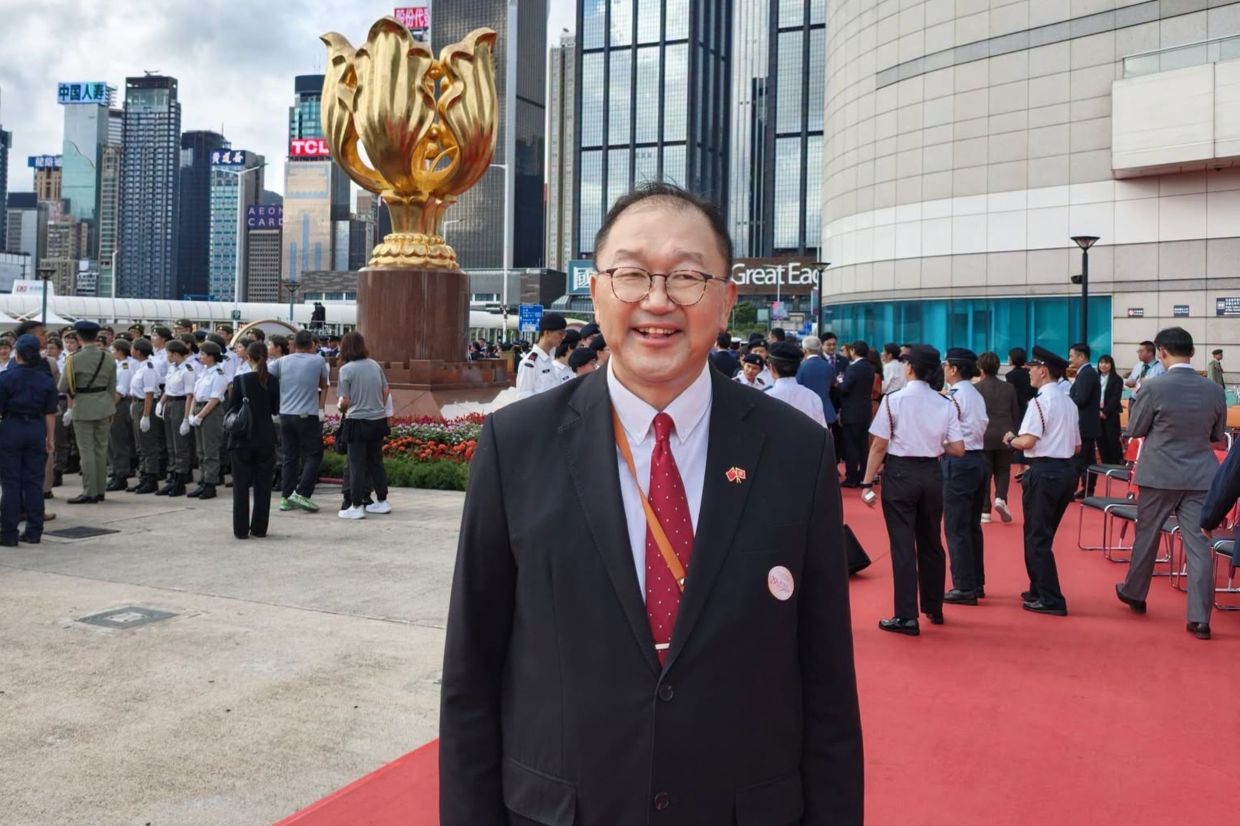
William Wong Kam-fai, a 66-year-old Hong Kong legislator, has become the first member of the Legislative Council to step down over a scandal in more than two decades, following his arrest on suspicion of drink-driving and involvement in a hit-and-run incident. His resignation announcement on Friday came just days after his detention on Monday evening, when he allegedly lost control of his vehicle near a staff residence and collided with two parked cars at approximately 10.46pm. The swift move marks a rare moment of political accountability in Hong Kong's legislative landscape and raises questions about governance standards and public expectations of elected officials.
In a brief statement, Wong expressed remorse for the distress his actions had caused to both the community and the Legislative Council itself. He emphasised that his decision to resign from all positions within the legislature took effect immediately, citing the need to prevent further disruption to the institution's operations. Wong also requested public understanding regarding his limited ability to comment further, pointing to the ongoing police investigation as the reason for his restraint. Despite stepping back from his legislative duties, he pledged to continue contributing to Hong Kong's development through other channels and future roles.
Legislative Council President Starry Lee Wai-king formally acknowledged Wong's resignation letter and thanked him for his service to the council and contributions to the territory. The acceptance of his resignation represents an institutional acceptance of his departure without apparent contention, suggesting a measured response to what many observers have characterised as a serious breach of public trust. Beyond his role as legislator, Wong also held membership in the Chinese People's Political Consultative Conference, a significant advisory body at the national level, raising the question of whether his resignation from that position would follow.
Political analysts and former officials have largely endorsed Wong's decision as the most prudent course of action available to him. Lau Siu-kai, a consultant at the semi-official Chinese Association of Hong Kong and Macau Studies think tank, characterised the resignation as strategically necessary to minimise reputational damage to both the individual and the legislature. He suggested that retaining the seat could have invited criticism that undermined the principle of patriots administering Hong Kong, a politically sensitive consideration in the post-2020 governance environment. By resigning promptly, Lau argued, Wong served the broader interests of institutional stability and public harmony.
Tam Yiu-chung, Hong Kong's former representative to the National People's Congress Standing Committee, similarly defended the resignation as appropriate given the gravity of the incident and the elevated standards expected of legislators. He indicated that the loss of Wong's seat would not substantially impair the council's functioning, since Wong represented the Election Committee constituency rather than a functional constituency designed to represent specific economic or professional sectors. This distinction matters operationally because it affects the perceived representational impact of his departure and influences calculations about whether a by-election would be necessary or cost-effective.
The question of whether Wong's seat will be filled through a by-election remains uncertain and rests with the government's discretion. There is no legal mandate requiring a by-election to replace departing legislators, and previous practice suggests that financial considerations and remaining time on a term can influence such decisions. The most recent precedent came when Stephen Wong Yuen-shan, also an Election Committee constituency representative, departed in late 2022 to lead a government think tank, leaving his seat vacant for approximately three years without a by-election. Constitutional Affairs Minister Erick Tsang Kwok-wai indicated during a 2024 Legislative Council session that budgetary prudence would be weighed in such determinations.
Wong's resignation represents a significant departure from recent Hong Kong legislative history, as the last legislator to resign over a scandal was Gary Cheng Kai-nam, who stepped down shortly after being elected in September 2000. Cheng's case involved far more serious allegations, including failure to disclose business connections, passing confidential government documents to a private contact, and engaging in an extramarital affair. He was subsequently convicted of bribery, misconduct in public office, false accounting, and theft, receiving an 18-month prison sentence in 2001. The comparison underscores the rarity of resignation over scandal in Hong Kong's legislative system and suggests that voluntary departure remains exceptional even when circumstances warrant it.
Beyond his legislative role, Wong held positions as an academic and administrator in various organisations, and the University of Hong Kong confirmed that it had immediately suspended him from administrative duties pending the outcome of police investigations. The university issued a statement expressing concern about the incident and emphasising its commitment to high standards of professional conduct and ethics among staff members. This institutional response reflects broader concerns about maintaining public confidence in the governance and leadership of key organisations, a priority that transcends partisan political considerations.
For Malaysian and regional observers, Wong's case offers instructive lessons about institutional response to ethical breaches by elected officials. While voluntary resignation remains comparatively rare in many Asian legislatures, the acceptance of Wong's departure without apparent political struggle suggests that even in systems with concentrated executive power, reputational concerns can motivate individual accountability. The incident also highlights the tension between maintaining legislative capacity and maintaining public trust, a balance that governments across Southeast Asia must navigate as demands for transparency and ethical governance intensify among increasingly educated and politically engaged populations.

