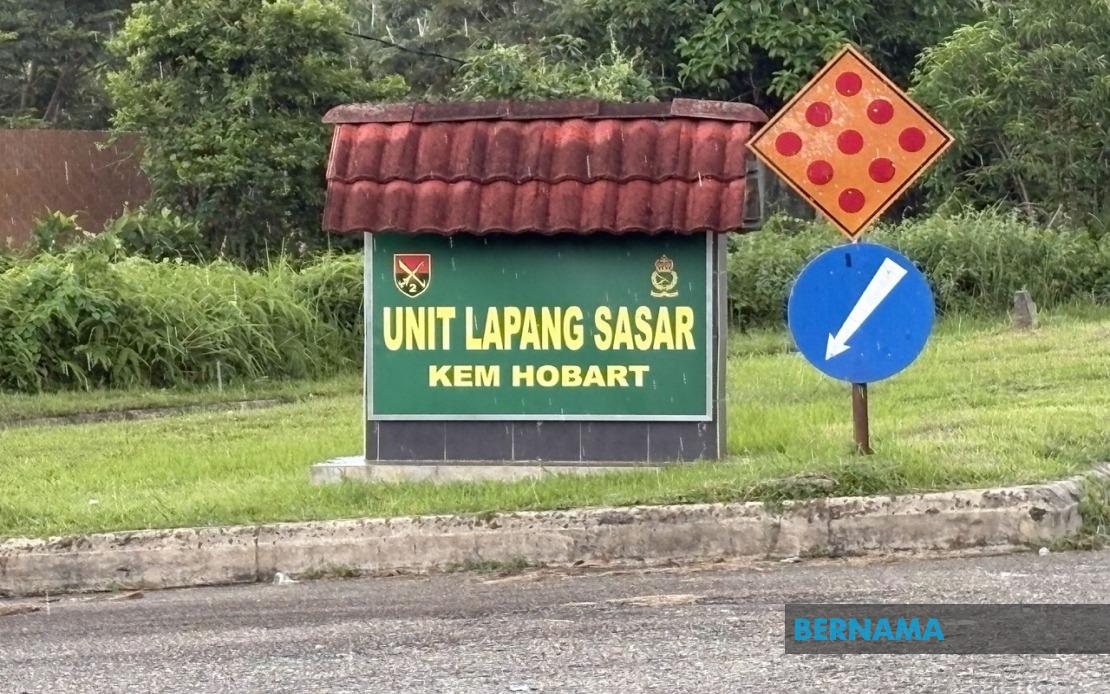
The Defence Ministry has concluded that a premature release of the grenade's safety lever caused the explosion at Kem Hobart in Gurun, Kedah on June 16 that claimed the lives of two Malaysian Armed Forces personnel. Defence Minister Datuk Seri Mohamed Khaled Nordin announced the findings of the Board of Inquiry investigation on July 24, revealing that the explosive device activated before the throwing motion could be completed, with the blast occurring while the grenade remained in proximity to the upper bodies of both service members engaged in the training exercise.
The investigation's conclusions rested on three pillars of evidence: the precise location where the explosion occurred at the training ground, the physical evidence gathered from the scene itself, and detailed analysis of the injury distribution patterns exhibited by the two victims. The thrower sustained severe injuries concentrated on the head and right hand region, while the handler suffered significant trauma to the head, torso and left limbs—wound patterns consistent with a detonation originating from within arm's reach rather than at a distance.
Despite the comprehensiveness of the inquiry, investigators faced a significant limitation in their ability to pinpoint the exact moment when the safety lever became disengaged. Mohamed Khaled acknowledged that the complete absence of eyewitnesses at the moment of detonation prevented the BOI from determining whether the lever released during the handling phase, at the moment of initiation, or during the throwing motion itself. This gap in the investigative record reflects a broader challenge in accident reconstruction when an incident occurs with no observers present.
The Board of Inquiry was formally established on June 17, just one day after the tragedy, and launched an immediate and multi-layered investigation across several hierarchical levels of Army command. The inquiry examined technical specifications and mechanical properties of the grenade itself, scrutinised adherence to established procedural protocols, and gathered testimonies from witnesses involved in supervising and conducting the training exercise. This comprehensive approach attempted to address not only the mechanical failure but also any procedural or supervisory shortcomings that may have contributed to the incident.
Standard grenade-throwing training at Malaysian Armed Forces facilities incorporates multiple redundant safety systems designed to prevent accidental detonation. Mohamed Khaled elaborated on these safety architecture layers, explaining that grenades maintain protective mechanisms in the form of clips, pins and safety levers that work in sequence. The explosive charge remains inert until the safety lever is released by the user's hand; once disengaged, the fuse ignites and the device detonates after approximately five seconds, allowing a trained soldier sufficient time to throw the grenade to its intended target or seek cover.
The tragedy represents a rare but consequential failure within this safety framework. While such incidents are uncommon in professional military training environments, they underscore the inherent risks associated with live explosive training. The incident has drawn focus to whether the current safety protocols, while theoretically robust, require additional safeguards or procedural modifications during the execution phase of training.
In response to the BOI findings, the Defence Ministry and Malaysian Armed Forces command have committed to strengthening the architecture surrounding grenade handling and deployment training. Mohamed Khaled announced that enhanced safety procedures and revised grenade-handling protocols would be implemented across training facilities. The measures also include increased levels of supervision during explosive exercises and more rigorous adherence to training execution standards, signalling an institutional response aimed at preventing recurrence of similar incidents.
The commitment to safety reinforcement reflects recognition that while equipment and procedures can be refined, the human factors involved in high-risk training remain critical. The Defence Minister emphasised that personnel safety constitutes a non-negotiable priority within the MAF training framework, and that no training objective justifies compromising on safety compliance or supervision standards. This positioning suggests that the institution may be reconsidering the risk-reward calculus of live grenade training, particularly regarding the intensity of supervision and the protocols governing handling and initiation phases.
For the broader Malaysian defence establishment, the incident and subsequent investigation serve as a reminder of the operational hazards inherent in maintaining military readiness. Training-related fatalities, though statistically uncommon in professional armed forces, carry disproportionate impact both in terms of institutional morale and public confidence in military safety management. The Defence Ministry's transparent disclosure of investigation findings and commitment to procedural reform demonstrates an attempt to address public concern while maintaining confidence in MAF training standards.
The investigation's findings also have implications for similar training programmes across Southeast Asia. Countries conducting grenade training with comparable equipment and protocols may review their own safety measures in light of the Kem Hobart incident. The specific conclusion regarding premature safety lever release may prompt regional military establishments to examine whether existing safety mechanisms are adequate or whether additional design modifications or training innovations could further reduce incident risk.
Moving forward, the Defence Ministry's focus will centre on translating these investigation conclusions into concrete operational changes. Implementation of enhanced protocols will require coordination across Army commands, training facility operators, and personnel responsible for instruction supervision. The effectiveness of these reforms will ultimately be measured by whether similar incidents can be prevented through a combination of improved procedures, heightened supervision, and sustained commitment to safety culture within the armed forces.

