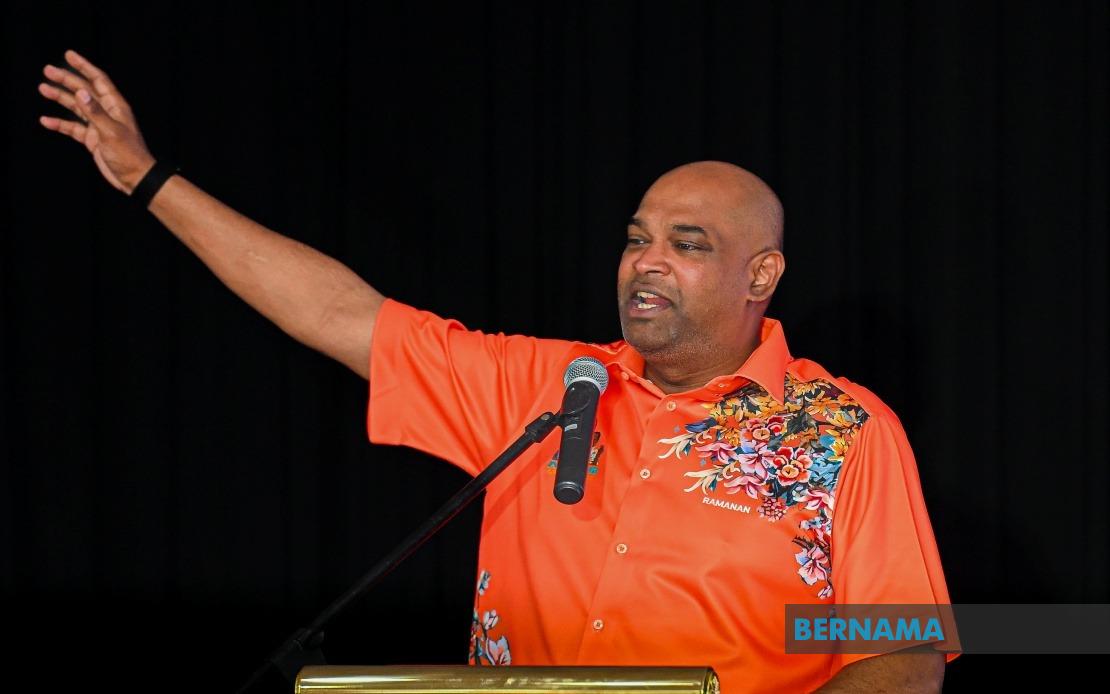
The Malaysian government has channelled over RM12 million to advance the Indian community's development, targeting vulnerable households and religious institutions across the country. Human Resources Minister Datuk Seri R.Ramanan announced the funding allocation during an official ceremony in Seremban on July 7, marking a significant push under the Malaysia MADANI initiative to create inclusive opportunities for marginalised segments of the Indian population. The funds represent a two-pronged approach addressing both foundational education and institutional strengthening within temple-centred community networks.
The Early Education Subsidy Assistance Programme, known as Celik MADANI 2026, accounts for RM8.87 million of the total disbursement and will reach 3,612 Indian children from economically disadvantaged households through participating kindergartens. The scheme operates across 162 such institutions nationwide, reducing financial barriers that traditionally exclude lower-income families from quality pre-primary education. For Malaysia, where early childhood development remains unevenly distributed across socioeconomic lines, this targeted intervention addresses a critical gap in human capital formation during formative years. The subsidy model recognises that educational disparities often begin before primary school entry, with disadvantaged children lacking exposure to structured learning environments that prepare them for formal education.
Complementing the education initiative, RM3.36 million has been allocated through the Third Series of Dharma MADANI Programme to support 168 Hindu temples nationwide. This component underscores recognition that religious institutions serve as vital social anchors within Indian communities, functioning beyond purely spiritual roles to coordinate welfare activities, cultural preservation, and community engagement. Each participating temple receives RM20,000 to implement programmes designed to strengthen community bonds and deliver tangible benefits to congregants. The approach reflects a pragmatic understanding that temple networks possess established trust relationships and logistical capacity to reach dispersed community members effectively.
Minister Ramanan emphasised that the allocations embody the government's broader commitment to institutional empowerment as a pathway toward sustainable community development. Rather than direct cash transfers alone, the funding strategy prioritises strengthening the organisations that communities already depend upon, creating multiplier effects through enhanced institutional capacity. This philosophy aligns with Malaysia MADANI's stated objective of fostering inclusive prosperity, though it places considerable responsibility on participating institutions to translate funding into meaningful community outcomes. The success of such programmes ultimately depends on institutional governance, programme design, and transparent accountability mechanisms.
The Dharma MADANI Programme has now reached a cumulative allocation of RM12.54 million across three disbursement phases, supporting 627 Hindu temples throughout Malaysia. This progressive scaling suggests sustained government commitment to temple-based community development, though it also indicates that substantial portions of Malaysia's approximately 800 registered Hindu temples may still lack similar support. The RM20,000 per-temple allocation, while meaningful for grassroots activities, must stretch across diverse programmes from educational support to welfare assistance and cultural initiatives. Understanding how temples prioritise these funds provides insight into community-identified priorities versus government programme objectives.
The South Zone ceremonial distribution at Wisma Ceylonese involved direct disbursement to 48 temples and 45 kindergartens in Melaka, Negeri Sembilan, and Johor, totalling nearly RM3 million. This regional focus underscores geographic variation in Indian population concentrations and institutional networks. The South Zone encompasses areas with significant Indian demographics, particularly in Johor's plantation and urban sectors and Selangor's industrial regions, making it a logical target for pilot or expanded implementation. The presence of Transport Minister Anthony Loke, whose Seremban constituency encompasses the event venue, reflects the intersection of developmental initiatives with political constituencies.
For Malaysian policymakers, this funding model demonstrates a strategy for targeted community empowerment that avoids universal subsidies while directing resources toward measurable beneficiary populations. The Celik MADANI parameters—specifying B40 household qualification and kindergarten-age children—create clear targeting criteria, though implementation challenges around verification and potential exclusion errors require ongoing monitoring. Similarly, temple-based distribution mechanisms raise questions about equitable access among community members and the capacity of religious institutions to serve non-congregant populations who might equally require support.
The initiative carries implications for Malaysia's broader intercommunal dynamics and social cohesion objectives. By visibly investing in specific community institutions, the government signals recognition of Indian community concerns around educational access and institutional sustainability. However, the allocation also reflects a demographic reality: India-origin Malaysians constitute approximately 1.1 million people or roughly 3.5 percent of the national population, making targeted programmes distinct from universal welfare provisions. The effectiveness of community-specific funding in advancing national integration versus potential perceptions of patronage depends significantly on communication, transparency, and complementary programmes across all communities.
Minister Ramanan's statement regarding transparent and effective disbursement addresses a perennial concern with government allocations to community institutions, particularly where accountability structures remain opaque. MITRA, as the coordinating unit, bears responsibility for monitoring fund utilisation and ensuring community outcomes align with programme objectives. The absence of publicly available evaluation frameworks or community feedback mechanisms represents a potential oversight in the initiative's design, limiting external oversight and learning opportunities from implementation experiences.
Moving forward, several questions merit attention from policymakers and community stakeholders. How are participating kindergartens and temples selected, and what prevents geographic concentration in urban areas or politically favourable regions? What mechanisms track beneficiary outcomes, particularly regarding kindergarten graduates' transition to primary education and retention in school systems? Do the RM20,000 temple allocations undergo community-level assessment or only administrative verification? These implementation details determine whether the initiative generates genuine capabilities within communities or primarily serves as a transfer mechanism with limited transformative impact.
The RM12 million injection represents meaningful government support, yet perspectives within the Indian community may vary regarding priorities. Some may prioritise higher education scholarships or vocational training for youth transitioning beyond school, while others emphasise temple operational sustainability or elderly welfare programmes. The Dharma MADANI formula, allowing temples discretion in programme design, provides flexibility but requires strong institutional governance to translate funding into equitable community benefits. Success ultimately hinges not merely on fund allocation but on how well participating institutions mobilise these resources to address community-identified development challenges and strengthen social resilience.

