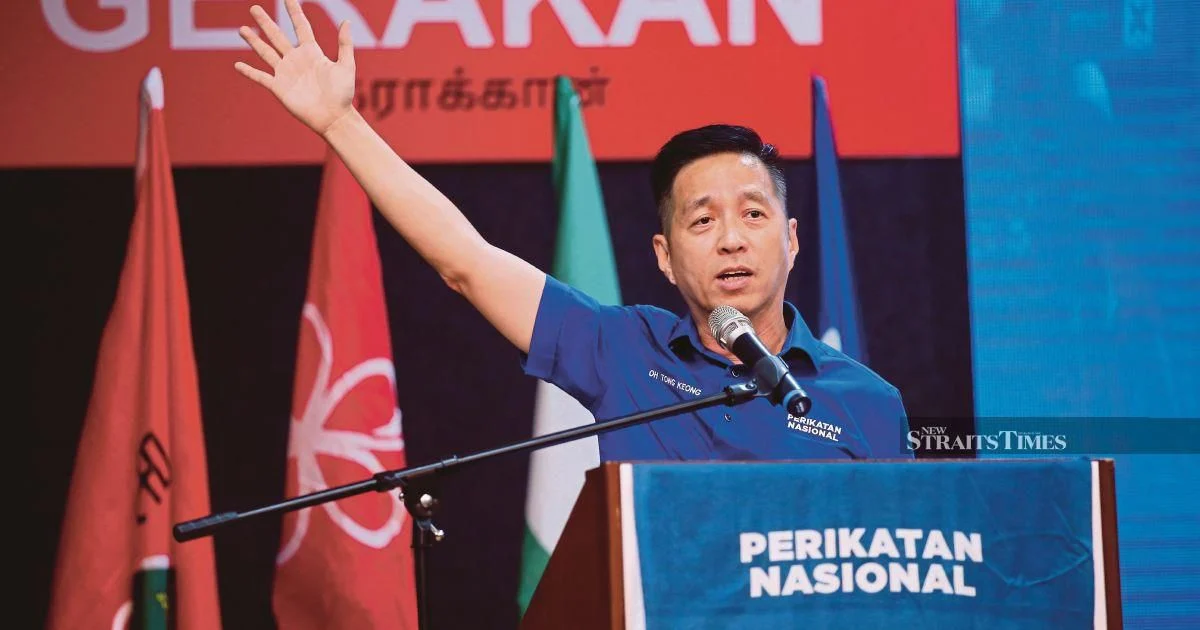
The Malaysian Democratic Party (Gerakan) has made a strategic withdrawal from contesting the upcoming Johor state election, redirecting its organisational focus to supporting the component parties of the Perikatan Nasional (PN) coalition instead. Party election director Oh Tong Keong announced the decision, marking a significant realignment of the party's electoral priorities in Malaysia's second-largest state by population.
The move reflects broader coalition dynamics within Perikatan Nasional, the federal ruling alliance that came to power following the 2022 general election and subsequent political negotiations. By stepping back from direct electoral competition in Johor, Gerakan signals its commitment to maintaining internal coalition cohesion while managing the practical realities of fielding candidates across multiple states. This approach allows the party to concentrate its limited organisational resources and financial capacity where it can have the greatest strategic impact.
Gerakan's decision carries particular weight given Johor's electoral significance within Malaysian politics. As a state that has historically influenced national political trajectories and commands substantial parliamentary representation, contests there typically draw intense party resources and public attention. The state has long been a battleground between major coalitions, with results often serving as bellwethers for national sentiment and coalition stability.
For Perikatan Nasional, Gerakan's strategic repositioning provides a clearer field for its primary component parties to pursue their own electoral ambitions without internal party competition fragmenting the vote. This arrangement potentially strengthens PN's ability to present a unified slate of candidates across Johor's constituencies, reducing the risk of split votes that could benefit opposition parties. The decision also demonstrates how smaller coalition members navigate their roles within larger political alliances, particularly when facing resource constraints.
The timing of Gerakan's withdrawal reflects the ongoing flux within Malaysian coalition politics. Since the 2023 Johor state election, various coalitions have jostled for position, with component parties regularly reassessing their strategic positioning. For smaller parties like Gerakan, such calculations involve weighing electoral viability in specific states against maintaining positive relations with coalition partners who may control greater political patronage and resource distribution.
Gerakan's history in Malaysian politics provides context for understanding this decision. Once a major political force with substantial parliamentary representation, the party has gradually declined in electoral fortunes over recent decades, necessitating careful strategy regarding where it commits its dwindling organisational capacity. By focusing on support roles rather than direct electoral competition, the party effectively protects its political credibility while remaining visible within the coalition framework.
For Malaysian voters in Johor, Gerakan's withdrawal simplifies the electoral landscape by reducing the number of candidates on ballots, though it also means fewer options for those who traditionally supported the party. Voters previously inclined toward Gerakan will likely be encouraged to direct their support toward PN component parties, particularly those aligned with Gerakan's political positioning on moderate policies and community engagement.
The announcement also reflects practical considerations around campaign resources. Mounting effective electoral campaigns demands substantial funding, trained volunteers, and media infrastructure. Smaller parties increasingly find that concentrating resources on supporting coalition partners' campaigns, rather than running parallel campaigns, yields better electoral outcomes and preserves internal coalition relationships.
Within Perikatan Nasional, this move may influence how other component parties calibrate their own electoral participation. If successful, Gerakan's approach of prioritising coalition unity over solo electoral ambitions could set a template for other minor coalition members facing difficult decisions about resource allocation and electoral viability.
The broader implications extend to Malaysian coalition politics generally. The willingness of coalition members to subordinate individual party interests to collective coalition goals has increasingly become a defining characteristic of competitive Malaysian politics. Gerakan's decision exemplifies this trend, where parties recognise that electoral success often depends less on individual party strength and more on effective coalition coordination and internal discipline.
For the upcoming Johor election, PN's component parties will now benefit from Gerakan's institutional support, including potentially allowing party volunteers and networks to assist other candidates. This behind-the-scenes coordination, while less visible than direct electoral competition, can significantly influence campaign effectiveness and voter mobilisation efforts across the state's constituencies.
Gerakan's decision ultimately reflects the maturation of Malaysian coalition politics, where medium and smaller parties increasingly recognise that direct electoral competition within friendly coalitions often produces pyrrhic victories. By strategically withdrawing from Johor while maintaining political relevance through coalition support, Gerakan demonstrates political pragmatism suited to contemporary Malaysian electoral realities where coalition strength increasingly determines government formation and policy influence.

