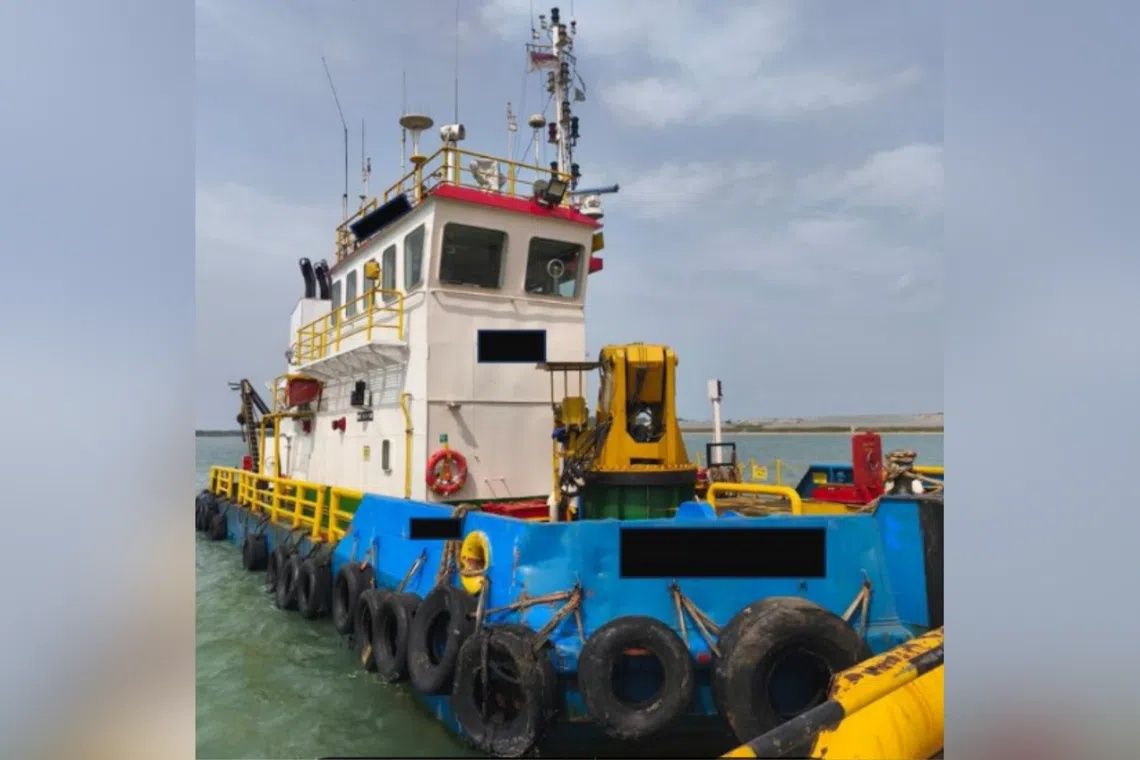
Singapore authorities have arrested eight crew members from a tugboat operating in waters off Tuas following a predawn investigation into the theft and illegal sale of marine gas oil. The suspects, whose ages range from 25 to 54, are scheduled to face charges in court on Friday, August 14. Police Coast Guard officers discovered the alleged theft during a routine inspection of the Singapore-registered vessel at approximately 1.05am on August 13.
Initial inquiries by law enforcement revealed a coordinated scheme in which the crew members misappropriated marine gas oil reserves held on the tugboat, acting without their employer's knowledge or authorisation. According to police statements, the stolen fuel was valued at approximately S$10,570 and subsequently sold through illicit channels, with the proceeds distributed among the accused individuals for personal enrichment. The systematic nature of the alleged transaction suggests a planned operation rather than opportunistic theft, raising concerns about potential networks engaged in fuel smuggling within regional waters.
The charges against the eight men relate to theft by servant of property in possession of master, an offence specifically designed to address breaches of trust by employees who misappropriate assets entrusted to their employer's care. This legal framework reflects Singapore's stringent approach to internal theft by workers in positions of responsibility, particularly within maritime industries where large quantities of valuable commodities are regularly transported. Conviction on these charges carries substantial penalties, including potential imprisonment for up to seven years and monetary fines, underscoring the gravity with which authorities treat such breaches.
The incident exposes vulnerabilities in maritime security protocols along busy shipping corridors in Southeast Asia. Tugboats, which constitute a significant portion of the region's maritime workforce, operate continuously in challenging conditions and often operate with minimal direct oversight during night shifts. The theft occurred during predawn hours when visibility is limited and crew supervision is typically reduced, suggesting perpetrators deliberately selected conditions conducive to undetected criminal activity. This pattern reflects broader challenges facing regional ports and coastal enforcement agencies attempting to prevent cargo diversion in high-traffic waters.
Marine gas oil, a refined petroleum product widely used as fuel in maritime vessels and industrial applications, represents a significant commodity within Singapore's petrochemical industry. The relatively modest value of the stolen cargo in this instance—S$10,570—masks a concerning trend. Systematic small-scale theft of fuel by crew members can accumulate substantially over time, and individual incidents often indicate larger smuggling networks operating across the Strait of Malacca and surrounding waters. The recovery of this particular theft therefore provides investigators with potential leads into broader illicit trading operations.
Singapore's response to maritime crime reflects its strategic position as a global shipping hub and major fuel bunkering centre. The nation's authorities maintain extensive surveillance and enforcement capabilities throughout territorial waters, deploying specialised units including the Police Coast Guard specifically to intercept smuggling operations and prevent theft. Despite these efforts, the persistence of such incidents demonstrates the ongoing challenge of securing assets within a maritime environment characterised by numerous vessels, complex ownership structures, and limited visibility across vast areas of water.
For Malaysia and other Southeast Asian nations, this case carries particular significance given overlapping jurisdictional concerns and the regional movement of fuel products across porous maritime boundaries. The Strait of Malacca remains a critical chokepoint for global trade, with thousands of vessels transiting annually. Fuel theft by crew members creates security risks extending beyond individual companies to encompass broader maritime stability and environmental protection. Stolen marine fuel entering unregulated supply chains can lead to environmental contamination and undercut legitimate fuel markets across the region.
The incident also underscores evolving criminal methodologies within maritime industries. Rather than large-scale piracy or cargo hijacking, contemporary maritime crime increasingly involves insider schemes leveraging crew access and intimate knowledge of vessel operations. This shift requires adjustments in enforcement strategies, including enhanced vetting of maritime personnel, improved cargo tracking systems, and stronger cooperation between shipping companies and law enforcement agencies. Regional authorities including those in Malaysia would benefit from implementing similar protocols to strengthen maritime security.
Police statements emphasised the seriousness with which Singapore approaches illegal fuel transactions within territorial waters, signalling deterrent messaging toward potential offenders. The authorities indicated commitment to intensified enforcement and security operations designed to prevent, discourage, and identify illicit maritime activity. This proactive stance reflects recognition that maritime crime threatens both economic interests and security imperatives. For regional stakeholders, the takeaway extends beyond individual criminal cases to encompass broader implications for supply chain integrity and coastal security cooperation across Southeast Asia.

