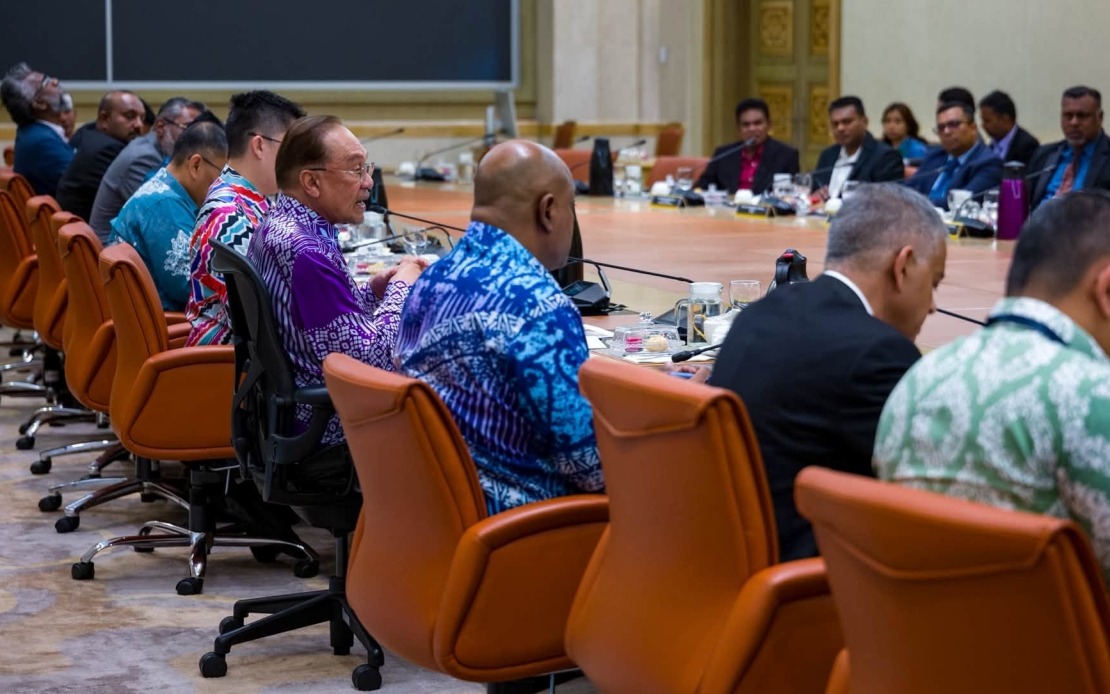
Prime Minister Datuk Seri Anwar Ibrahim has outlined a comprehensive framework for advancing the Indian community in Malaysia, placing particular emphasis on quality education, robust welfare systems, skills training and accessible employment pathways. Speaking following consultations with Indian community leaders, Anwar articulated a vision centred on ensuring that development opportunities reach those most in need, reflecting his broader commitment to inclusive economic growth across Malaysia's diverse population.
The Prime Minister's remarks come at a time when questions about equitable resource distribution and targeted support for minority communities remain prominent in national discourse. By specifically highlighting education as a cornerstone of empowerment, Anwar acknowledges the well-established link between educational attainment and long-term socioeconomic mobility. Quality schooling provides the foundation for individuals to access better-paying positions, pursue professional qualifications and participate more fully in Malaysia's knowledge economy.
An equally significant element of Anwar's agenda involves strengthening welfare provisions tailored to the Indian community's specific needs. Comprehensive welfare frameworks—encompassing healthcare access, housing assistance, income support for vulnerable groups and elderly care—directly affect living standards and reduce economic stress on struggling households. By integrating welfare into the empowerment strategy, the government acknowledges that education alone cannot address deeply entrenched disadvantage without simultaneous safety-net improvements.
The emphasis on skills development reflects recognition that Malaysia's labour market is evolving rapidly. Traditional employment pathways are narrowing in some sectors whilst demand surges in technical fields, digital industries and service sectors. Targeted training programmes equip Indian Malaysians with competencies valued by employers, increasing their competitiveness and reducing unemployment or underemployment. Such initiatives must address both entry-level qualifications and mid-career advancement opportunities to serve community members at different life stages.
Anwar's directive to the Malaysian Indian Transformation Unit (MITRA) and related agencies signals an expectation of greater operational intensity at community level. Rather than top-down policy implementation, grassroots engagement allows officials to understand lived realities—the specific barriers families face, gaps in service delivery and cultural considerations affecting programme uptake. This approach aligns with contemporary development thinking emphasising participatory governance and community co-design of solutions.
The accountability dimension underscored by Anwar is particularly noteworthy. He explicitly called for verification that initiatives actually benefit intended recipients, implying concern about leakage, inefficiency or misdirection of resources. In a Malaysian context where questions about programme implementation quality periodically surface, such reminders about accountability demonstrate executive concern for rigorous execution and transparent monitoring of government spending.
The Prime Minister's reference to compassion as a guiding principle adds ethical framing to what might otherwise appear as purely technical or bureaucratic exercises. Compassion in policy suggests recognition of dignity, respect for community agency and acknowledgment that statistics represent real people navigating genuine hardship. This framing may also help sustain political will for sustained investment in communities that, whilst historically important to Malaysia, sometimes face reduced policy attention in contemporary national debates.
For the Indian community specifically, these statements carry particular resonance given historical patterns of uneven development. Though substantial portions of the community have achieved middle-class status and professional prominence, concentrations of poverty persist in certain urban and rural areas. Educational disparities, healthcare access gaps and employment discrimination remain measurable challenges, making targeted intervention both economically justified and socially necessary.
The broader Malaysian implications are significant. Anwar's formulation—prioritising education, welfare, skills and employment across one segment whilst emphasising good governance and inclusivity—presents a replicable template for approaching other communities facing development challenges. Whether among rural Malays, indigenous groups, urban poor or other disadvantaged segments, the same four-pillar approach could theoretically apply, suggesting a potential mainstreaming of targeted community empowerment strategies.
Implementation will ultimately determine the impact of these commitments. MITRA and partner agencies must translate executive priorities into concrete programmes with adequate budgeting, skilled personnel, measured outcomes and sustained political support. The real test lies in whether consultation with community leaders translates into substantive policy changes, whether grassroots engagement genuinely shapes programme design, and whether accountability mechanisms actually prevent resources from being misdirected or wasted.
Anwar's articulation of this agenda also reflects his positioning as a leader concerned with social equity alongside economic growth. Rather than viewing community empowerment as peripheral to national development, these statements centre social inclusion as integral to Malaysia's progress. For Indian Malaysians and observers of Malaysian governance, subsequent months and years will reveal whether these carefully articulated priorities translate into visible improvements in educational quality, welfare adequacy, skill-building access and employment outcomes for community members.

