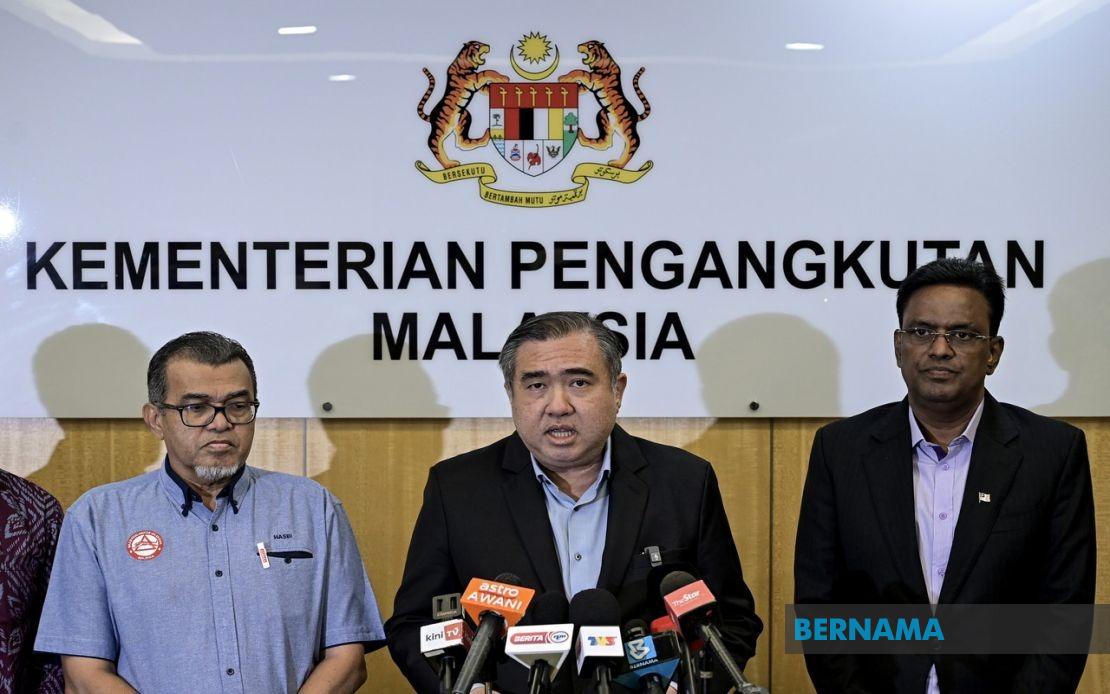
Malaysia's Cabinet has endorsed proposed amendments to the Road Transport Act 1987 that would empower courts to order road offenders to compensate accident victims or their families as a supplementary form of punishment. Transport Minister Anthony Loke announced the in-principle approval on Wednesday, signalling a significant shift toward holding reckless drivers financially accountable for the human and economic consequences of their actions. The government views this mechanism as a critical step in addressing the ongoing burden faced by victims and their families following tragic road incidents.
The proposed framework represents a departure from Malaysia's traditional approach to road safety enforcement, which has historically relied on imprisonment, monetary fines, and driving bans as primary deterrents. Under the new system, compensation would function as an additional layer of accountability rather than a replacement for existing penalties. This means offenders could still face custodial sentences and fines while simultaneously being obligated to reimburse victims for medical expenses, loss of income, funeral costs, and other demonstrable losses arising from the incident.
Crucially, Loke emphasised that compensation amounts would be determined by courts on a case-by-case basis rather than through standardised government formulas. Judicial discretion would consider the gravity of the offence, the extent of injuries or fatalities, documented financial losses borne by victims or their dependents, and the financial capacity of the offender to pay. This approach acknowledges that road accidents vary dramatically in severity and impact, requiring nuanced assessment rather than blanket solutions.
The proposed amendments would apply to a broad spectrum of serious road offences, including driving under the influence of alcohol or drugs, reckless or dangerous driving, and related violations. This scope reflects growing concern about Malaysia's road safety record, which consistently ranks among the worst in Asia. The amendments would complement existing safety measures, particularly the Road Offence Demerit Points System (KEJARA), which the government intends to strengthen concurrently to enhance overall road discipline and reduce accident frequency.
Ministry officials have deliberately constructed the compensation mechanism to avoid interfering with victims' existing legal protections. Those injured or bereaved retain full rights to pursue insurance claims against offenders' policies and to initiate civil lawsuits seeking damages through the courts. The new statutory compensation framework operates in parallel with these channels rather than supplanting them, ensuring that victims maintain multiple avenues for financial recovery.
The road to implementation involves extensive stakeholder engagement before legislative drafting concludes. The Ministry of Transport will conduct detailed consultations with relevant government agencies and the insurance industry, recognising that insurers have substantial operational interests in how compensation orders interact with insurance obligations and claims procedures. Several technical matters remain unresolved, including the precise scope of offences triggering compensation eligibility, formal definitions of serious injury categories, and mechanisms for situations where offenders lack the financial means to satisfy compensation orders.
Loke underscored that the compensation mechanism cannot operate retroactively, meaning only offences committed after Parliament enacts the amended legislation would fall under its purview. This limitation reflects established legal principles preventing legislation from creating new liabilities for conduct that was lawful when performed. The ministry targets the year-end parliamentary sitting for tabling the bill, contingent upon completing both the drafting process and stakeholder engagement phases.
To ensure the legislation receives comprehensive parliamentary scrutiny and broad political support, Loke proposed establishing a special cross-party select committee to examine the bill in depth. This approach signals the government's recognition that road safety commands consensus across political divides and that securing multipartisan backing would strengthen the law's legitimacy and implementation prospects. Such committees typically accelerate legislative progress while building legislative buy-in that extends beyond the governing coalition.
The compensation framework carries significant implications for Malaysia's insurance industry and vehicle owners. Motor insurers will need to adjust claims handling procedures and potentially modify policy terms to accommodate court-ordered compensation obligations. Fleet operators and businesses dependent on vehicle operations face potential exposure to both insurance costs and direct compensation liabilities, potentially incentivising greater investment in driver training and vehicle maintenance as risk management strategies.
For accident victims and bereaved families, the amendments offer tangible recognition of their suffering and material losses. Malaysia experiences thousands of fatal and serious road accidents annually, generating substantial economic costs through medical treatment, lost productivity, and family hardship. By formalising compensation as judicial consequence of serious traffic offences, the government acknowledges these impacts and provides structured pathways for financial accountability beyond abstract criminal punishment.
The initiative also reflects evolving international perspectives on road safety, where compensation mechanisms increasingly complement traditional enforcement approaches. Countries employing similar systems have observed modest improvements in driver behaviour as offenders recognise tangible financial consequences beyond fines. The psychological impact of directly compensating victims may prove more motivating than abstract punishment, particularly when compensation amounts remain substantial relative to offenders' financial circumstances.
Implementing this framework will demand careful calibration across multiple government bodies and the private sector. Courts will require guidance on compensation assessment methodologies, ensuring consistency and fairness across different cases. Law enforcement agencies must accurately document accident circumstances and victim losses to support subsequent judicial determinations. These operational considerations underscore why the ministry has prioritised engagement and detailed technical planning ahead of legislative drafting.

