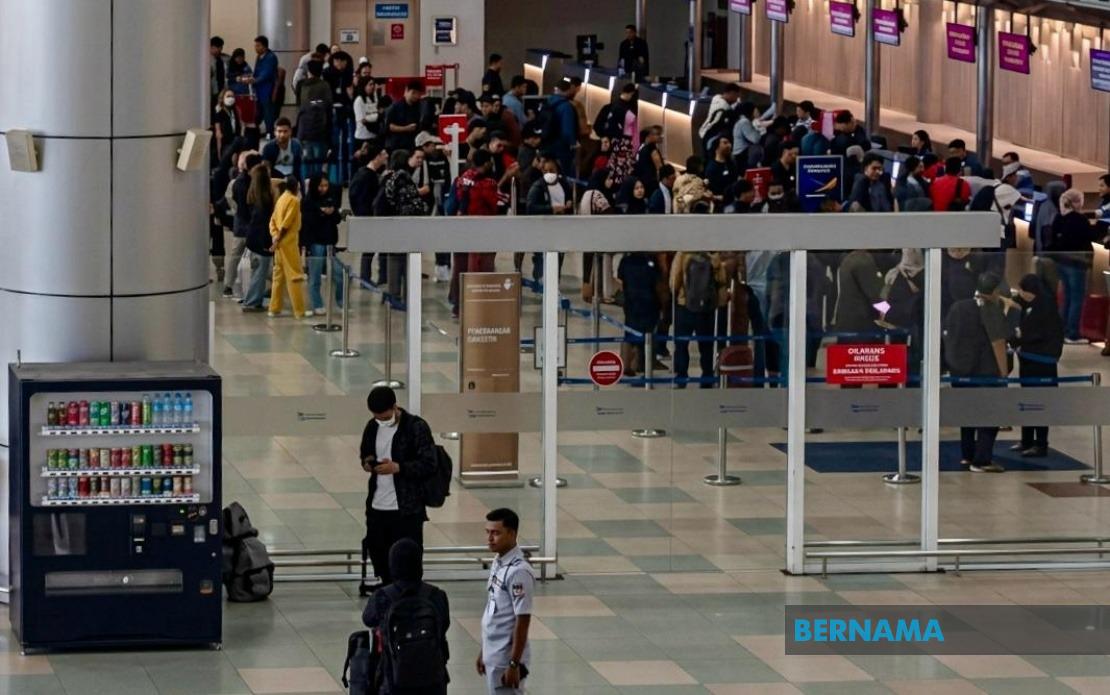
Flight operations at Labuan Airport ground to a halt on June 26 following an emergency closure of its runway after authorities discovered ordnance positioned approximately 150 metres from the runway threshold. The discovery prompted immediate action from both the Royal Malaysian Air Force and airport management, who jointly issued a Notice to Airmen at 5pm to formally suspend all runway activity pending completion of safety inspections.
The formal NOTAM, announced through Malaysia Airport's official channels, provided no timeline for when the runway might reopen. Instead, authorities indicated that operations would resume only after comprehensive inspection protocols concluded and relevant safety clearances were formally issued. This precautionary approach reflects the seriousness with which the authorities are treating the security incident and the potential risks to aircraft and passengers.
The temporary closure immediately cascaded into widespread operational disruptions across the airport's flight schedule. Services connecting Labuan to Miri and Kota Kinabalu faced outright cancellation, while numerous other flights experienced delays, diversions, or schedule modifications. Bernama's monitoring confirmed that at least five scheduled departures—originally timed for 4:05pm, 5:15pm, 6:05pm, 6:15pm, and 7:25pm—were directly affected, with destinations spanning Kuala Lumpur, Kota Kinabalu, and Miri.
For passengers holding tickets on affected services, the disruption created immediate uncertainty about their travel plans. Airlines operating from Labuan faced the challenge of accommodating stranded travellers, rescheduling flights, or arranging alternative transport options. The incident underscored the vulnerability of regional air connectivity, particularly for a smaller hub like Labuan, which handles a significant volume of business and leisure traffic connecting the federal territory to mainland Sabah and beyond.
Labuan's role as a commercial and logistics centre makes its airport critical infrastructure for the region. The facility serves not only routine passenger traffic but also supports the needs of offshore workers, business executives, and tourists visiting the island. A prolonged closure would ripple through the local economy, affecting accommodation providers, ground services, and businesses dependent on reliable air connectivity.
Authorities provided minimal additional detail about the nature of the explosives discovered or the circumstances surrounding their placement. The lack of elaborate explanation suggests either that the investigation was still in preliminary stages or that security considerations precluded immediate public disclosure of sensitive operational details. Such discretion is standard practice in explosive ordnance incidents, where full transparency could compromise ongoing investigative work.
The incident reflects broader security challenges across Southeast Asian aviation infrastructure. While major international hubs benefit from extensive security apparatus, regional airports must balance operational efficiency with robust threat assessment protocols. The swift response from Labuan Airport authorities demonstrated institutional readiness to prioritise safety over schedule adherence, a principle that resonates positively with passenger confidence and regulatory standards.
Passengers and travellers were advised to maintain direct contact with their airlines for current flight status and updated travel arrangements rather than relying on airport notices alone. This guidance proved practical, as different carriers manage rebooking and compensation through their own systems, and real-time coordination with airline customer service remains the most reliable channel for individual assistance.
The incident carries implications for Southeast Asian aviation security more broadly. Regional airports increasingly face the responsibility of maintaining vigilance while managing growing traffic volumes and economic pressures. Labuan's experience serves as a reminder that smaller facilities must maintain equivalent security standards and rapid response capabilities despite their limited scale compared to major transport hubs like Kuala Lumpur International Airport.
The joint operation between the RMAF and civil airport authorities demonstrated institutional coordination in response to the emergency, indicating established protocols for handling security incidents at civilian facilities. Such preparedness reflects years of experience managing various aviation-related challenges across Malaysia's dispersed airport network.
As authorities proceeded with their inspection and clearance procedures, the broader question of the incident's origin and circumstances remained under investigation. Whether the explosives represented ordnance from historical conflicts, a deliberate security threat, or materials related to industrial operations required careful forensic examination by specialist teams.
The resumption of normal operations would depend entirely on inspection findings and official safety certification. Until that point, Labuan Airport would remain partially disabled, serving as a concrete reminder of how swiftly security incidents can disrupt modern air transport infrastructure and the interdependencies linking regional economic activity to uninterrupted aviation connectivity.

