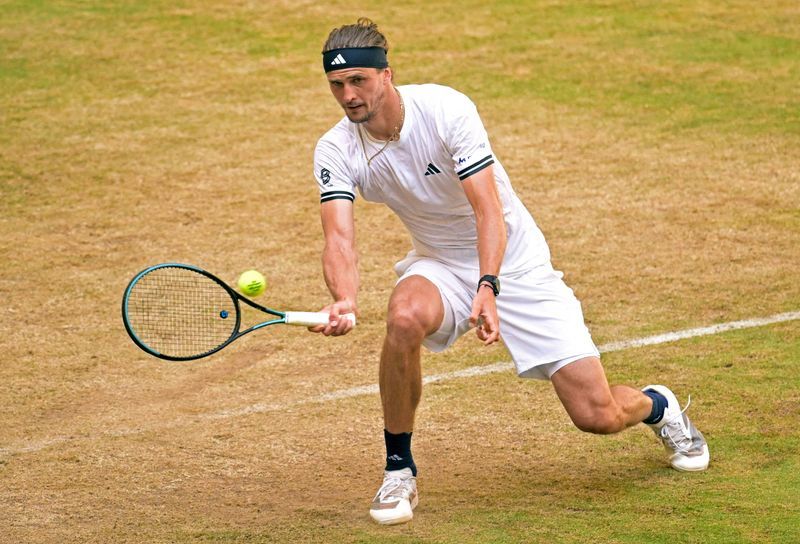
World number three Alexander Zverev has attributed his semi-final defeat at the Halle Open to a malfunction in the glucose monitoring device he relies on to manage his Type 1 diabetes. The German fell to Taylor Fritz in straight sets, 6-7(4) 6-4 7-5, in a match that stretched beyond two and a half hours on Saturday. The loss marked another setback against the American, extending Zverev's recent struggles to six consecutive defeats in their head-to-head matchups.
Zverev explained that the sensor, which he has used since around 2016 or 2017, provided readings so inaccurate that it fundamentally compromised his physical state during the contest. The device indicated his blood sugar levels were dangerously high when they were actually critically low, leading him to inject significantly more insulin than his body required. This miscalculation created a cascade of physiological problems that unfolded across the court and directly impacted his ability to compete at full capacity.
The consequences became apparent almost immediately after play began. During the opening 45 minutes of the match, Zverev found himself forced to consume approximately 350 grams of sugar in a desperate attempt to counteract the effects of the excessive insulin injection. Despite these emergency interventions, he described feeling "absolutely terrible" throughout this period, a sensation that would have been particularly debilitating during intense physical exertion under pressure. The combination of low blood sugar, panic about his physical condition, and the mental distraction of managing a medical crisis mid-match created an environment where competitive performance was nearly impossible to sustain.
Yet even in acknowledging the physical obstacles he faced, Zverev demonstrated sportsmanship by recognising that Fritz earned his victory fairly. He noted that while he fought hard and gave maximum effort within the constraints of his compromised physical state, the American ultimately executed better tennis and deserved the win. This perspective reflects the professionalism expected at elite levels of sport, where athletes understand that external factors, while influential, do not negate the superior play of their opponents.
Zverev's experience highlights the particular vulnerability of athletes with chronic conditions who must manage their health while competing at the highest levels of professional sport. Type 1 diabetes requires constant monitoring and adjustment, and the reliance on technological aids means that any equipment failure carries not merely performance implications but potential medical risks. At the Halle tournament, a prestigious grass-court event that traditionally precedes Wimbledon, the stakes were substantial, making the timing of this malfunction particularly unfortunate.
The 27-year-old has been open about his diabetes management throughout his career, using Medtronic technology to help regulate his glucose levels both on and off the court. This transparency has made him an important figure for athletes and fans living with similar conditions, demonstrating that elite professional performance remains achievable even with significant health management demands. His public discussion of the Halle incident maintains that advocacy while also illustrating how technology failures can have outsized impacts on athletes who depend on such devices.
What distinguishes this incident as noteworthy is its rarity in Zverev's experience. In nearly a decade of relying on this particular sensor technology, he indicated this represents the first instance of such a significant malfunction. The magnitude of the error—providing readings in entirely the wrong direction rather than minor fluctuations—suggests not a typical sensor drift but a fundamental system failure. This unprecedented nature adds credibility to his account and raises questions about the reliability margins built into medical devices used in high-stress professional environments.
Looking forward, Zverev expressed confidence that the sensor malfunction would not present ongoing concerns as the tennis calendar moves toward the sport's grass-court season. Wimbledon, scheduled to run from June 29 to July 12, represents the immediate focus for top players, and Zverev indicated he had no apprehension about competing there. This suggests either that the defective device has been replaced or that he has identified the specific technical issue and resolved it, allowing him to return to his customary level of preparation and confidence.
The broader significance of this situation extends beyond a single match result. For Southeast Asian readers and others following professional tennis globally, Zverev's experience underscores how modern elite sport intersects with medical technology and personal health management. It demonstrates that even world-class athletes with comprehensive support systems remain vulnerable to equipment failures and that managing chronic conditions while pursuing elite athletic goals requires not only physical and mental resilience but also reliable technological infrastructure. As sports medicine and athlete health monitoring continue to evolve, the Halle incident serves as a reminder that the human dimension of sport remains paramount, and that sometimes the outcome of major matches can hinge on factors entirely beyond an athlete's control.

