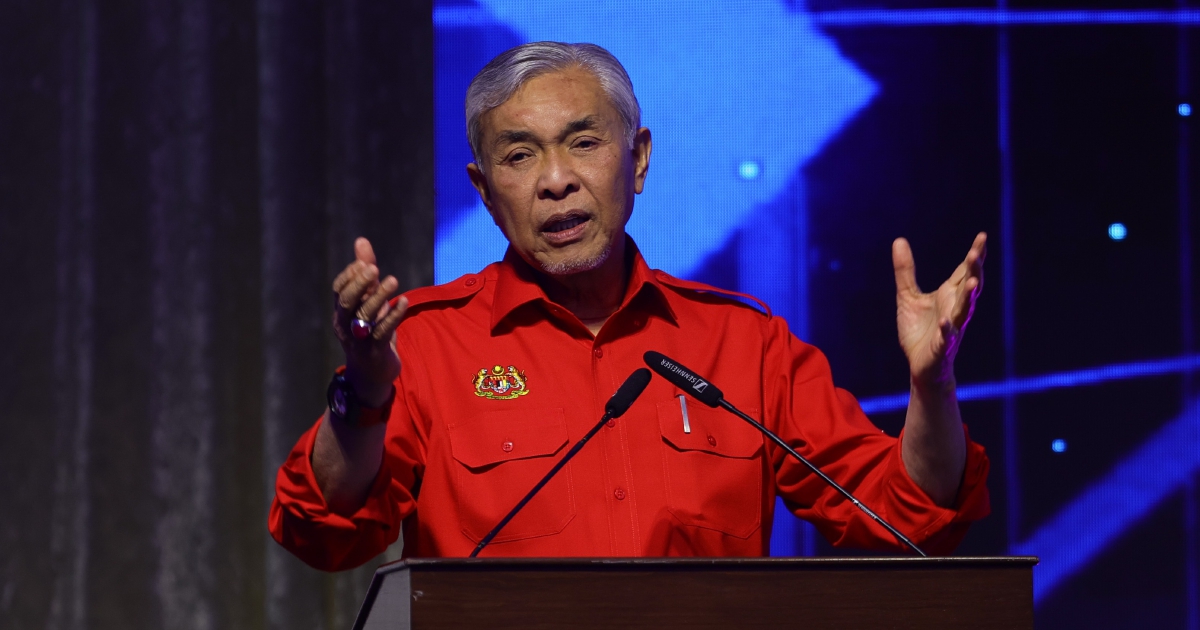
Datuk Seri Dr Ahmad Zahid Hamidi, steering the Barisan Nasional coalition, has publicly affirmed that Prime Minister Datuk Seri Anwar Ibrahim holds the prerogative to remove ministers affiliated with BN from their posts if their performance fails to meet government standards. Speaking in Seremban, the BN chairman's remarks underscored the hierarchical authority vested in Malaysia's chief executive, while simultaneously reflecting the delicate balance of power within the ruling coalition that has governed the nation since 2022.
Zahid's statement carries significant implications for coalition governance in Malaysia. The BN, traditionally a heavyweight political bloc commanding substantial parliamentary representation, has seen its role shift considerably following the 2022 general election, when it entered government as a junior partner to Anwar's PKR-led Pakatan Harapan alliance. This arrangement has required careful navigation of ministerial appointments and performance expectations across multiple parties with distinct organizational structures and leadership hierarchies.
The assertion that dismissal remains an available tool for the Prime Minister reflects established constitutional practice in Westminster-derived parliamentary systems. In Malaysia's governmental framework, the head of government exercises considerable discretion over cabinet composition, subject to broader coalition dynamics and political considerations. However, Zahid's explicit confirmation of this principle carries weight when delivered by a major coalition partner, as it demonstrates alignment between the BN leadership and the Prime Minister's office regarding lines of accountability.
For Malaysian readers, this statement matters because ministerial performance directly influences policy implementation, administrative efficiency, and public service delivery across critical portfolios. Education, defence, finance, health, and infrastructure ministries all operate under specific ministers whose effectiveness determines how government initiatives translate into tangible benefits for citizens. When coalition leadership publicly accepts performance-based removal as legitimate, it theoretically strengthens mechanisms for ensuring accountability at the highest levels of government.
The timing and context of Zahid's remarks merit consideration. Coalition governments globally often experience tensions between parties over cabinet positions and ministerial tenure. By preemptively validating the Prime Minister's authority in this domain, Zahid may be signalling BN's commitment to stable governance and reducing potential friction points. Conversely, the statement could indicate awareness of performance concerns affecting specific ministers, prompting clarification that dismissal remains available should circumstances warrant intervention.
BN's position within the current government coalition involves representation across multiple ministries and significant parliamentary backing. The coalition brings experienced administrative personnel and institutional memory spanning previous administrations. However, this strength also means that removing BN-linked ministers carries political consequences, including potential loss of coalition harmony and resentment among party members passed over for advancement. Zahid's statement, therefore, suggests the BN leadership is willing to accept such consequences if performance issues become severe enough to demand corrective action.
The statement also addresses broader questions about governance priorities within Malaysia's coalitional framework. Emphasizing performance accountability suggests that maintaining effective government and public confidence takes precedence over purely transactional political calculations regarding ministerial appointments. For citizens concerned about governmental efficiency and corruption prevention, this represents a noteworthy positioning by one of Malaysia's major political organizations.
Context matters significantly for understanding these remarks. Malaysia has experienced recurring discussions about ministerial competence, with public debates over specific ministers and their handling of portfolios featuring regularly in media coverage and social discourse. The government faces multiple pressing challenges including economic management, educational reform, healthcare provision, and infrastructure development. Against this backdrop, confirming that underperformance can trigger removal demonstrates responsiveness to public expectations for effective administration.
Southeast Asian observers note that Malaysia's coalition arrangements differ from neighbouring systems, requiring particular attention to intra-alliance dynamics. Indonesia's presidential system, Thailand's evolving political structures, and Singapore's single-party dominance all represent alternative models. Malaysia's multi-party coalition approach demands constant negotiation and compromise, making explicit statements about performance criteria valuable for transparency and reducing misunderstandings among partner organizations.
The constitutional position regarding ministerial appointments in Malaysia reserves substantive authority with the Prime Minister, though practical governance involves consultation with coalition partners, particularly when those ministers belong to specific parties. Zahid's reaffirmation of this principle effectively constrains any future claims by BN members that their positions are guaranteed regardless of performance, establishing clear expectations for ongoing ministerial conduct.
For political analysts, Zahid's statement reflects maturation of Malaysia's post-2022 electoral settlement. The question of how coalitions remain stable while maintaining performance standards has preoccupied Malaysian political observers. This clarification contributes to the ongoing conversation about coalition governance norms and expectations, potentially establishing precedent for how performance-based accountability operates within Malaysia's complex multi-party system.
Moving forward, such statements establish benchmarks against which ministerial performance will be measured. Should the government face situations where ministerial changes become necessary, Zahid's prior acknowledgement of the Prime Minister's authority potentially smooths transitions and reduces claims of procedural impropriety. This represents pragmatic coalition management during a period when effective governance remains crucial for addressing Malaysians' diverse needs and aspirations.

