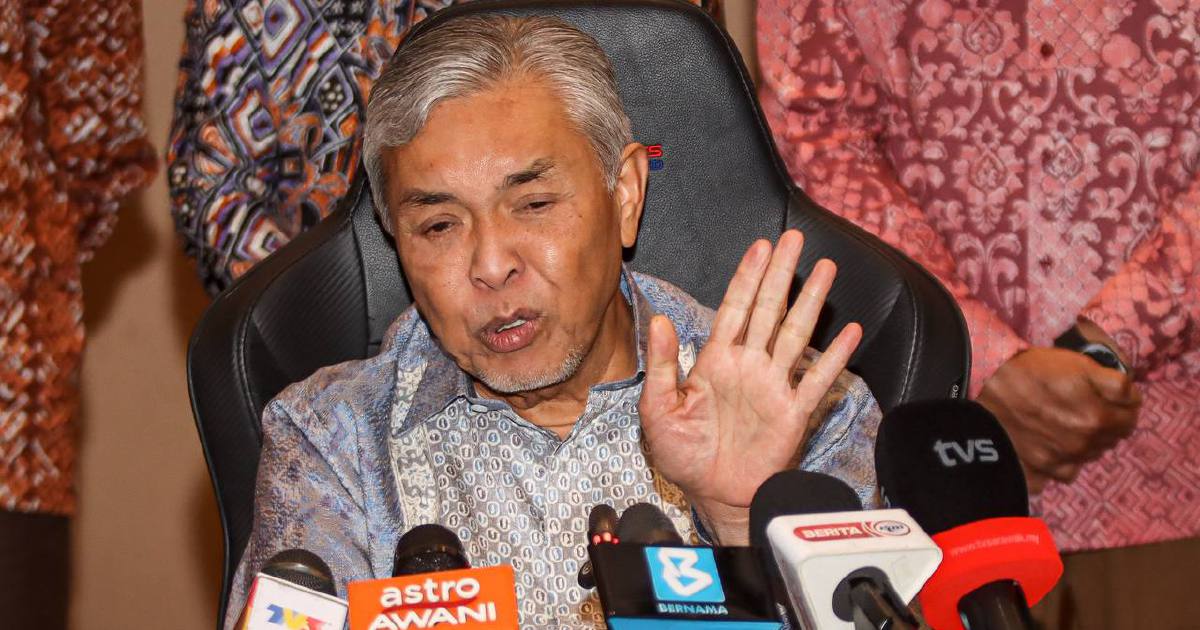
Datuk Seri Ahmad Zahid Hamidi has moved to extinguish persistent speculation about potential moves to destabilise the government, making a clear statement that Barisan Nasional harbours no intentions of removing Prime Minister Datuk Seri Anwar Ibrahim from office. Speaking in George Town, the senior coalition figure underscored that BN remains committed to sustaining the unity government arrangement that has governed Malaysia since 2022, pledging continued support through the remainder of the 15th Parliament's tenure.
The remarks by the Barisan Nasional deputy chairman come at a time when Malaysian political discourse frequently cycles through rumours about the stability of the current administration. Such speculation has become a fixture of the nation's political landscape, particularly given the complex coalition dynamics that emerged following the 2022 elections. Zahid's intervention represents an attempt to provide public reassurance about the solidity of arrangements that have defined recent governance.
The unity government model itself represents an unprecedented configuration in modern Malaysian politics. Forged in the aftermath of the 2022 general election when no single bloc secured an outright majority, the arrangement brought together Pakatan Harapan and Barisan Nasional under Anwar's leadership. This departure from Malaysia's traditional two-bloc competitive framework introduced novel challenges around consensus-building and coalition management across ideologically distinct partners.
Zahid's reaffirmation of commitment gains significance against the backdrop of periodic tensions that naturally emerge within broad coalitions. The integration of parties with different organisational cultures, policy priorities, and historical rivalries creates ongoing pressure points. Yet the public unity stance suggests that at leadership level, the decision to maintain the coalition has been sufficiently reinforced to weather such internal friction.
For Malaysian business and investor sentiment, clarity about governmental stability carries considerable weight. Extended periods of political uncertainty typically trigger capital flight, disrupt policy implementation, and complicate long-term economic planning. Zahid's comments therefore serve a stabilising function beyond mere political theatre, signalling to markets and international observers that the administration retains sufficient internal consensus to function effectively.
The emphasis on honouring the parliamentary term through completion points to an understanding that early dissolution or collapse would trigger another election cycle. Malaysians have experienced sufficient electoral activity in recent years to create genuine weariness about frequent polling. The commitment to see out Parliament's full term may resonate with a public preference for continuity and sustained focus on governance matters rather than perpetual campaign cycles.
Barisan Nasional's positioning within the coalition remains strategically important. As the entity that governed Malaysia for decades before the 2018 electoral upset, BN's participation in the unity government carries symbolic weight about Malaysia's political maturation. The coalition's acceptance of a subordinate role within a broader partnership, rather than pursuing destabilisation to recover paramount authority, suggests pragmatism about electoral mathematics and the fragmented nature of current political support.
The background of these assurances matters too. Zahid himself navigated the complex transition from BN's dominance to coalition participation, and his explicit dismissal of toppling scenarios carries weight precisely because sceptics might otherwise question BN's long-term intentions. By taking the unusual step of directly addressing speculation, he signals that such rumours merit decisive rebuttal rather than dismissive silence.
Regional observers often monitor Malaysian political stability as an indicator of broader Southeast Asian governance trends. Malaysia's ability to sustain coalitions despite structural complexity influences perceptions about democratic resilience across the region. The unity government, whatever its internal tensions, has become a model that other nations with fragmented parliaments might study.
Looking ahead, Zahid's comments establish a clear benchmark against which BN's conduct will be measured. Should fresh speculation emerge, this public commitment provides grounds for questioning whether actions match stated intentions. The leadership has thus created accountability through transparency about its own stated objectives.
For Anwar Ibrahim's administration, such reinforcements from coalition partners remain valuable if not regularly required. The Prime Minister's capacity to command BN support, alongside his PKR base and other Pakatan components, undergirds his authority. Zahid's statement essentially confirms that the scaffolding supporting the current administration remains intact, despite the inevitable strains that emerge within any governing coalition navigating Malaysia's complex social, economic, and political landscape.

