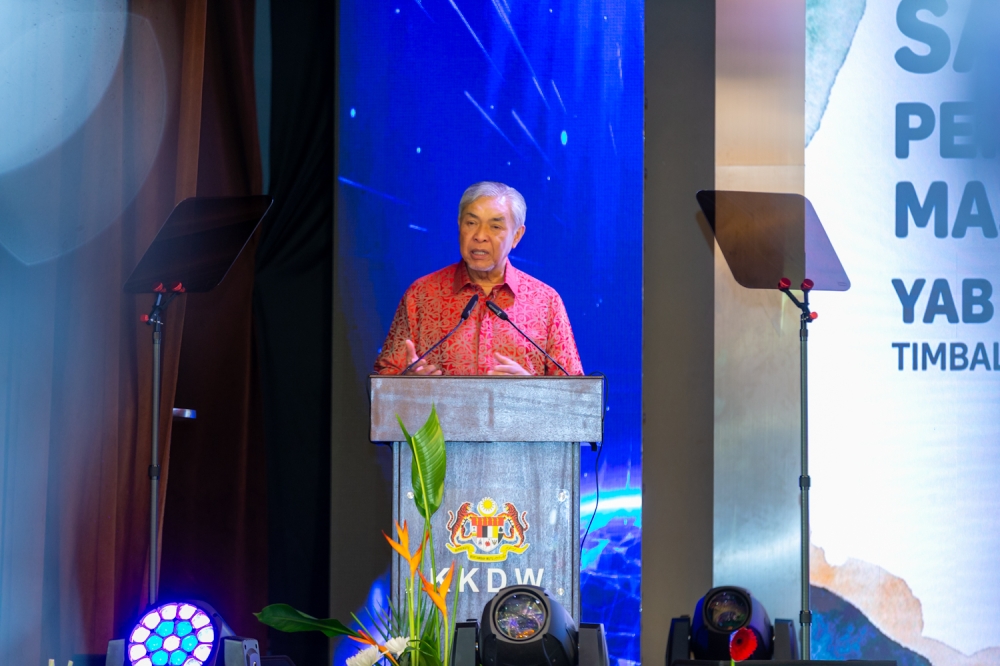
Deputy Prime Minister Datuk Seri Ahmad Zahid Hamidi has moved swiftly to dispel speculation surrounding alleged coalition discussions, emphasizing his unwavering support for the current unity government framework. Speaking from Putrajaya on July 21, Zahid categorically rejected reports that had circulated suggesting behind-the-scenes meetings among senior figures from Barisan Nasional, Perikatan Nasional, Gabungan Parti Sarawak, and Gerakan Rakyat Sabah. The denial comes amid persistent whispers within political circles about potential realignments ahead of anticipated national developments, a pattern that has become increasingly common as Malaysia navigates its evolving political landscape.
The Deputy Prime Minister's public statement represents a critical reassurance to coalition partners and the broader electorate, signalling stability within the fragile multi-party arrangement that has governed since the 2023 general election. By directly addressing what he described as "viral claims," Zahid sought to prevent misinformation from destabilizing the administration at a time when economic recovery and legislative priorities demand cohesion. His intervention underscores the sensitivity surrounding coalition dynamics in contemporary Malaysian politics, where public perception of disunity can rapidly translate into parliamentary vulnerabilities and investor confidence issues.
The unity government model itself has represented an experiment in Malaysian governance, bringing together ideologically diverse parties under a single administration. This arrangement, while providing stability compared to previous years of political uncertainty, requires constant management and explicit reaffirmations of commitment from key figures. Zahid's position as Deputy Prime Minister places him in a particularly crucial role, as his statements carry weight with both party loyalists and the broader coalition apparatus. Any suggestion of coalition flux emanating from his level could trigger cascading concerns throughout the government's support base.
Speakers within government circles have previously noted that coalition unity remains essential for implementing infrastructure projects, economic policies, and legislative agendas. For Malaysian voters and international observers monitoring political stability, such pronouncements from senior figures serve as barometers of governmental durability. The rapid emergence and circulation of claims about multi-party talks, whether substantiated or not, reflects ongoing tensions within Malaysia's fractious political environment, where party leaders constantly balance competing interests and factional pressures.
The Perikatan Nasional faction, which has significantly expanded its influence in recent years, represents the most substantial potential rival to the current arrangement. Gerakan Rakyat Sabah's pivotal position in East Malaysian politics, combined with GPS's considerable parliamentary strength from Sarawak, means any realignment involving these groups would fundamentally reshape the government's majority. Zahid's specific naming of these parties in his denial, therefore, carried particular significance, as it addressed the exact combination that political analysts have identified as potentially consequential.
Beyond immediate political considerations, coalition stability carries substantial implications for Malaysia's development agenda. Infrastructure continuity, investment climate predictability, and policy implementation all depend on administrative consistency. Foreign investors particularly monitor such political signalling closely, as perceived instability can influence capital allocation decisions across the region. For Malaysian businesses and employment prospects, government coherence remains economically meaningful.
The circulation of such claims also reflects the sophisticated information ecosystem that characterizes modern Malaysian politics. Social media, encrypted messaging platforms, and informal political networks enable rapid dissemination of unverified information, creating challenges for public communication strategies. Zahid's direct public denial, therefore, represented a deliberate effort to combat misinformation through conventional media channels, countering the speed and reach of digital rumour-mongering.
Political observers have noted that similar speculation has periodically emerged throughout the unity government's tenure, with various combinations of parties mentioned in hypothetical realignment scenarios. The frequency of such reports suggests underlying structural vulnerabilities within the coalition, even as current arrangements hold. Each emphatic reaffirmation from senior figures becomes necessary precisely because the coalition remains fundamentally contingent on continued agreement among partners with distinct ideological orientations and regional interests.
Looking forward, Zahid's statement establishes a clear public position from which the Deputy Prime Minister can sustain coalition discipline and manage expectations among party members. By unambiguously rejecting alternative scenarios, he has constrained room for speculative discussions about coalition alternatives while simultaneously reinforcing institutional loyalty within Barisan Nasional. Such positioning protects against destabilizing narratives that could encourage backbench rebellions or factional fragmentation among coalition MPs.
For Southeast Asian regional observers, Malaysian political dynamics carry significance beyond national borders. Coalition stability influences Malaysia's engagement with regional institutions, foreign policy consistency, and economic participation within ASEAN frameworks. Zahid's affirmation of unity government commitment therefore carries implications extending across the region's diplomatic and economic relationships, reinforcing the importance of Malaysian governmental coherence for broader Southeast Asian stability and development partnerships.

