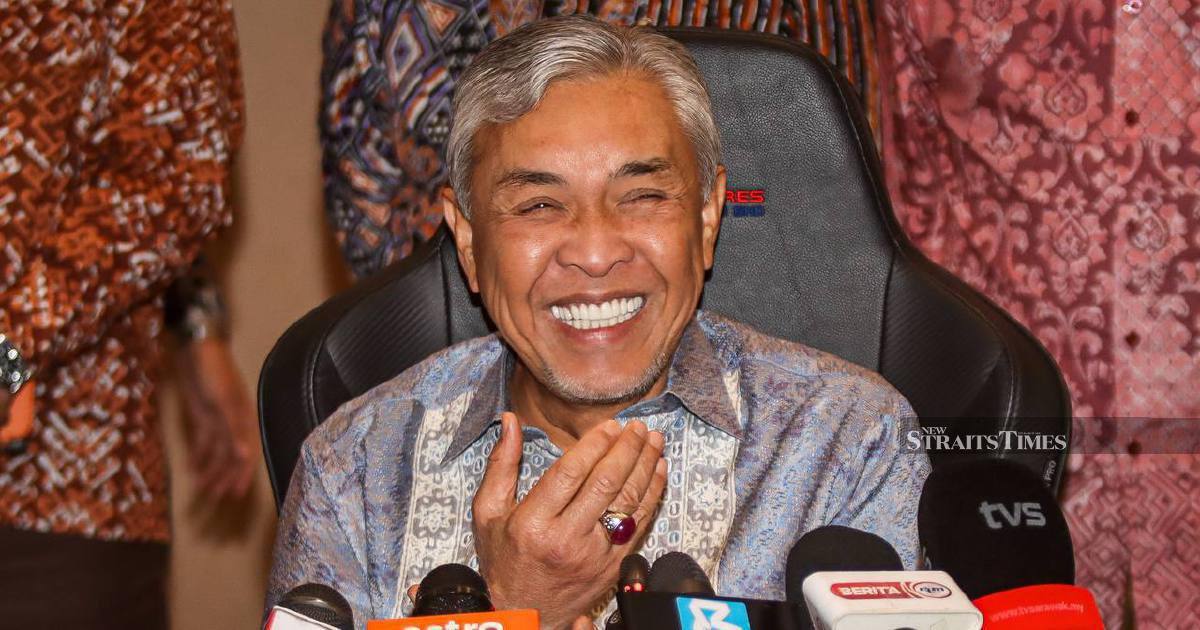
In a display that blended cultural tradition with contemporary Malaysian politics, Deputy Prime Minister Datuk Seri Dr Ahmad Zahid Hamidi returned a poetic gesture in Penang, composing his own pantun in response to Prime Minister Datuk Seri Anwar Ibrahim's earlier unity-themed verses. The exchange of traditional four-line Malay poetry between the two senior officials revealed an unexpected dimension to political discourse in Malaysia, where government leaders occasionally resort to classical literary forms to convey messages about governance and national direction.
The pantun, a quintessentially Malay poetic form that has been woven into the cultural fabric of Malaysia for centuries, provides a vehicle for commentary that operates on multiple levels. The rhyming structure and metaphorical language allow speakers to address substantive political matters while maintaining a tone of civility and respect that befits formal diplomatic interactions. By choosing this medium, both Anwar and Zahid demonstrated an appreciation for cultural heritage whilst simultaneously engaging in what appeared to be a carefully calibrated political conversation.
Zahid's verses, which invoked imagery of roofs and storms, constructed a metaphor for stability and resilience during turbulent times. The choice of such language suggests a deliberate engagement with themes of national steadfastness and the durability of institutions when facing external pressures or internal challenges. Such symbolic representations through classical poetry allow political figures to communicate complex policy positions and philosophical stances without the directness that might otherwise appear confrontational or divisive.
The exchange occurred within a broader context of efforts to foster greater cohesion among Malaysia's political leadership. These attempts have intensified as the nation navigates complex economic transitions, regional geopolitical shifts, and the need to maintain stability across an ethnically and religiously diverse polity. When senior government figures engage in such traditional cultural exchanges, they signal to the broader public that despite inevitable policy disagreements and institutional rivalries, a foundation of shared national values persists.
The use of pantun by political leaders carries particular significance in Malaysian public discourse. Unlike direct policy statements or legislative speeches, poetry allows for a more nuanced exploration of ideas and creates psychological distance that permits both the speaker and audience to contemplate implications without immediate partisan reaction. The form itself embodies principles of restraint and elegance that contrast sharply with more combative styles of political communication increasingly prevalent in digital forums.
Anwar's initial pantun had established the thematic framework around unity, and Zahid's response accepted this invitation to engage in dialogue rather than dismissal. The reciprocal nature of the exchange suggested acceptance of common purpose, even if tactical disagreements might emerge on specific issues. Such gestures, whether calculated or spontaneous, contribute to the psychological climate in which governance occurs and influence how political actors relate to one another beyond the formal structures of parliament and cabinet.
For Malaysian observers accustomed to more acrimonious political interactions, the pantun exchange offered a refreshing reminder that different registers of political communication remain available. In an era when social media often amplifies conflict and reduces complex issues to binary opposition, the deliberate choice to express political sentiment through an art form requiring craft and restraint demonstrates an alternative approach to public discourse.
The specific imagery Zahid selected carries particular weight for a Malaysian audience familiar with monsoon seasons and weather patterns that have historically shaped settlement patterns and economic activity. Metaphorical references to shelter and weathering storms resonated with lived experience, making the political message more viscerally comprehensible than abstract policy terminology would achieve.
Beyond the immediate political context, the pantun exchange reflects evolving expectations regarding how Malaysia's leadership presents itself to the world. As a multicultural nation with diverse artistic traditions, Malaysia benefits when its senior officials demonstrate genuine engagement with classical cultural forms. This validates these traditions as contemporary and relevant rather than relegating them to historical museums or cultural performances.
The diplomatic implications of such exchanges should not be underestimated. When political opponents communicate through traditional poetry rather than adversarial rhetoric, they establish a precedent for interaction that permits disagreement without enmity. This approach has historical precedent in Malay sultanate courts, where elaborate courtesies and indirect communication often accompanied substantive negotiations over power and resources.
Zahid's willingness to engage in this poetic dialogue demonstrated political maturity and cultural sensitivity. Rather than dismissing Anwar's initial overture or responding with prosaic bureaucratic language, he met the Prime Minister on cultural ground that both understood intimately. Such choices accumulate to shape political culture and influence whether young Malaysians view their leaders as custodians of national heritage or merely as functionaries managing contemporary problems.
Looking forward, observers will watch to see whether this pantun exchange signals a sustained commitment to elevated political discourse or represents merely a passing moment of cultural refinement. The durability of such gestures depends on whether both leaders maintain consistent commitment to civility and shared purpose when disagreements inevitably surface on substantive issues of governance, economic policy, and resource allocation across Malaysia's complex federal system.

