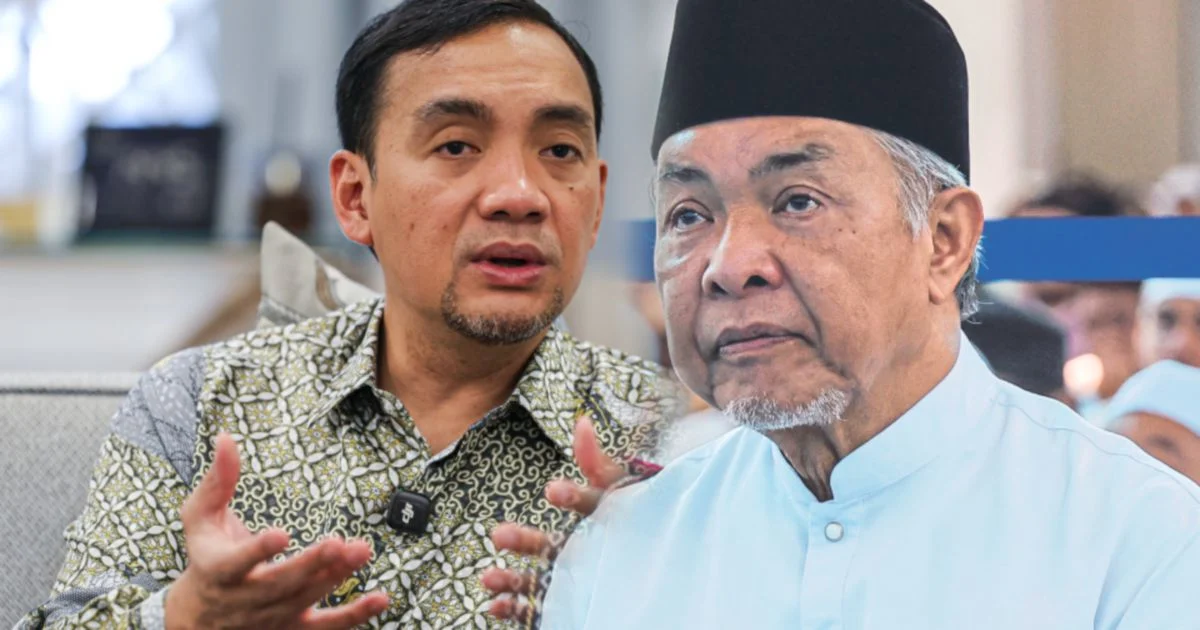
Deputy Prime Minister Datuk Seri Ismail Sabri Yaakob has firmly rejected suggestions that directives were handed down to restrict caretaker Johor Menteri Besar Datuk Onn Hafiz Ghazi's movement into Federal Land Development Authority (Felda) communities across the state. The categorical denial comes at a time of heightened political maneuvering in Johor, where control of rural constituencies remains fiercely contested among competing political factions.
Onn Hafiz, who continues to discharge his duties as caretaker chief minister pending the conclusion of electoral proceedings in Johor, has maintained his public visibility across the state despite the ongoing political uncertainty. The Felda settlements, distributed across multiple districts in Johor, represent a significant voting bloc that carries substantial political weight in state-level calculations. These communities, traditionally settled by agricultural smallholders and their descendants, have historically served as crucial battlegrounds during election cycles.
The emphatic clarification from Zahid suggests that no administrative apparatus has been activated to obstruct Onn Hafiz's official engagements or campaign activities within Felda territories. Such blockages, had they existed, would have represented an unprecedented intervention in routine administrative functions and would have generated considerable controversy regarding the boundaries of executive authority during caretaker periods. The timing of Zahid's statement indicates a desire to prevent misperceptions that might suggest coordinated efforts to sideline specific political figures.
Felda settlements constitute a critical demographic landscape that candidates across multiple parties attempt to cultivate during electoral campaigns. These communities have traditionally demonstrated distinct voting patterns and have been responsive to localized grievances related to commodity prices, agricultural policies, and rural development initiatives. Political parties have invested considerable resources in strengthening grassroots networks within these areas, recognizing their potential to swing electoral outcomes.
The clarification carries significance beyond mere administrative protocol. During caretaker periods, the scope of authority for state leadership becomes circumscribed, with conventions generally limiting major policy initiatives and personnel decisions. However, basic administrative functions, including visitations to constituent areas and engagement with stakeholders, remain within the purview of caretaker administrators. Any genuine restrictions on such activities would have raised questions about the legitimacy of interim governance arrangements.
Johor's political landscape has experienced considerable flux in recent years, with multiple transitions affecting the state administration. The caretaker arrangement reflects the complex dynamics of Malaysian politics, where electoral outcomes often remain uncertain until final tabulations are completed. During these interim phases, sitting administrators typically maintain their positions to ensure continuity of essential governmental functions, though their authority to initiate new policies or make significant expenditures becomes limited.
The Felda demographic holds particular relevance for state-level politics given the settlements' geographic distribution across vote-rich constituencies. Approximately four hundred Felda schemes operate across Johor, encompassing tens of thousands of settler families whose collective voting power influences competitive parliamentary and state assembly seats. These communities have experienced varying degrees of economic stress, particularly those heavily dependent on palm oil cultivation, making them receptive to political messaging centered on economic hardship and development promises.
Zahid's statement serves to establish clear parameters regarding administrative fairness during the caretaker phase. By explicitly denying that access restrictions exist, he seeks to forestall allegations that the interim arrangements have been weaponized to advantage specific political competitors. Such assurances matter because they reinforce the principle that caretaker governments, despite their limited powers, should operate impartially and not employ administrative machinery to disadvantage particular political actors.
The political context surrounding this clarification reflects broader tensions within Johor's governing coalitions. Multiple parties jostle for influence, and perceptions of unfair treatment or unequal access to voter communities can rapidly escalate tensions. By preemptively addressing suggestions of restrictions, Zahid attempts to maintain the fragile consensus that enables caretaker administrations to function without constitutional crisis, even as various factions position themselves for the next electoral phase.
For Malaysian observers monitoring Johor's political trajectory, Zahid's statement confirms that traditional campaign activities remain permissible for caretaker office-holders. This interpretation aligns with established practices whereby interim administrators may continue routine public engagement, though they refrain from major policy pronouncements or financially significant decisions. The Felda settlements, as crucial components of Johor's electoral geography, therefore remain accessible to incumbent office-holders seeking to maintain their political profiles.

