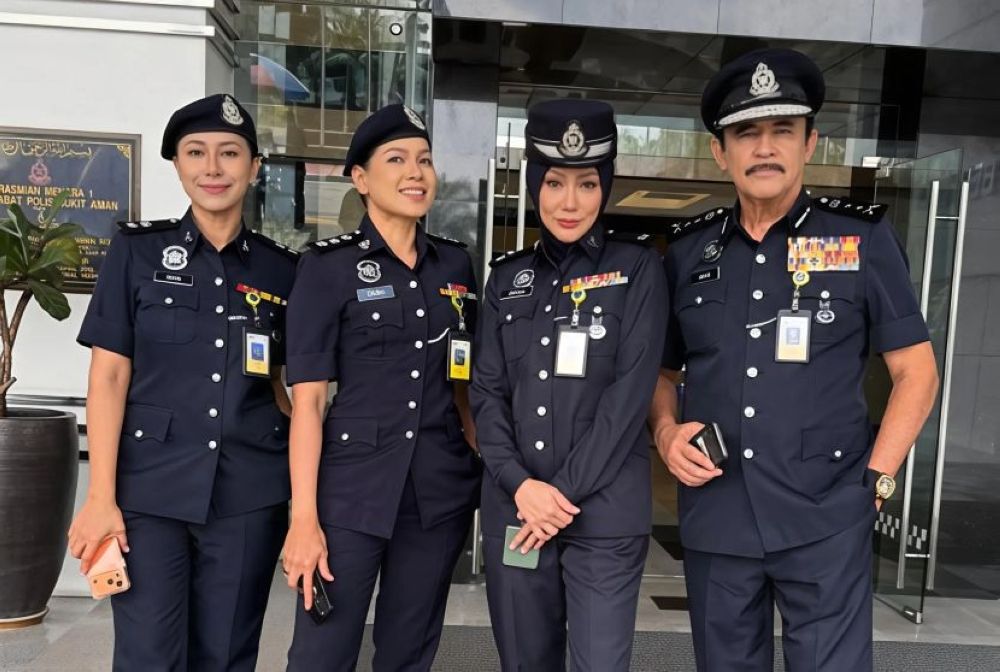
The production of Skop Production's 'Gerak Khas 2.0', a contemporary reimagining of Malaysia's iconic police drama, has taken a decisive turn after one cast member's arrest on drug-related charges. Producer Datuk Yusof Haslam announced that all remaining scenes featuring the actress have been removed from the series, marking a firm stance on maintaining professional standards within the high-profile television production.
The actress was apprehended during a police operation conducted by officers from Dang Wangi district police headquarters on July 7, and subsequently tested positive for three different controlled substances. The timing of the incident occurred just days after the drama's premiere, creating immediate complications for the production schedule and narrative continuity. With approximately 90 per cent of filming already completed, the team faced the decision of either reshaping the remaining episodes or eliminating the actress's contributions entirely.
Yusof revealed that the actress still had scenes scheduled across episodes 23 and 24 of the 26-episode series, representing the final stretch of production work. The decision to cancel these remaining scenes was made swiftly in response to the arrest, as the production team determined that her continued involvement would compromise the show's core message and its association with the Royal Malaysia Police. The removal required careful logistical planning, given that only approximately two weeks of principal photography remained before the production would have wrapped entirely.
The producer emphasised that this situation represented circumstances beyond the production's control and raised broader questions about casting practices. Yusof acknowledged that prior knowledge of the actress's circumstances would have fundamentally altered casting decisions, noting that her inclusion was based on a previously unblemished professional record with Skop Production. The firm action taken aims to serve as a cautionary lesson not only for the actress involved but for the broader entertainment industry grappling with similar challenges.
Yusof stated explicitly that the door remains permanently closed for future collaboration with the actress, underscoring the severity of the company's response. He rejected any subsequent appeals, excuses, or pleas from the actress once the decision had been finalised, adopting an uncompromising position that emphasised the finality of professional consequences. This approach reflects a broader philosophy within Malaysia's entertainment sector that association with drug-related charges carries irreversible reputational costs, particularly when the production maintains direct ties to institutional entities like the police force.
The producer disclosed that he had previously issued two formal warnings to the actress, explicitly cautioning against involvement in activities that could damage the drama's reputation or reflect poorly on the police. These warnings were part of broader disciplinary communications Yusof delivered to the entire cast and crew at various points during production, emphasising the sensitive nature of creating content that interfaces with law enforcement institutions and requires cooperation from PDRM. The repeated warnings underscore the gravity with which the production treated potential misconduct among its personnel.
Yusof's characterisation of the situation reflected frustration about the limits of producer oversight and the unpredictability of cast behaviour outside professional settings. He drew parallels to parental responsibility, noting that even with stringent guidelines in place, external behaviour remains fundamentally beyond a production's direct control. His comments highlighted the tension between setting clear standards and enforcing compliance across a dispersed cast and crew operating across multiple filming locations and schedules.
The cultural context surrounding female performers in Malaysian entertainment adds an additional dimension to this incident. Yusof specifically referenced the heightened scrutiny that society applies to women in public life, noting that reputational damage accrues more rapidly to female performers than their male counterparts. This observation reflects persistent gender-based expectations within Malaysian society regarding personal conduct and the particular vulnerability of female actors to career-ending consequences from disciplinary incidents.
The cast of 'Gerak Khas 2.0' includes established performers Hans Isaac, Erra Fazira, C. Kumaresan, and Salina Saibi, alongside actresses Tisha Shamsir, Nabiha Aimi, and Emily Elizabeth, who portray police inspectors alongside the removed cast member. The existing ensemble provides sufficient depth that narrative adjustments, while requiring creative problem-solving, do not necessarily compromise the series' viability. The distribution of roles across multiple actresses playing inspector characters provides some redundancy in the ensemble structure.
Yusof's public statements regarding the actress emphasised the permanence of professional consequences in entertainment, framing her situation as a life lesson about the enduring impact of mistakes. He stressed that redemptive narratives, while common in popular culture, do not translate into professional reintegration within Malaysia's industry, particularly following involvement with controlled substances. This unforgiving stance reflects industry norms that prioritise institutional reputation and audience trust above individual circumstances or rehabilitation prospects.
The incident raises broader questions for Malaysian television productions about risk management, background checking procedures, and the boundaries of institutional responsibility for cast member conduct. While Skop Production's swift response demonstrates institutional accountability, the case also highlights vulnerabilities in casting processes and the challenges of maintaining control over emerging talent within a competitive entertainment marketplace. Future productions may respond by implementing more rigorous vetting procedures or contract provisions addressing conduct expectations.
The completion of 'Gerak Khas 2.0' with approximately two weeks of production remaining suggests the series will proceed to post-production with minimal additional delays. The narrative adjustments required by the actress's removal, though logistically complex, appear manageable given the advanced stage of filming. The controversy surrounding the production may generate additional publicity, though whether such attention translates to audience benefits or complications remains uncertain in Malaysia's polarised media environment.

