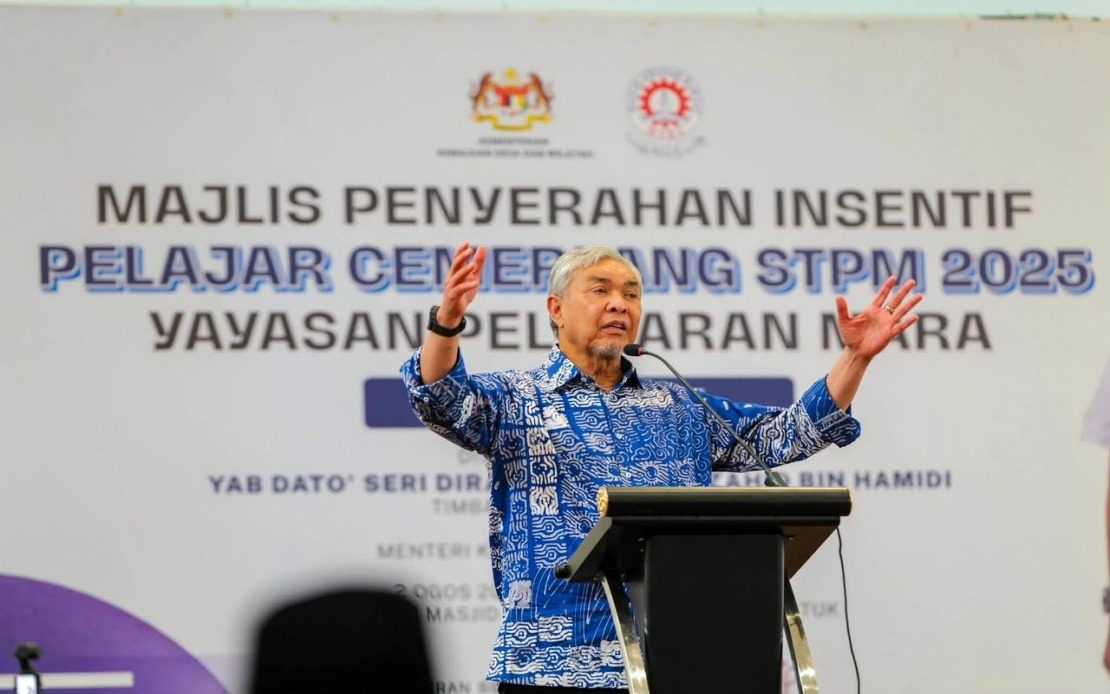
IPOH: Yayasan Pelajaran MARA (YPM) has honoured 38 students from two secondary schools in Bagan Datuk for their exceptional performance in the 2025 Sijil Tinggi Pelajaran Malaysia (STPM) examination. The recipients, drawn from Sekolah Menengah Kebangsaan Khir Johari and Sekolah Menengah Kebangsaan Tun Abdul Razak, represent a notable achievement for the Perak constituency during a time when competition for places in tertiary institutions remains intensely competitive across Malaysia.
Deputy Prime Minister Datuk Seri Dr Ahmad Zahid Hamidi, who represents Bagan Datuk in Parliament, announced the recognition through his official Facebook page, emphasising the broader significance of the accomplishment for his constituency. Beyond the STPM incentive recipients, he highlighted additional achievements among local students that underscore a pattern of educational advancement in the district. The acknowledgement carries particular weight given that education policy and student achievement remain central concerns for policymakers navigating Malaysia's transition towards a knowledge-based economy.
Among the notable outcomes from Bagan Datuk this year, three students have gained admission to Al-Azhar University to pursue Islamic Syariah and Usuluddin studies. This represents a meaningful pathway for students seeking Islamic theological education at one of the Muslim world's most prestigious institutions. The placement reflects both individual ambition and the continued emphasis within Malaysian educational circles on developing expertise in Islamic disciplines alongside secular fields of study. Al-Azhar's recognition as a world-class institution for Islamic scholarship makes these placements particularly noteworthy for the families and schools involved.
In addition to the STPM excellence recognition, 23 students from the district have accessed the YPM Education Compassionate Fund, a financial assistance scheme designed to support students from economically disadvantaged backgrounds. This dual recognition—both merit-based and needs-based support—illustrates the multifaceted approach required to nurture educational potential across socioeconomic divides. The compassionate fund component reflects acknowledgement that talent and capability exist across all income brackets, yet financial barriers often prevent capable students from reaching their potential without targeted intervention.
Dr Ahmad Zahid's commentary on the achievements frames education as foundational infrastructure for community transformation and long-term district development. His emphasis on education as investment rather than expenditure aligns with contemporary development thinking across Southeast Asia, where human capital formation increasingly determines regional competitiveness. The statement signals his political investment in portraying Bagan Datuk as a constituency where government initiatives yield tangible educational dividends, an important narrative in competitive electoral contexts.
The Bagan Datuk Member of Parliament called upon parents to sustain their role as educational advocates and motivators within families, recognising that parental engagement significantly correlates with student success across educational systems globally. This framing distributes responsibility for educational outcomes across multiple stakeholders—schools, government, families and students themselves—rather than attributing results solely to institutional efforts. Such messaging resonates particularly in Malaysian contexts where family values remain culturally central to social narratives.
Dr Ahmad Zahid expressed hope that graduates from Bagan Datuk would pursue higher education both domestically and internationally before eventually channelling their expertise back into local development. This brain circulation model, distinct from brain drain concerns that preoccupy policymakers regionally, suggests confidence that improved educational credentials and international exposure can strengthen the human resource base supporting future district prosperity. The expectation that educated returnees will contribute to community development reflects long-standing assumptions about the relationship between elite education and local responsibility.
For Malaysian readers, the Bagan Datuk recognition touches on broader educational policy challenges. Competition for university places remains acute, particularly for programs at prestigious institutions. The STPM pathway, though declining in relative importance as the Malaysian education system diversifies through pre-university programmes, continues to matter for students seeking admission to selective local universities. That 38 students achieved excellence-level recognition suggests reasonable institutional capacity within the two schools, though their performance must be contextualised against the total secondary cohort facing STPM nationally.
The involvement of Yayasan Pelajaran MARA reflects the continued role of government-linked foundations in supplementing educational support infrastructure. YPM's reach across constituencies and school types indicates systematic rather than ad-hoc recognition of achievement, although the extent to which such schemes address equity challenges across Malaysian schooling remains subject to ongoing policy debate. The foundation's dual focus on meritocratic recognition and compassionate support for disadvantaged students navigates tensions between excellence-driven and equity-centred educational philosophies.
Regionally, Bagan Datuk's educational performance reflects broader patterns across Malaysia's peninsular states, where secondary institution performance correlates with infrastructure investment, teacher quality and socioeconomic profiles of school catchment areas. As Southeast Asian nations compete for human capital advantage, such constituency-level educational outcomes acquire significance beyond immediate local contexts. They signal to international investors and regional talent markets the quality of human resources available within specific jurisdictions.
The constellation of achievements—STPM excellence, Al-Azhar placements and compassionate fund access—illustrates how educational outcomes emerge from multiple mechanisms and support pathways rather than singular institutional levers. Policymakers observing Bagan Datuk's results might reflect on how merit-based incentives, targeted financial support and international educational pathways interact to create comprehensive encouragement systems for student advancement. This multi-channel approach may offer lessons applicable to other constituencies seeking to elevate educational outcomes.
Moving forward, sustaining and expanding such educational achievements requires ongoing attention to teacher development, infrastructure maintenance and equitable access to quality instruction across school types. Dr Ahmad Zahid's optimism about Bagan Datuk's potential reflects political investment in the constituency's narrative, but translating such recognition into systemic improvement demands sustained resource allocation and policy coherence beyond celebratory announcements. The students honoured represent human investments whose ultimate returns depend on subsequent access to quality tertiary education and labour market opportunities aligned with their qualifications and aspirations.

