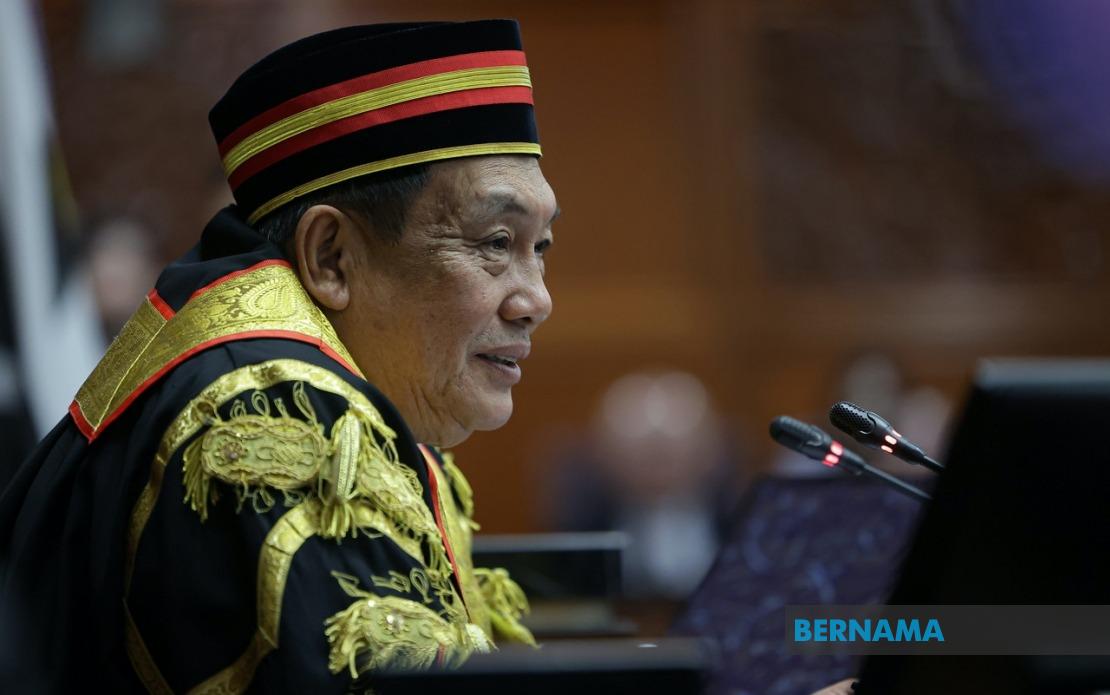
Dewan Negara President Datuk Awang Bemee Awang Ali Basah has characterised Malaysia's Youth Parliament as a transformative educational initiative, describing it as a "school of democracy" designed to nurture a generation of informed and conscientious citizens. Speaking at an event organised by Parliament Malaysia at Universiti Malaysia Terengganu, Awang Bemee underscored the platform's significance in providing young people with tangible experience in democratic participation, from articulating perspectives and engaging in structured debate to absorbing constructive feedback and respecting collective decisions. This hands-on exposure, he suggested, cultivates the foundational attitudes necessary for principled leadership across public and private domains.
Critically, Awang Bemee framed the Youth Parliament not merely as a recreational forum but as a crucible for character development. He argued that genuine leadership transcends the conventional markers of authority, such as oratorical skill or command capacity. Instead, he positioned leadership as a blend of listening acumen, problem-solving orientation and a commitment to serving constituencies rather than advancing personal interests. By engaging youth in real parliamentary procedures and deliberative processes, the initiative creates an environment where young Malaysians internalise the ethos that every stance adopted carries reciprocal obligations to their peers and society. This philosophical emphasis resonates particularly in a nation grappling with questions of integrity in public office and institutional trust.
Within Malaysia's political architecture, the Youth Parliament occupies a distinctive role that complements rather than duplicates the work of Parliament itself. While Parliament functions as the ultimate decision-making authority, the Youth Parliament channels the perspectives and priorities of younger constituents, thereby enriching parliamentary discourse with viewpoints often underrepresented in formal legislative chambers. Awang Bemee framed this relationship as symbiotic, arguing that incorporating youth voices strengthens democratic practice by ensuring that policy considerations encompass the interests and experiences of those inheriting its consequences. This is particularly salient for Malaysia, where demographic projections indicate that young people will constitute a substantial voting bloc capable of reshaping electoral dynamics and policy priorities.
Awang Bemee articulated three strategic pillars underpinning effective youth empowerment, beginning with openness and inclusive democracy. He advocated for institutional frameworks that actively solicit young people's contributions, create genuine avenues for influence and cultivate respect for ideological pluralism. He emphasised Malaysia's multicultural and multireligious fabric as an asset to be weaponised through enhanced intercommunal dialogue and mutual recognition, rather than a liability. In a regional context where social cohesion increasingly faces pressure from polarisation and misinformation, the cultivation of youth who can navigate difference with empathy and intellectual rigour carries strategic weight beyond the immediate parliamentary context.
The second pillar centered on educational transformation, with Awang Bemee pushing beyond conventional academic metrics toward the cultivation of competencies aligned with contemporary global challenges. He advocated for curricula emphasising analytical thinking, technological fluency encompassing artificial intelligence, creative problem-solving, entrepreneurial initiative and informed citizenship. Simultaneously, he warned that technological capacity divorced from ethical grounding poses risks. This framework acknowledges the acceleration of digital disruption whilst insisting that moral formation remain central to educational missions. For Malaysian educators and policymakers, this represents a call to recalibrate pedagogy around genuine capability development rather than examination performance.
An intriguing dimension of Awang Bemee's intervention involved situating youth development within Malaysia's emerging economic landscapes, particularly the Blue Economy. By referencing maritime sectors spanning aquaculture, tourism, renewable marine energy and transportation, he positioned youth empowerment as instrumental to national economic diversification and innovation. This framing suggests that parliamentary engagement and democratic participation are not ornamental to economic competitiveness but integral to it, as informed and engaged citizens prove more adept at identifying opportunities, managing risks and building consensus around transformative initiatives. For the Southeast Asian region pursuing sustainable development trajectories, this integrated vision of civic and economic development merits consideration.
The third pillar addressed the paradox of freedom and responsibility in democratic societies, with particular emphasis on digital citizenship. Awang Bemee cautioned youth against conflating freedom of expression with licence to disseminate falsehoods or engage in reputational assault. His formulation—verify before sharing, scrutinise before accepting, understand before condemning—offers practical guidance navigating information environments increasingly saturated with unreliable content. This is urgent for Malaysia, where social media continues reshaping political communication whilst simultaneously facilitating rapid misinformation diffusion. By cultivating reflective consumption and conscientious sharing practices among young people, the Youth Parliament potentially inoculates against the destabilising effects of coordinated disinformation campaigns.
Awang Bemee expressed confidence that Malaysian youth could assume roles as "bridge-builders," uniting disparate communities, troubleshooting complex challenges and steering the nation toward inclusive prosperity. This aspirational framing situates youth not as passive recipients of inherited institutional arrangements but as active architects of national futures. The emphasis on bridge-building carries particular resonance in Malaysia's contemporary context, where racial, religious and political divisions frequently dominate public discourse. Young leaders educated through democratic participation and equipped with cross-cultural competence represent a potential countervailing force against polarising dynamics.
The broader programme, titled "Tranung Mari! From Campus to Parliament: Youth Voices Shaping Malaysia's Future," constitutes part of Parliament Malaysia's systematic effort to strengthen youth engagement and narrow distances between higher education communities and legislative institutions. By embedding parliamentary engagement within university settings and creating direct forums for student dialogue with parliamentary leadership, the initiative removes friction from civic participation and normalises young people's legitimate expectations to influence governance. This grassroots approach complements top-down institutional reform, creating multiple pathways for youth influence.
A centrepiece of the UMT event involved a forum titled "Malaysian Youth: Drivers or Spectators?" featuring Parliament Malaysia's chief administrator Datuk Dr Ahmad Husaini Abdul Rahman. The framing itself—positing youth agency as a binary between active driving and passive observation—implicitly advocates for greater youth mobilisation. By creating platforms where students directly encounter senior parliamentary officials, the initiative demystifies legislative processes whilst demonstrating institutional receptivity to youth concerns. Such accessibility potentially strengthens institutional legitimacy among younger cohorts, fostering stronger identification with democratic systems and parliamentary institutions.
The underlying ambition articulated by Awang Bemee extends beyond parliamentary procedure to encompass the development of a generation characterised by ethical clarity, critical capacity and civic consciousness. In framing the Youth Parliament as a mechanism for cultivating integrity-anchored leadership and fostering informed, conscientious citizenship, he articulates a vision where democratic participation becomes inseparable from moral development and community obligation. For Malaysia navigating complex governance challenges and social fractures, investments in youth development through participatory democratic mechanisms represent not luxury expenditure but essential infrastructure for sustainable national development and social stability.

