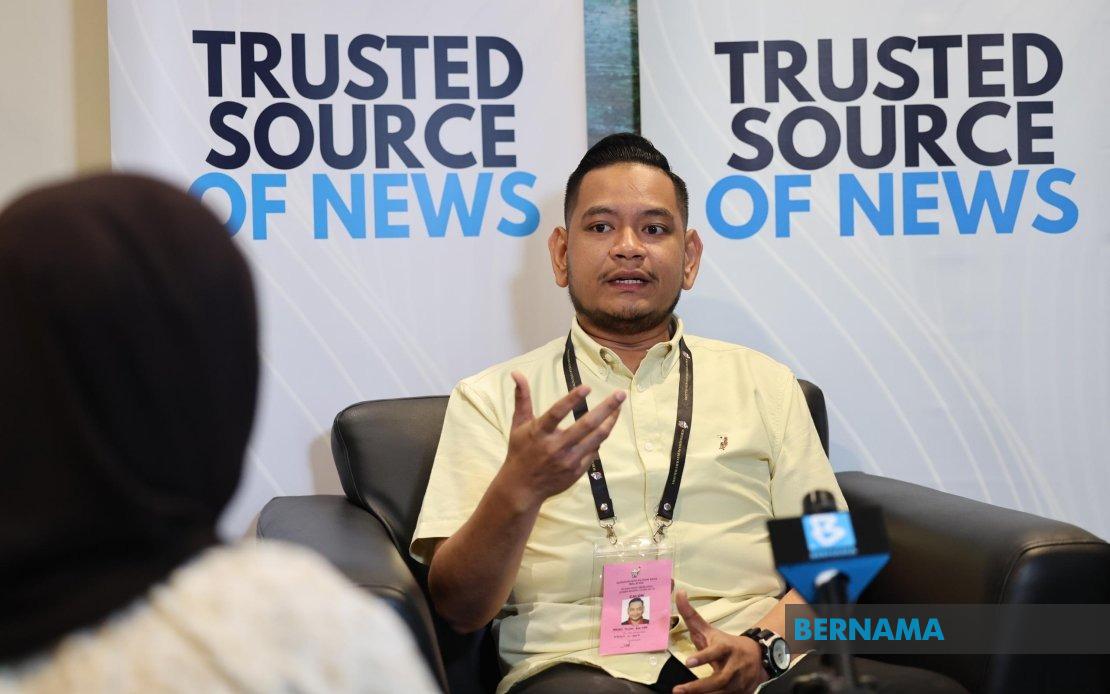
The Johor state election race in Sedili presents an unusual dynamic as Pakatan Harapan fields Amirul Huzni, the 29-year-old youth chief of Parti Amanah Negara, to challenge two notably more seasoned politicians in what has traditionally been a Barisan Nasional bastion. Rather than viewing his youth as a disadvantage against the incumbent Muszaide Makmor and three-term former assemblyman Rasman Ithnain—who represents Perikatan Nasional—Amirul Huzni has reframed his status as a political newcomer into a strategic asset for his July 11 campaign.
In Malaysian electoral politics, where accumulated experience and established networks have long dominated state and parliamentary contests, Amirul Huzni's positioning offers a refreshing counternarrative. His argument rests on a simple but compelling premise: younger candidates arrive unburdened by the failures, unfulfilled promises, and controversial decisions that often haunt their predecessors. For voters fatigued by conventional politics, this blank-slate approach carries genuine appeal, particularly in a constituency where incumbent performance may have disappointed residents seeking tangible change.
The competitive landscape in Sedili reflects broader patterns across Johor's political terrain. Barisan Nasional has maintained firm control in this seat through multiple electoral cycles, yet the emergence of Perikatan Nasional as a competing force has fractured the traditional opposition to the ruling coalition. By inserting Pakatan Harapan into this three-way contest, the electoral equation becomes more unpredictable. Amirul Huzni's willingness to engage with this complexity, rather than dismiss his rivals' experience as an insurmountable advantage, demonstrates tactical maturity despite his relative newcomer status.
Amirul Huzni articulates a pragmatic understanding of electoral mathematics that extends beyond symbolic generational renewal. He acknowledges frankly that measured against conventional markers of political influence—party machinery, ground networks, established relationships—he trails considerably behind both opponents. However, he invokes a fundamental principle of democratic competition: elections ultimately resolve into binary outcomes of victory or defeat, regardless of the background profiles of competing candidates. This refreshingly unsentimental framing sidesteps the victim narrative sometimes employed by younger politicians while maintaining confidence in his capacity to win.
His campaign platform prioritizes concrete, achievable deliverables rather than expansive promises unlikely to materialize once elected. This disciplined approach mirrors growing voter preferences across Southeast Asia for politicians who articulate modest, verifiable objectives. The centerpiece of his manifesto is the construction of a fuel station in Sedili—a facility that resonates particularly among the constituency's fishing communities and recreational anglers. Critically, Amirul Huzni notes that suitable land was identified and cleared over a year ago, yet implementation has stalled under previous administration. This specificity transforms the fuel station from a vague campaign pledge into a measurable test of administrative capability.
The fuel station issue encapsulates a broader critique of incumbent governance without resorting to partisan rhetoric. By highlighting how previous administrations failed to convert preparatory groundwork into tangible infrastructure, Amirul Huzni appeals to voters' direct, material interests while avoiding personality-driven attacks on opponents. For residents dependent on fishing or tourism activities, a functional fuel station represents time savings, reduced transportation costs, and improved economic efficiency. The issue's concreteness makes it an effective campaign tool precisely because its failure to materialize represents a governance failure rather than a political talking point.
Amirul Huzni's campaign philosophy emphasizes civility and substantive engagement with opponents as critical components of electoral conduct in diverse communities. His reported statement to rivals on nomination day—that he came to learn and campaign in a healthy spirit—reflects awareness that Malaysian constituencies often contain multiple ethnic and religious communities requiring mutual respect across political divisions. By privileging harmony and mature campaigning, he signals that political competition need not undermine social cohesion, a message with particular resonance in Johor where inter-communal relations require careful stewardship.
This emphasis on respectful opposition politics carries implications beyond Sedili's immediate contest. As younger politicians increasingly contest seats previously held by established figures, norms around campaign conduct become crucial for democratic health. Amirul Huzni's articulation of mature political engagement—where candidates can meaningfully compete while preserving community relationships—offers a model for generational transition that avoids the scorched-earth approaches sometimes associated with succession battles in Malaysian politics.
The Sedili contest also illuminates shifting dynamics within Johor's political landscape. The three-way split between Barisan Nasional, Perikatan Nasional, and Pakatan Harapan fragments opposition votes that might otherwise concentrate against the incumbent. Whether this fragmentation advantages the establishment candidate or creates opening for a fresh face depends partly on voter sentiment regarding political change. Amirul Huzni's appeal to younger voters and his positioning as unburdened by past political commitments may resonate in constituencies where dissatisfaction with traditional politics runs deepest.
As polling day approaches on July 11, with early voting scheduled for July 7, Amirul Huzni faces the challenge of converting his youth and fresh perspective into actual electoral performance. The constituency presents a genuine test of whether Malaysian voters prioritize demonstrated experience or openness to new approaches when making electoral decisions. For Pakatan Harapan, his candidacy represents an investment in challenging Barisan Nasional's traditional dominance in a stronghold where conventional opposition politics has yielded limited success.
The broader significance of Amirul Huzni's campaign extends beyond Sedili's boundaries. His strategic reframing of youth and political inexperience as electoral strengths rather than liabilities may establish templates for younger candidates across Malaysia seeking to contest established strongholds. If his campaign generates meaningful voter engagement and performs competitively despite his limited political background, it would signal that Malaysian electorates increasingly reward fresh approaches and younger leadership regardless of traditional credentials.
Ultimately, the Sedili race exemplifies how Malaysian state elections continue evolving beyond simple incumbent-versus-challenger frameworks. The intersection of generational politics, localized governance issues, and shifting coalition dynamics creates complex electoral environments where experience alone no longer guarantees electoral success. Amirul Huzni's campaign, whatever its electoral outcome, contributes to ongoing recalibration of how political credentials and capability are assessed by increasingly discerning Malaysian voters.

