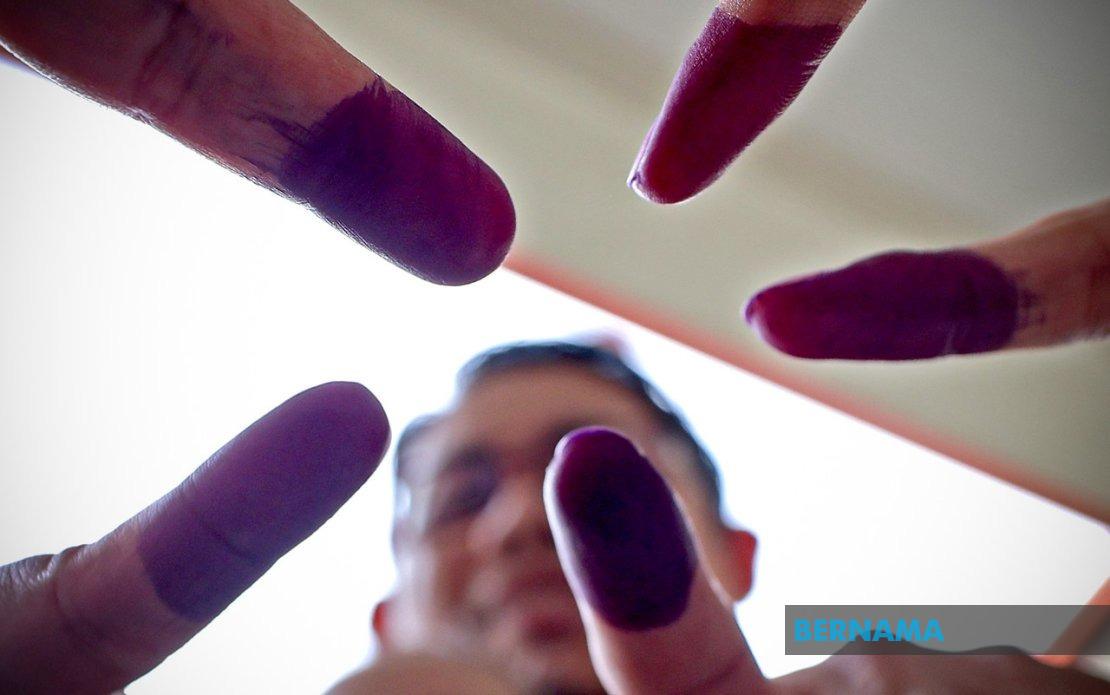
The July 11 Johor state election is shaping up to be a contest where younger voters, particularly those voting for the first time, could emerge as the pivotal swing bloc in closely marginal constituencies. Following the rollout of Undi18 and automatic voter registration, political analysts are increasingly focused on how this enlarged cohort of first-time and fence-sitting voters will behave, especially given their weaker attachment to traditional party allegiances compared to older generations.
According to Election Commission data, Johor has registered more than 1.29 million voters under the age of 40. This comprises 587,888 voters aged 30 to 39, 544,657 aged 21 to 29, and 165,386 aged between 18 and 20. The sheer scale of this demographic in constituencies where results are expected to be tight means that whichever party can most effectively mobilise and persuade these voters stands to gain a decisive advantage. Political strategists now recognise that winning Johor may hinge on translating youth enthusiasm into actual ballot-box outcomes.
Associate Professor Mohd Yusri Ibrahim, research chief at the Ilham Centre, emphasises that first-time voters have become numerically substantial across every state constituency, but their impact will be most pronounced where contests are closely fought. The volatility of these younger, less ideologically committed voters means that traditional campaign assumptions no longer hold. Rather than viewing politics through inherited family or community loyalties, many younger Johor voters are evaluating candidates on grounds of proven capability, track record, and their readiness to tackle concrete problems such as employment, housing affordability and cost of living pressures.
Campaign strategists cannot adopt a one-size-fits-all approach if they wish to succeed in the current electoral landscape, Mohd Yusri explains. Digital platforms and social media have become the primary channel for reaching urban youth, where information spreads rapidly and campaigns can be tailored to specific interests and concerns. However, reliance on online outreach alone is insufficient. Rural constituencies, where older voters remain influential, still depend heavily on face-to-face interactions, community networks, and the established relationships between candidates and local populations. This dual-track campaigning requirement represents a major shift from earlier Johor elections.
Dr Mohammad Tawfik Yaakub from Universiti Malaya's Department of Political Science echoes this analysis, identifying voters aged 18 to 39—roughly 1.2 million strong—as the election's most consequential demographic. Unlike voters from earlier cohorts who often voted according to deeply held political convictions or family tradition, this younger generation evaluates candidates primarily on their ability to deliver tangible results and demonstrate genuine competence. The evaluative lens they apply is distinctly pragmatic rather than ideological, rewarding those who present credible, realistic solutions to daily challenges.
The divergence between urban and rural voter behaviour requires parties to calibrate their messaging carefully. Urban voters in Johor are typically exposed to national political narratives filtered through social media discourse, news alerts, and online commentary. They develop political opinions through information networks that are geographically dispersed and increasingly personalised. Rural voters, by contrast, remain rooted in locality-based information ecosystems where grassroots networks, word-of-mouth, and interpersonal connections with candidates and party machinery exert stronger influence. A viral social media post may galvanise urban support, but on-the-ground presence and community relationships ultimately convert online interest into actual votes.
Dr Tawfik cautions that parties which build impressive digital presence while neglecting grassroots machinery often find themselves unable to convert online momentum into electoral victory. The mechanics of winning in Johor therefore require sophisticated coordination between two distinct campaign modes—one that operates in the digital realm and another that functions through physical presence and community engagement. Parties that master this integration will possess a formidable advantage.
Another significant finding concerns voter receptiveness to new faces. Johor voters increasingly demonstrate willingness to evaluate candidates on individual merit rather than restricting themselves to established political figures. However, analysts warn that youth alone carries insufficient weight; candidates must also project credibility and demonstrate the capability to represent constituents effectively. A young candidate with limited track record or questionable qualifications may struggle despite appealing to younger voters' stated preference for fresh alternatives to entrenched political figures.
The substantive issues that will likely determine electoral outcomes centre on bread-and-butter economic concerns. Voter turnout rates, the behaviour of undecided fence-sitters, and each party's capacity to address practical problems such as stagnant wages, escalating prices, insufficient housing supply, and limited employment opportunities will collectively shape the result. According to Dr Tawfik, economic grievances may prove more decisive than political rhetoric or partisan messaging in this election cycle. Parties that convincingly articulate solutions to rising living costs will enjoy a meaningful strategic advantage over those relying primarily on ideological appeals or party loyalty messaging.
The implications for Malaysian political dynamics more broadly extend beyond Johor itself. If younger voters demonstrate that they can swing marginal seats and force parties to prioritise policy substance over identity politics, future elections across other states may follow similar patterns. The structural shift toward greater voter sophistication and demand for practical governance could gradually reshape how Malaysian political parties campaign and what they choose to emphasise. The Johor result may therefore serve as a bellwether for whether Malaysian politics is experiencing a generational reorientation toward performance-based evaluation and away from traditional allegiances.
With early voting scheduled for July 7 and polling day on July 11, parties face the final stretch of campaigning knowing that the outcome may well be determined by how effectively they reach, persuade, and mobilise younger voters. The challenge is formidable: these voters demand both digital sophistication and authentic grassroots engagement, both new ideas and proven credibility, both fresh faces and demonstrated capability. Those who navigate this complex terrain most skilfully will likely emerge victorious in Johor's closely contested marginal seats.

