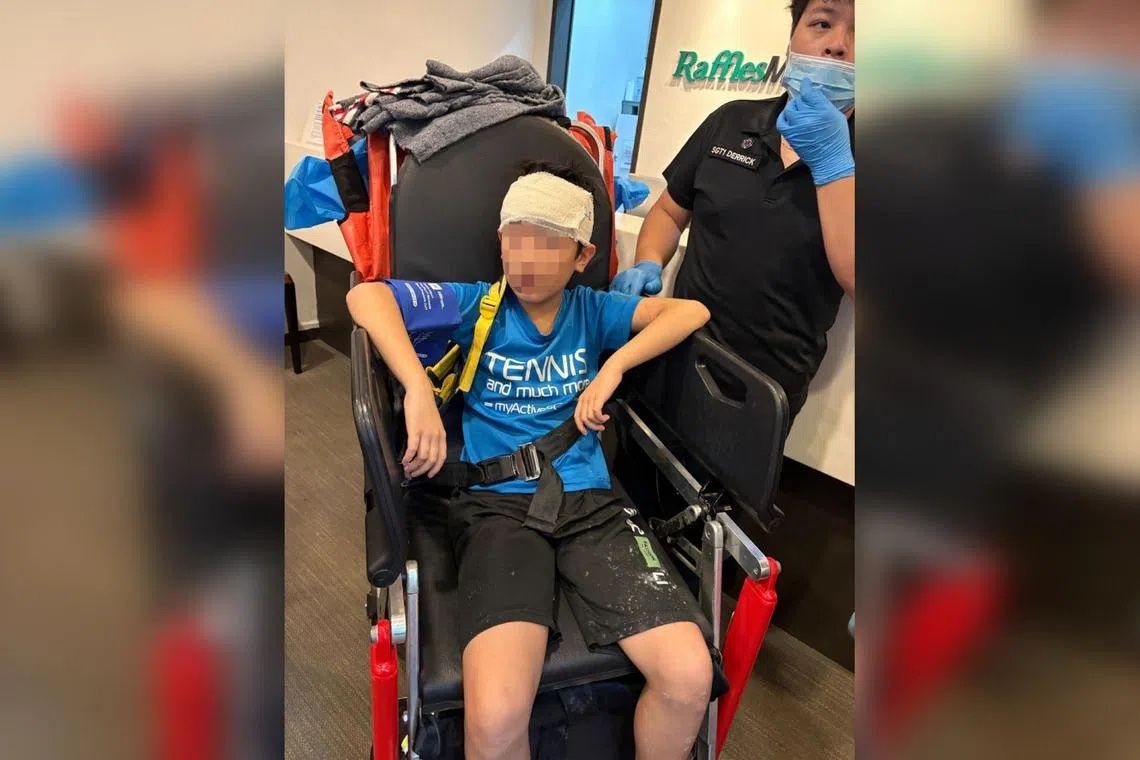
A child suffered injury requiring hospitalisation after structural failure at a Food Junction foodcourt outlet in Singapore's Rivervale Mall on Saturday morning, June 20. The Singapore Civil Defence Force responded to an emergency call at approximately 10.30am and transported the victim to KK Women's and Children's Hospital for medical evaluation and treatment.
The incident unfolded at the ground-floor foodcourt establishment, where a signboard gave way unexpectedly. Eyewitness footage circulated on TikTok captured the extent of the structural damage, showing debris scattered across the entrance to the Food Junction outlet and portions of the ceiling compromised or dislodged. Bystanders maintained a safe distance from the collapse zone as emergency personnel secured the area.
Food Junction's management responded swiftly, coordinating with both Rivervale Mall authorities and emergency responders to manage the aftermath. A company spokeswoman confirmed awareness of the incident and emphasised the immediate mobilisation of staff to assist the injured customer. The statement noted that the individual underwent further assessment at the hospital but has since been discharged and is recovering at home, indicating the injuries, whilst serious enough to warrant emergency transport and hospital care, were not life-threatening.
Investigations into the root cause commenced immediately following the collapse. Food Junction indicated that a comprehensive review and detailed investigation were undertaken to identify what led to the structural failure. The findings prompted the company to implement reinforced safety protocols across all outlets, aligned with regulations set by the relevant authorities overseeing building standards and operational safety.
The timing of the incident—mid-morning on a weekend—meant the foodcourt was likely moderately busy, raising questions about whether the signboard failure was triggered by external factors, structural fatigue, or inadequate maintenance. Such incidents in high-traffic retail environments carry significant liability implications and raise public safety concerns, particularly in establishments frequented by families and children.
Rivervale Mall management worked alongside Food Junction to ensure rapid restoration of operations. The foodcourt resumed service shortly after the incident, indicating that damage assessment determined the immediate vicinity safe for continued use, though this would have included additional scrutiny of nearby structural elements and overhead fixtures.
For Malaysian readers, the incident serves as a reminder of the importance of regular structural maintenance and safety audits in commercial establishments. Singapore's Building and Construction Authority involvement in the investigation underscores how regional authorities treat such matters seriously, conducting formal reviews to prevent recurrence. The multi-agency coordination demonstrated—involving emergency services, mall management, the food operator, and regulatory bodies—reflects the systematic approach expected in urban Southeast Asia's developed retail environments.
Food Junction operates extensively across Southeast Asia, including Malaysia, where similar foodcourt installations are commonplace in shopping centres. The incident highlights the potential hazards posed by overhead signage and structural elements in busy dining areas where customers, particularly children, may not constantly maintain awareness of their surroundings. Operators region-wide may now reassess their own maintenance schedules and safety protocols in response to this high-profile incident.
The company's public apology and commitment to enhanced safety precautions reflects contemporary corporate responsibility standards in the region. Such transparency and accountability messaging aims to rebuild customer confidence and demonstrate that the business takes patron safety seriously. For foodcourt operators across Malaysia and Singapore, the incident underscores the necessity of treating maintenance not as a cost centre but as a critical investment in risk mitigation and brand protection.
Structural collapses in commercial spaces, whilst statistically uncommon in developed urban areas, create lasting psychological impact on customers and raise awareness of invisible infrastructure risks. The fact that the victim was a child may amplify parental concerns about safety in family-oriented venues, potentially influencing customer behaviour and venue selection in the short term. Rivervale Mall's swift response and coordinated recovery effort attempted to minimise such reputational damage through demonstrable action rather than mere statements.
The incident occurred during a period of heightened attention to workplace and public space safety standards across Asia-Pacific. Regulatory frameworks in Singapore, Malaysia, and the broader region continue evolving, with emphasis placed on preventive maintenance and risk assessment rather than reactive responses to failures. This incident will likely feature in industry briefings and safety training programmes across regional foodservice and retail operations.

