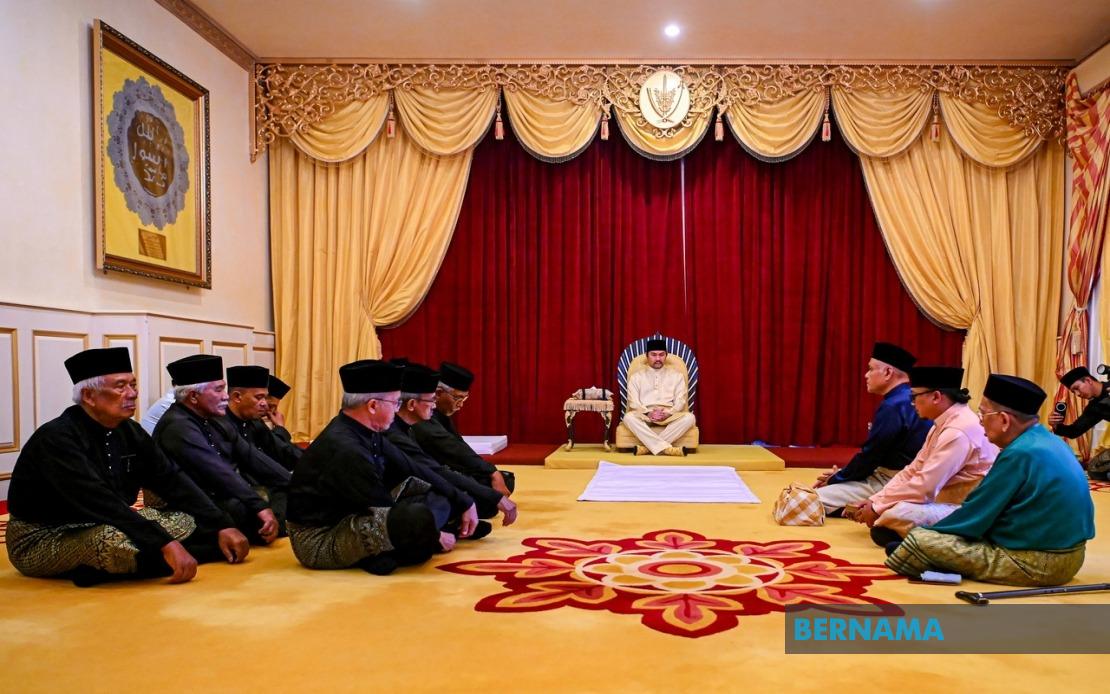
The Yang Dipertuan Besar of Negeri Sembilan, Tuanku Muhriz Tuanku Munawir, has granted his consent for a formal royal audience to take place at Istana Besar Seri Menanti in Kuala Pilah on Saturday, marking the official installation of the newly selected Undang of Luak Sungei Ujong. The ceremonial approval represents the final constitutional step in a succession process governed by centuries-old Minangkabau customs that remain integral to Negeri Sembilan's political and cultural framework.
Tunku Besar Seri Menanti Tunku Ali Redhauddin Tuanku Muhriz formally conveyed the ruler's decision during an audience with the adat leaders and hereditary chiefs of Luak Sungei Ujong at the palace today. The announcement reflects the careful choreography of traditional governance in a state where the election of regional undangs—territorial chiefs who exercise customary law authority—must blend constitutional propriety with deeply rooted adat protocols. The Istiadat Menghadap Menjunjung Duli Bagi Menyempurnakan Kejadian Undang Luak Sungei Ujong, the formal ceremony of presentation and installation, is the culmination of months of adat deliberation within the luak.
The Buapak customary council assembly unanimously selected Muhammad Faris Johari, a 29-year-old inheritor of the Pesaka Undang title, following traditional procedures established in Luak Sungei Ujong. According to Waris Negeri Sungei Ujong Datuk Sinda Maharaja Razlan Hamid, who represented the luak at the palace audience, the selection process adhered rigorously to adat customs and traditions governing the succession of this hereditary position. The appointment of Johari as the 11th Undang represents continuity within a specific waris or descent line entitled to hold this office, a system that privileges genealogical connection and customary legitimacy over democratic selection.
This installation follows the dismissal of Datuk Klana Petra Datuk Mubarak Dohak, who served as the 10th Undang of Luak Sungei Ujong. The Dewan Keadilan dan Undang, the traditional justice and law council overseeing adat matters, formally accepted his removal during proceedings that reflected the accountability mechanisms embedded within Negeri Sembilan's customary governance structure. Menteri Besar Datuk Seri Aminuddin Harun confirmed that the dismissal decision emerged from a special sitting convened at the palace and presided over by Tuanku Muhriz himself, underscoring the sovereign's active role in maintaining the integrity of adat institutions.
Negeri Sembilan occupies a distinctive constitutional position within Malaysia's federal system. As a state with a unique history of Minangkabau settlement and governance, it has preserved a dual system in which the elected Menteri Besar operates alongside hereditary undangs who exercise customary authority over their respective luaks. This parallel structure, codified in the Negeri Sembilan Constitution, ensures that traditional adat remains actively integrated into state governance rather than relegated to ceremonial status. The formal installation of new undangs thus carries implications extending beyond symbolic significance.
The palace audience and subsequent ceremony also underscore the important role played by the Yang Dipertuan Besar in safeguarding customary institutions. While Tuanku Muhriz's consent is ceremonial in strict constitutional terms, his active engagement—receiving delegations, granting formal audiences, and presiding over special sittings—reinforces the principle that adat governance depends upon the monarchy's continuing support and validation. This relationship mirrors broader patterns across Malaysian sultanates, where rulers function not only as constitutional heads of state but as custodians of Malay-Muslim traditions and customary law.
The selection of Johari occurs within a generational context that poses subtle challenges for traditional governance systems. At 29 years old, he represents a younger generation of adat leaders navigating the balance between preserving customary authority and adapting to contemporary expectations of leadership. The Buapak council's choice of such a comparatively young successor may signal confidence in the capacity of traditional institutions to recruit talented individuals from within their hereditary pools, or alternatively, reflect the pool of available waris within the Sungei Ujong descent line. Either interpretation carries implications for the long-term viability of hereditary governance in an increasingly modernised society.
Saturday's ceremony will not stand alone as a singular installation. The Yang Dipertuan Besar has similarly approved a formal audience for the same day to formalise the installation of the 22nd Undang of Luak Rembau, another of Negeri Sembilan's nine territorial subdivisions. This doubling of ceremonial events reflects the regular rhythm of succession within the state's adat system, where multiple luaks maintain their own hereditary undangs, each following genealogical and customary selection procedures. The clustering of installations within a single day suggests either fortuitous timing or, more likely, coordination by palace officials to manage the ceremonial calendar efficiently.
For Malaysian observers seeking to understand how traditional governance persists within a modern constitutional monarchy, Negeri Sembilan provides a compelling case study. Unlike peninsular states where sultans reign over subjects organised primarily through secular administrative hierarchies, Negeri Sembilan has maintained territorial divisions where customary chiefs exercise recognised authority derived from adat rather than statute. These chiefs do not merely perform ceremonial functions; they adjudicate customary disputes, oversee adat property succession, and maintain the regulatory frameworks governing inheritance and family matters according to Minangkabau traditions.
The public role of Tuanku Muhriz in approving and formalising these installations reflects his positioning as not merely a constitutional figurehead but an active guardian of state traditions. His willingness to convene special sittings, hear from adat delegations, and personally oversee the formal machinery of succession sends a signal to Negeri Sembilan society about the continuing importance of customary governance. In an era when many traditional practices face erosion from globalisation and administrative modernisation, the maintenance of visible, ritual engagement by the highest state authority provides institutional legitimacy and social reinforcement.
The Istiadat Menghadap Menjunjung Duli ceremony itself carries deep symbolic weight. The formal presentation of the newly appointed undang to the Yang Dipertuan Besar, the exchange of court regalia and insignia, and the recitation of adat protocols all serve to embed the appointment within Negeri Sembilan's constitutional and customary hierarchy. The young undang enters his office not as an isolated individual but as an inheritor of a genealogical legacy and a representative of his luak within the broader state structure. This ceremonial framing emphasises continuity, legitimacy through tradition, and the integration of customary authority within the monarchical framework.
For the wider region, Negeri Sembilan's approach to hereditary leadership and customary governance offers contrasts and comparisons with other Southeast Asian polities that have grappled with the tension between modernisation and tradition. While some neighbouring societies have substantially dismantled hereditary chieftain systems, Malaysia has chosen to preserve and formally recognise them, at least in states like Negeri Sembilan where deep historical roots justify their continuation. This approach reflects a particular theory of constitutional pluralism, in which different communities and regions are permitted to maintain distinct governing arrangements provided they remain compatible with overarching federal structures. Saturday's ceremonies will demonstrate that theory in practice.

