The Malaysian government's push to establish clearer accreditation requirements for those delivering religious content across digital platforms has found a powerful ally in the Yayasan Dakwah Islamiah Malaysia, the country's premier Islamic outreach foundation. The move represents an increasingly sophisticated attempt by authorities to maintain doctrinal integrity as religious instruction migrates away from traditional mosques and study circles toward the sprawling, decentralized ecosystem of social media, where oversight remains minimal and barriers to entry virtually non-existent.
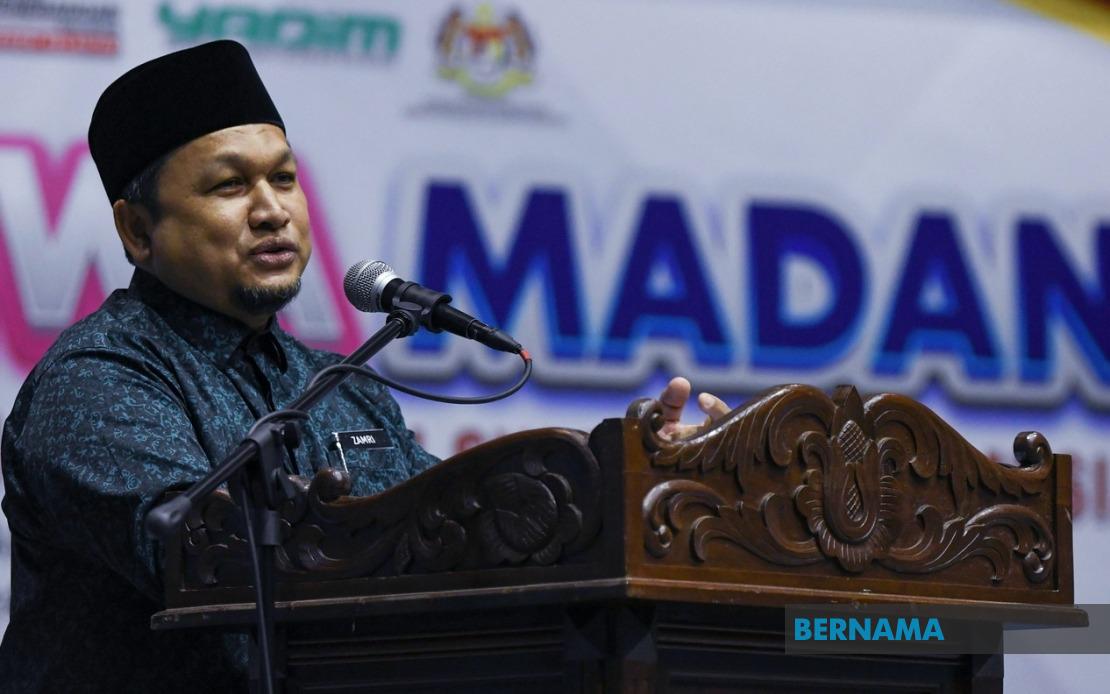
Zamri Zainal Abidin, chief executive of YADIM, articulated the foundation's enthusiastic endorsement of the proposal, which was originally announced by Dr Zulkifli Hasan, the Minister in the Prime Minister's Department responsible for Religious Affairs. The foundation frames the initiative not as restrictive censorship but as a protective mechanism designed to preserve the authenticity of Islamic teachings and maintain public confidence in religious guidance as it traverses the digital realm. This framing proves crucial in a landscape where religious institutions have struggled to maintain traditional authority structures in the face of democratized information distribution.
Central to YADIM's argument is a straightforward concern: the current absence of any meaningful gatekeeping mechanism allows virtually anyone to establish themselves as a religious authority figure online, regardless of their actual depth of Islamic knowledge or training. This democratization of religious voice, while theoretically empowering, creates genuine risks, particularly when individuals without rigorous theological grounding present incomplete or distorted interpretations of Islamic principles to audiences seeking spiritual guidance. The concern extends beyond academic precision to encompass the potential for deliberate manipulation of religious doctrine for personal gain or ideological purposes.
The foundation emphasized that such unregulated proliferation of self-appointed preachers poses particular risks for younger Malaysians who increasingly turn to social media platforms as their primary source of religious information and instruction. Without reliable mechanisms to distinguish between qualified teachers and fraudulent actors, young people absorb religious guidance whose provenance they cannot verify and whose foundational accuracy they lack the training to evaluate. This vulnerability becomes especially acute as algorithmic feeds amplify emotionally resonant or sensational content, potentially elevating less reliable sources while marginalizing more measured, authoritative voices.
Zamri stressed that the proposed framework carries no intention to suppress dakwah activities or erect unnecessary obstacles for sincere individuals genuinely committed to sharing Islamic knowledge with broader audiences. Rather, the accreditation mechanism would function as a credibility marker, allowing audiences to identify speakers who have undergone formal evaluation of their theological knowledge, teaching methodology, and adherence to orthodox Islamic principles as understood within the Malaysian context. This distinction between restricting activity and establishing quality standards proves essential to the framework's potential acceptance among both religious communities and civil society observers concerned about government overreach.
YADIM itself has already implemented comparable credibility measures internally, demonstrating the practical feasibility of such systems. The foundation's trained preachers, including those in its Daie Muda program targeting younger religious teachers, receive formal accreditation from the Federal Territories Mufti Department. This existing practice provides a template for broader implementation, suggesting that YADIM sees the government proposal as an extension and generalization of mechanisms already proven workable within its own institutional context.
The foundation's positioning as a potential strategic partner in realizing the initiative carries significance given YADIM's institutional location within the Prime Minister's Department and its role as the government's primary dakwah agency. This structural positioning enables the foundation to offer not merely rhetorical support but concrete institutional capacity to develop accreditation standards, train evaluators, and maintain credential registries. However, it also inevitably raises questions about whether government-proximate institutions can establish standards perceived as genuinely independent and professionally rigorous rather than politically motivated.
The practical implementation of such accreditation frameworks will require navigation of several complex considerations particular to the Malaysian context. Religious authority in Islam operates differently than in hierarchical faith traditions, and Islamic education encompasses both formal institutional training and informal mentorship traditions. Any accreditation system must accommodate these diverse pathways to religious competence while establishing meaningful standards that prevent unqualified individuals from misrepresenting their credentials. Additionally, the framework must function across Malaysia's various states, each with distinct Islamic administrative structures and established religious authority hierarchies.
The timing of this initiative reflects broader regional anxieties about online religious content. Across Southeast Asia, governments and religious institutions grapple with the challenge of maintaining theological orthodoxy and preventing the spread of fringe interpretations through digital channels. Malaysia's proposal arrives amid increasing scrutiny of online religious content globally, from debates over ISIS recruitment to concerns about the amplification of extremist interpretations. The accreditation framework positions itself as a moderate middle path between laissez-faire approaches that allow uncontrolled content proliferation and heavy-handed censorship that might provoke accusations of religious suppression.
For Malaysian audiences and religious communities, the proposal ultimately hinges on questions of implementation transparency and institutional trust. Whether the accreditation system will genuinely enhance the quality and reliability of online religious guidance, or whether it will become a tool for enforcing ideological conformity beyond legitimate theological standards, depends heavily on how authorities construct and administer the framework. Public confidence in such mechanisms requires not merely declarations of good intent but demonstrated commitment to procedural fairness, transparent evaluation criteria, and genuine input from diverse Islamic scholarly traditions represented within Malaysia's Muslim-majority society.

