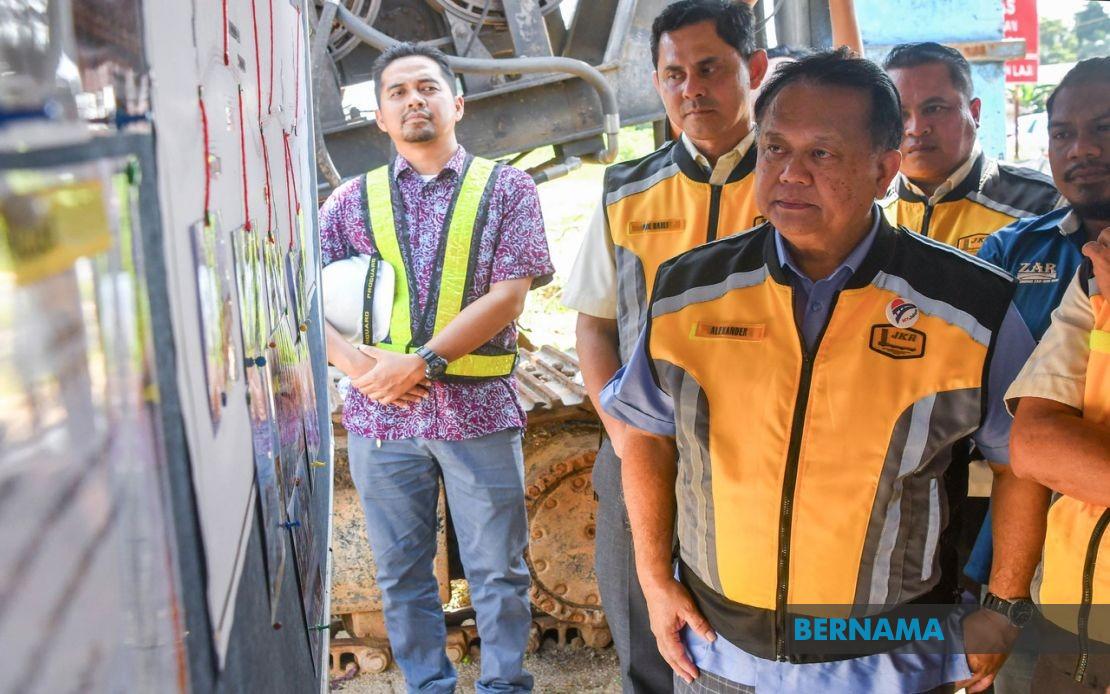
The Works Ministry has placed 50 infrastructure projects under intensive scrutiny as their implementation timelines have slipped significantly, with officials working to restore these developments to their intended schedules. Works Minister Datuk Seri Alexander Nanta Linggi disclosed the scope of the monitoring effort during a working visit to a major road project in Kelantan, underscoring the extent of delays affecting the ministry's nationwide portfolio. Out of the 865 projects currently under the ministry's responsibility, only seven in Kelantan have been classified as problematic, suggesting that the delays are distributed across the country rather than concentrated in any single region.
The underlying causes of these project slippages reveal common structural challenges in Malaysia's infrastructure delivery system. Financial difficulties affecting contractors represent a significant factor, alongside management shortcomings within executing organisations. Land acquisition complications have emerged as another persistent obstacle, frequently causing cascading delays in site preparation and mobilisation. The ministry has also identified utility relocations as a recurring complication, requiring coordination with multiple service providers before construction can proceed. Unforeseen underground conditions discovered during implementation, which escaped detection during the initial planning and survey phases, have created additional complications that extend timelines unpredictably.
The ministry's approach to managing these problematic projects involves a structured review mechanism designed to evaluate each situation independently and determine the most suitable resolution. Rather than applying blanket solutions, officials assess the specific circumstances surrounding each delayed project to decide whether continuation, modification, or termination represents the most cost-effective pathway forward. This nuanced approach acknowledges that different projects face distinct challenges requiring tailored interventions rather than standardised responses that might generate unnecessary expenditure.
A critical consideration in the decision-making process involves the extent of work remaining when delays become apparent. Projects approaching completion, with only ten to fifteen percent of work outstanding, are frequently granted extensions of time rather than facing contract termination. This pragmatic stance recognises that terminating contracts and appointing replacement contractors typically incurs significantly higher costs than permitting reasonable additional time for completion. The ministry thus avoids the false economy of enforcing strict deadline adherence when doing so would substantially increase public expenditure.
Responsibility for the weekly assessment of delayed projects has been structured through the ministry's senior leadership, with the deputy minister assigned specific oversight duties. These reviews occur consistently following post-Cabinet meetings, ensuring that the monitoring process remains integrated with broader government decision-making cycles. The systematic tracking allows officials to identify emerging problems early and implement corrective measures before minor issues escalate into project failures. The consistent rhythm of weekly reviews, rather than ad hoc assessments, creates accountability mechanisms that pressure contractors and project teams to maintain momentum and address obstacles promptly.
Projects demonstrating persistent unsatisfactory performance face graduated consequences as the ministry progressively escalates its interventions. Initial steps involve detailed performance reviews and corrective action plans imposed on underperforming contractors. Should these measures prove insufficient, the ministry retains the authority to remove contractors entirely and appoint substitute organisations to complete the remaining work. The ultimate sanction involves contract termination, though officials acknowledge that this decision requires careful handling to remain compliant with proper governance frameworks and avoid exposing the government to legal challenges that could prove costly and time-consuming.
The FT209 and FT131 road upgrading project in Kelantan exemplifies both the magnitude of contemporary infrastructure investment and the complications that accompany large-scale developments. The RM191 million undertaking addresses a critical transport bottleneck affecting movement between Kubang Kerian and Pengkalan Chepa, routes that experience chronic congestion during peak periods. The six-kilometre stretch requires comprehensive upgrading to accommodate anticipated traffic growth and provide relief to communities dependent on these routes for economic connectivity. The project has achieved 71.61 percent physical progress, positioning it on a trajectory toward September next year completion, though this timeline presumes that no further complications emerge during the final implementation stages.
Land acquisition for the road project has proven financially intensive, with 300 land parcels requiring compensation that has exceeded RM200 million. This substantial expenditure, necessary to clear rights-of-way for construction, reflects both the urban density along the corridor and the need to provide fair market value compensation to affected property owners. The scale of land acquisition costs underscores how contemporary infrastructure projects in increasingly developed areas face significantly higher land-related expenses than comparable undertakings in less densely populated regions, a constraint that limits the number of major projects that can proceed simultaneously within budget parameters.
Concerns raised by the local Member of Parliament regarding flooding affecting adjacent residents prompted the minister to direct immediate remedial action. The contractor has been instructed to construct a temporary forty-metre drainage channel to mitigate flood impacts pending full project completion. This responsive action addresses community concerns whilst avoiding modifications that might substantially delay the overall project schedule. The intervention reflects how infrastructure projects generate localized impacts requiring mitigation measures that extend beyond the primary project objectives, adding complexity to implementation planning and community engagement strategies.
The ministry's intensive monitoring regime reflects broader governmental recognition that infrastructure delivery requires systematic oversight to prevent cost overruns, maintain timelines, and ensure public resources achieve intended outcomes. The 50 projects currently demanding close attention represent approximately six percent of the ministry's nationwide portfolio, a proportion suggesting that whilst delays affect a minority of projects, the absolute number remains substantial enough to warrant dedicated management focus. This monitoring model, combined with weekly assessment cycles and graduated consequences for underperformance, provides a framework designed to maintain accountability whilst remaining cognisant of the practical realities and unanticipated complications that accompany large-scale infrastructure delivery in Malaysia's diverse geographic and administrative contexts.

