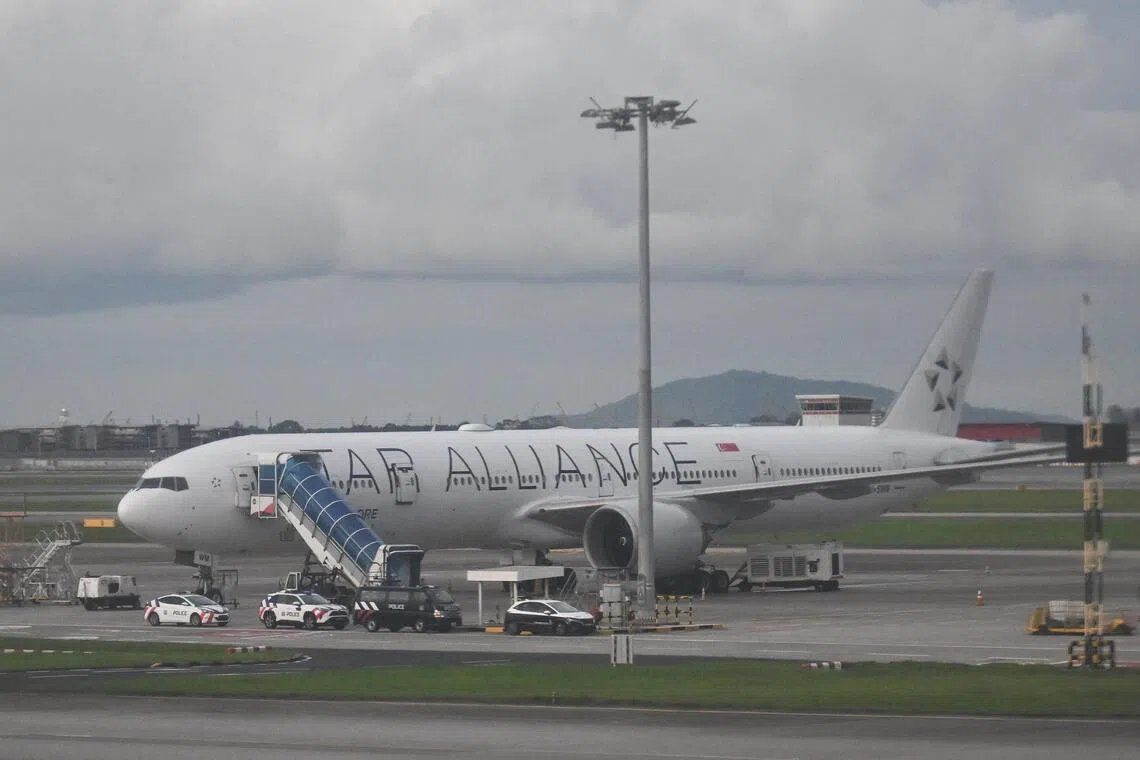
Linda Kitchen has launched legal proceedings at Britain's High Court against Singapore Airlines, seeking damages following the death of her husband during severe turbulence that struck Flight SQ321 in May 2024. The 74-year-old widow is pursuing the compensation claim to secure specialist medical support for her broken back, sustained during the catastrophic incident that unfolded as the London-bound aircraft flew over Myanmar.
Geoffrey Kitchen, a theatre director, suffered a fatal heart attack when the aircraft suddenly dropped over 54 metres in just five seconds on May 21, 2024. The couple had been married for 52 years and were embarking on a six-week holiday to Singapore, Indonesia and Australia when the tragedy occurred. The incident has left Linda Kitchen grappling not only with profound grief but also with the physical and financial burden of long-term medical rehabilitation, prompting her to pursue formal legal action through the courts.
The turbulence struck without warning during routine breakfast service, with the sudden plunge throwing passengers and cabin contents violently through the cabin. According to eyewitness accounts, Geoffrey Kitchen was thrown forward with such force that he fell directly onto his wife, crushing her against the armrest. Other passengers intervened to help move him as a physician among the passengers immediately began cardiopulmonary resuscitation in an attempt to revive him. Despite these emergency efforts, the damage sustained during the violent motion proved fatal.
Flight SQ321 was carrying 211 passengers and 18 crew members when the turbulence struck. The captain made an emergency diversion to Suvarnabhumi Airport in Bangkok, Thailand, where the aircraft landed and immediate medical assistance was provided to the injured. In total, 79 people sustained injuries ranging from minor to serious. Linda Kitchen spent ten days in hospital in Bangkok before being airlifted back to Bristol in the United Kingdom, where she required additional hospitalization and ongoing home support following her discharge.
The emotional toll has been compounded by Linda's experience of learning about her husband's death. She was not informed of Geoffrey's passing until two days after the incident, and she has described the initial separation and subsequent revelation as devastating. In remarks to British media, she recalled the confusion and pain of the emergency: "When I got separated from Geoff, I knew he was in a bad way, but nothing prepared me for hearing he had died. It was absolutely devastating. I was in so much pain that the journey was a blur. Once back in the UK, I remained in hospital for around a week and, following my discharge, required significant assistance at home."
Anthe Korelidou, the aviation lawyer representing Kitchen, has emphasized that the legal action represents a quest for accountability and thorough investigation. Despite the passage of more than two years since Geoffrey's death, lingering questions remain about what transpired and whether preventive measures could have mitigated the injuries. Korelidou stated: "While it's more than two years since Geoff's death, Linda and the rest of her family continue to have a number of questions and concerns about what happened and if more could have been done to prevent their injuries. All Linda wants is for the most thorough investigations to be conducted."
Linda Kitchen is among multiple passengers pursuing legal claims against the airline. British court records indicate that Bradley Richards, Jack Jenkins, Hannah Fullerton, Andrew Dawood, Bryan Matthews, and Pauline and Michael Rainey have also initiated proceedings. These parallel cases underscore the broader impact of the incident and the widespread pursuit of legal remedies among affected passengers and families.
Singapore Airlines has maintained a cautious stance regarding ongoing litigation. When contacted by The Straits Times on August 29, the airline stated it was unable to comment on matters currently before the courts. However, in 2024 the carrier did implement a compensation programme for Flight SQ321 passengers, offering USD10,000 to those with minor injuries and USD25,000 advance payments to passengers requiring long-term medical care. The airline additionally provided full airfare refunds to all passengers aboard the flight and issued a formal apology acknowledging the traumatic experience of those involved.
The technical circumstances of the incident have been examined by Singapore's Transport Safety Investigation Bureau (TSIB), which conducted a formal investigation into the turbulence event. The bureau's report concluded that storm clouds responsible for the severe turbulence went undetected by the aircraft's onboard weather radar, catching the captain by surprise. This detection failure created a situation where preventive action could not be taken. However, the TSIB has determined that it remains inconclusive whether technical malfunctions with the radar system itself were responsible for the failure to detect the hazardous weather phenomena, leaving open questions about potential systemic vulnerabilities.
The incident has broader implications for aviation safety protocols in Southeast Asia and beyond. The fact that advanced weather detection systems failed to identify dangerous storm formations raises concerns about radar reliability during extreme weather events and the adequacy of alternative weather monitoring procedures. For Malaysian and regional aviation authorities, the case serves as a reminder of the critical importance of maintaining robust weather surveillance capabilities and developing enhanced detection protocols for severe atmospheric phenomena that may evade conventional radar systems.
Linda Kitchen's pursuit of justice through the British courts reflects the complex jurisdictional and legal questions that arise when international aviation incidents result in casualties. Her case will likely establish important precedents regarding airline liability for injuries sustained during severe weather events and the extent to which airlines can be held responsible when detection systems fail. The ongoing legal proceedings signal that affected passengers and families are determined to obtain comprehensive answers about what occurred and to secure compensation that recognizes both the loss of life and the lasting physical and emotional trauma inflicted.

