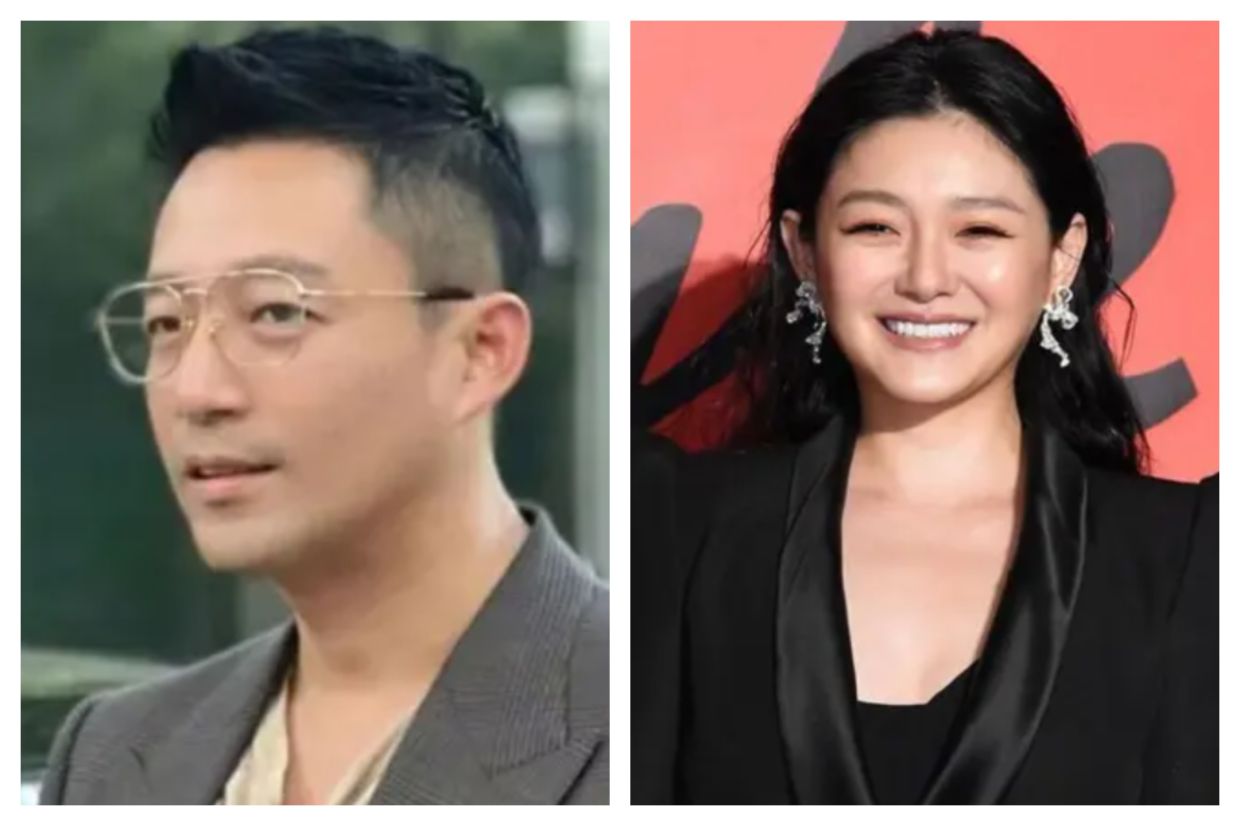
Wang Xiaofei, the Chinese entrepreneur and former husband of late Taiwanese actress Barbie Hsu, has stepped forward to address mounting speculation about her estate following her death from pneumonia in 2025. Through an official statement released by his representative on July 8, Wang sought to dispel circulating rumors that have increasingly complicated the administration of Hsu's inheritance and strained her family relationships during an already difficult period.
The couple's 11-year marriage ended in divorce in 2021, leaving behind two minor children who now stand to benefit substantially from Hsu's assets. According to the statement, two-thirds of the actress's total estate has been allocated to these children and secured through formal trust arrangements, a structure designed to protect their financial interests during their years of dependency. Wang has additionally moved to strengthen these protections by petitioning the court to appoint a specialized legal representative whose responsibility will be safeguarding the children's rights throughout the inheritance process.
The remaining one-third portion of Hsu's estate legally belongs to her second husband, Korean musician and DJ Koo Jun-yup, also known as DJ Koo, whom she had married after rekindling a romance that originally developed in 1998. Wang's representative underscored that the former entrepreneur fully respects Koo's entitlement and his prerogative to make independent decisions regarding his inheritance share, signaling a notably magnanimous stance given the sensitive family circumstances and potential financial disputes.
A significant source of family distress has been circulating reports suggesting that Hsu's properties faced potential auction due to unpaid mortgage obligations, with particular concern raised by Hsu's mother, who reportedly feared eviction from the residence. Wang's representative directly contradicted these narratives, asserting that mortgage payments have been consistently managed by Wang himself since Hsu's passing and that these obligations have been appropriately transferred to the children's estate accounts. The statement emphasized that Hsu's mother remains welcome to continue her residence in the family home indefinitely, with no pressure or expectation of relocation.
Estimates place Hsu's total estate value at approximately 600 million yuan, equivalent to roughly RM361 million, a substantial sum reflecting her successful decades-long entertainment career. Her assets encompass significant real estate holdings, including a penthouse unit and a valuable property located at the National Taiwan Museum of Fine Arts, alongside financial considerations derived from her divorce settlement with Wang. This considerable estate underscores both the complexity of the inheritance administration and the substantial interests at stake for the beneficiaries involved.
The distribution of these assets has become notably complicated by the proliferation of unverified claims and speculative reporting that have circulated through media channels in Taiwan and across the broader Chinese-speaking entertainment sphere. Wang's representative appealed directly to media outlets to exercise restraint and journalistic responsibility, arguing that continued publication of unsubstantiated rumors has caused measurable distress to the grieving family members already navigating the emotional and practical challenges inherent in estate settlement.
Currently, the formal administration of Hsu's inheritance proceeds under the structured oversight of a court-appointed legal representative, ensuring that distributions align with applicable succession laws and protect the interests of all entitled parties. This judicial supervision provides an important safeguard against future disputes and establishes a transparent framework for resolving remaining questions about asset valuation and distribution procedures. The involvement of the court system reflects the significant scale and complexity of the estate, which extends across multiple jurisdictions and asset classes.
The situation underscores the particular challenges that arise when prominent entertainment figures pass away, leaving behind multiple marriages, significant assets, and competing family interests. In the case of Hsu, whose career spanned Taiwan, mainland China, and South Korea, her death has triggered inheritance questions with cross-cultural and cross-border dimensions that require careful navigation of different legal systems and family expectations. Wang's statement appears designed to establish clarity and demonstrate that all parties are acting within recognized legal frameworks and with appropriate family consideration.
For Malaysian readers and others across Southeast Asia, this case illustrates the importance of clear estate planning and formal inheritance structures, particularly for individuals with substantial assets and complex family arrangements spanning multiple countries. The situation also highlights how media reporting on celebrity inheritances can amplify family tensions and create unnecessary confusion when factual clarification remains pending through legal channels. Wang's intervention, while coming months after initial disputes surfaced, represents a deliberate effort to restore family dignity and redirect attention toward the formal legal processes governing the estate's ultimate resolution.

