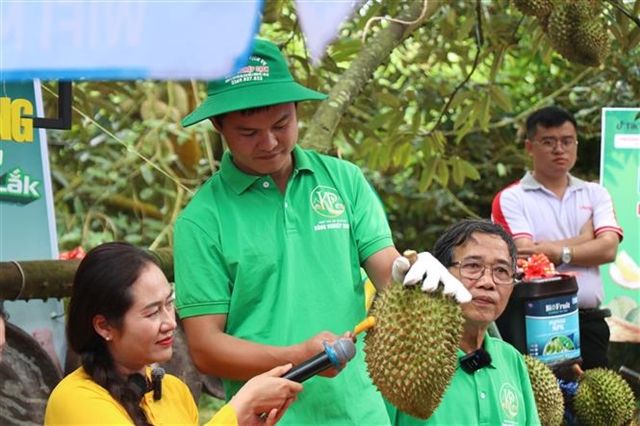
Vietnam's thriving durian industry is confronting a critical integrity crisis. The Ministry of Public Security has escalated investigations into systematic corruption involving the issuance of growing area codes, packing house certifications, and laboratory test results for durian destined for Chinese markets. The inquiry has uncovered a troubling pattern of officials, including a high-ranking figure at the Ministry of Agriculture and Environment, allegedly leveraging their positions to create unauthorised 'sub-licences' that enriched private interests while circumventing proper regulatory channels. The scale of illicit gains uncovered suggests this was not opportunistic malfeasance but rather an entrenched scheme requiring complicity across multiple government tiers.
The scandal arrives at a particularly sensitive moment for Southeast Asia's agricultural trade landscape. Vietnam's fruit and vegetable exports surged to approximately US$4.7 billion during the first seven months of 2026, representing a robust 23 per cent annual increase, with July alone marking the first instance of monthly exports breaching the US$1 billion threshold. Durian production dominates this recovery, accounting for more than half of total fruit and vegetable shipments. This concentration underscores both the sector's economic importance and its vulnerability to reputation damage or market access restrictions. For Malaysian stakeholders monitoring regional agricultural competition, Vietnam's stumble presents both immediate market opportunity and a cautionary tale about institutional fragility.
The certification apparatus Vietnam has constructed to facilitate durian exports to China functions as a multi-layered gatekeeper system. Exporters cannot access Chinese markets without securing three interconnected credentials: a legitimate growing area code identifying the production zone, registration documentation for the packing facility processing the fruit, and laboratory certificates confirming the absence of prohibited contaminants such as cadmium and Auramine O residues. This architecture, designed to assure Chinese importers of product traceability and safety compliance, has become the vulnerability point through which fraudsters have operated. When violations are detected, Chinese authorities respond with blunt instruments—suspending entire growing area codes, withdrawing laboratory approvals, intensifying inspections, and halting shipments until compliance is demonstrated.
Industry participants have long warned about systemic weaknesses in enforcement mechanisms. The Vietnam Fruit and Vegetables Association documented instances where operators duplicated government seals and forged authorisation documents to falsely claim rights to growing area and packing facility codes legitimately issued to competing businesses. Beyond the immediate commercial advantage gained through fraud, such practices corrode the entire certification framework's credibility. Compliant producers operating within proper regulatory channels face heightened Chinese scrutiny, delayed shipments, and potential reputational contamination by association with fraudulent operators. The integrity of the system thus becomes a collective good—its degradation harms legitimate players whilst rewarding rule-breakers.
Testing capacity has emerged as a distinct operational chokepoint. Vietnam relies on designated laboratories authorised to conduct cadmium and Auramine O residue testing, yet periodic temporary suspensions of these facilities have repeatedly disrupted export schedules precisely when harvest volumes peak. During recent years, hundreds of shipping containers have accumulated in warehouses awaiting inspection clearance, creating costly delays and straining supply chain logistics. This bottleneck generates perverse incentives—operators desperate to move inventory may be tempted toward illicit shortcuts or corrupt arrangements with testing officials to expedite results. Recognising this vulnerability, the Ministry of Agriculture and Environment earlier in 2026 instructed testing facilities to expand staffing, extend operating hours, and enhance procedural transparency to eliminate backlogs and reduce opportunities for misconduct.
Government response has escalated from administrative tightening to high-level anti-corruption action. In 2025, the Prime Minister issued a directive ordering comprehensive investigation into the illegal trading of growing area and packing facility codes, forged export documentation, and related violations that threaten Vietnam's international agricultural reputation. The discovery that these violations had metastasised into the current corruption investigation suggested earlier warnings had been inadequately heeded. Most recently, the Government Inspectorate initiated a 60-day intensive review of certification issuance and management practices across Dong Thap, Lam Dong, and Dak Lak—the three provinces accounting for Vietnam's largest durian production volumes. This audit encompasses certification procedures spanning from March 2023 through June 2026, with explicit focus on identifying systematic management failures that permitted fraudulent activity to flourish.
Local administrative bodies have begun taking remedial action. On July 28, authorities in Lam Dong Province revoked seven growing area codes and five packing facility codes granted to two Dak Lak-based companies, following evidence the firms had ceased purchasing operations from registered growers and dissolved their production relationships. The companies' voluntary request for cancellation suggests they anticipated imminent legal exposure and sought to limit potential criminal liability. This reactive posture hints at the scale of the fraud problem—neither isolated bad actors but rather interconnected networks of operators exploiting the system's weaknesses whilst remaining sufficiently integrated within it to recognise danger signals.
Industry voices increasingly emphasise that institutional credibility now ranks equally with production capacity. Nguyen Van Muoi, deputy secretary-general of Vinafruit, articulated that meaningfully elevating product quality must proceed in tandem with constructing genuinely transparent and reliable certification mechanisms. Le Anh Trung, chairman of the Dak Lak Durian Association, has advocated for accelerated digitalisation of growing area management and traceability infrastructure. He highlighted a seeming paradox afflicting Vietnam's durian sector—strong export demand persists yet the number of officially certified growing areas remains circumscribed, a mismatch reflecting both fraudulent code-sharing and gaps in legitimate capacity authorisation. Industry observers contend that the gap itself creates perverse incentives for operators unable to secure proper codes through legitimate channels.
Experts advancing reform blueprints identify several foundational interventions. Comprehensive digitalisation of growing area records, integrated with interconnected traceability databases, would substantially elevate the technical barriers to successful fraud whilst creating audit trails enabling detection. Strengthening independent oversight of both testing laboratories and certification authorities through external auditing mechanisms would reduce reliance on internal compliance cultures demonstrably compromised. Establishing firewalls between officials responsible for issuing codes and those conducting inspections would diminish opportunities for collusion. These measures collectively shift from a trust-based governance model toward a system-based architecture rendering fraud significantly more difficult and risky to execute.
As Vietnam navigates this institutional crisis, the broader strategic implications for Southeast Asia merit consideration. International buyers—particularly China—are progressively tightening food safety and traceability standards, making governance reliability increasingly determinative of long-term market competitiveness. For regional competitors including Malaysia, Vietnam's current vulnerability represents a window during which alternative suppliers can rebuild buyer relationships and demonstrate superior institutional reliability. Conversely, if Vietnam successfully reforms its certification framework and restores market confidence, the competitive challenge for other durian exporters will intensify. The investigation's outcome will thus reverberate across regional agricultural trade dynamics, potentially reshaping established market shares and buyer sourcing strategies.

