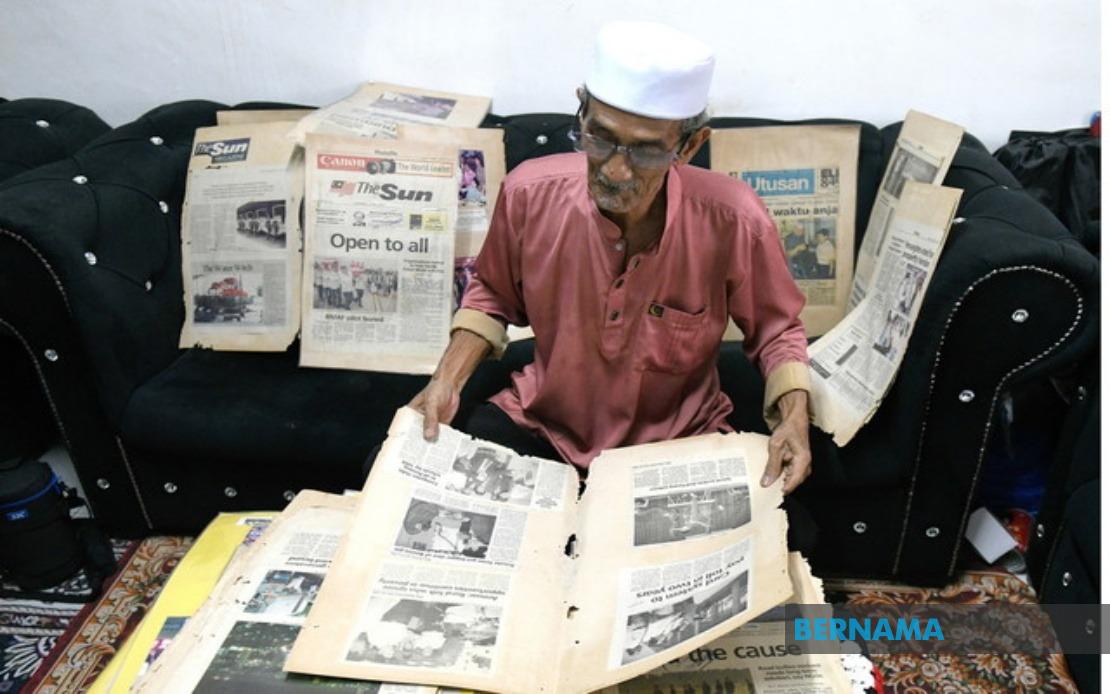
Azmi Sapiei's journey through Malaysia's news media landscape spans more than three decades, marked by both triumphant journalistic moments and difficult encounters that have tested his resolve. The 64-year-old veteran photographer and cameraman, who worked across multiple prestigious media organisations including the Malaysian national news agency Bernama, Radio Televisyen Malaysia, and The Sun newspaper, carries vivid memories of being physically assaulted while on duty—an experience that underscores the often-overlooked hazards faced by those who document Malaysia's breaking news stories.
One particularly formative incident occurred around 2001 while Sapiei was working for The Sun covering a court case. During that assignment, a suspect kicked and spat at him, a traumatic moment that remained deeply embedded in his professional memory. Such encounters represent the unglamorous reality behind the camera, revealing that news gathering demands not only technical skill and journalistic acumen but also considerable physical courage and psychological resilience. For Sapiei, these challenges became integral to his understanding of what it truly means to be a frontline media professional documenting Malaysian current events.
Before experiencing these occupational hazards, Sapiei had already established himself as a capable news photographer. His nearly three years with Bernama, beginning in 1993, exposed him to major national assignments and helped shape his professional standards. Among his most significant scoops was securing exclusive photographs of Shamsiah Fakeh, a former Malayan Communist Party member, upon her return from China in July 1994. The assignment required strategic timing and resourcefulness—Sapiei and his accompanying journalist managed to gain access to her residence in Gombak by arriving ahead of the police cordon that would have prevented media access. This early success demonstrated the investigative instinct and persistence that would characterise his lengthy career.
The story of how those photographs were initially received illustrates the evolution of news judgment during the film era. Sapiei shot three rolls of film covering Shamsiah's arrival, a substantial effort given the material costs and processing delays of analogue photography. When he returned to the office, his editor questioned whether three rolls represented adequate coverage, suggesting skepticism about the assignment's newsworthiness. However, after the film was developed, every major Malaysian newspaper published the images the following day—a vindication that taught Sapiei valuable lessons about trusting his instincts and understanding what constitutes genuine news value, even when initial reactions suggest otherwise.
Sapiei's path to journalism was unconventional. Beginning his career in the mid-1980s, he initially worked in factory employment before deciding to relocate to Kuala Lumpur to pursue his passion for photography. He worked independently with various agencies and women's magazines, gradually building technical expertise and developing an understanding of visual storytelling. When he joined Bernama in 1993, he brought this accumulated experience and genuine enthusiasm for news photography. The organisation became what he describes as a professional 'school'—an environment that not only produced skilled visual journalists but instilled rigorous discipline regarding accuracy, news value, and ethical standards in image capture and presentation.
The transition from analogue to digital technology fundamentally changed how news photographers operate, yet Sapiei's career spanned both eras, providing perspective on their respective demands. During the film era, photographers faced significant operational constraints. Every photograph required chemical processing before editors could evaluate its news value, meaning decisions about coverage had to be made with incomplete information about results. Photographers also bore responsibility for writing detailed captions that would accompany their images to publication, requiring them to be both visual and verbal communicators. This dual competency—understanding both what made a compelling image and how to articulate its newsworthiness—became a defining characteristic of photographers trained during this period.
When Sapiei transitioned to television work with Bernama TV and subsequently with RTM Penang beginning in 2003, he encountered different physical and technical requirements. Television cameramen operated equipment substantially heavier than still cameras, with the Betacam systems Sapiei used weighing approximately 12 kilogrammes. Journalists in the field nicknamed this equipment 'junk iron' because operators had to carry and stabilise these machines throughout long assignments, often in challenging locations or weather conditions. The physical endurance required to maintain camera stability while standing for extended periods, navigating uneven terrain, or responding quickly to developing situations represented a dimension of journalism frequently invisible to audiences consuming finished news reports. Sapiei's willingness to master this technology and tolerate its physical demands exemplified the professional commitment expected of broadcast journalists.
Sapiei's career achievements earned recognition from Malaysian media institutions. In 2006, he received the Penang State Media Award in the visual electronic media category, acknowledging his contributions to the field and his standing among peers and media administrators. This honour came near the conclusion of his most intensive professional period, as he continued working part-time with RTM Penang until retiring in mid-2020. By that point, he had witnessed the complete transformation of news media—from darkroom processing to digital workflows, from film stock to memory cards, from local distribution to instantaneous global dissemination through digital platforms.
Perhaps most significantly, Sapiei's professional legacy extends into the next generation through his son Muhammad Syafiq, who is now 30 years old and works as a cameraman with Media Prima Television Network. Young Syafiq's interest in television production was cultivated directly through exposure to his father's work. As a child, he observed the equipment Sapiei brought home and began accompanying him to assignment locations after completing his Sijil Pelajaran Malaysia examination in 2016. Within a year, he had begun operating cameras himself, transitioning from observer to practitioner. This intergenerational transmission of skills and professional values represents a continuity often overlooked in discussions of media industry evolution.
Muhammad Syafiq credits his father not merely as a parent but as an educator and mentor who conveyed the technical dimensions of broadcast journalism alongside its disciplinary and ethical requirements. The lessons encompassed practical camera operation and compositional choices regarding visual angles, but also extended to maintaining professional standards and work discipline while covering unpredictable news events. This mentorship model—where professional knowledge, technical competency, and ethical commitment are transmitted through observation and guided practice—has historically characterised journalism training within Asian newsrooms, particularly before the proliferation of formal broadcast journalism programmes in regional universities.
Sapiei's reflections on his career reveal an individual who has maintained genuine pride in his professional contributions despite encounters with violence and the considerable physical demands of news gathering. His understanding that the profession requires simultaneous development of technical skill, physical resilience, and mental fortitude has shaped not only his own approach but also the values he has communicated to his son. In an era when Malaysian media industries face significant economic and technological pressures, and when journalistic work is increasingly performed under challenging circumstances, Sapiei's career provides a reminder of the commitment and sacrifice that news photography and videography demand from practitioners. His transition from exclusive film photography to digital television work, and his cultivation of the next generation of Malaysian visual journalists, underscore the adaptability required to sustain a media career across technological and industrial transformations.

