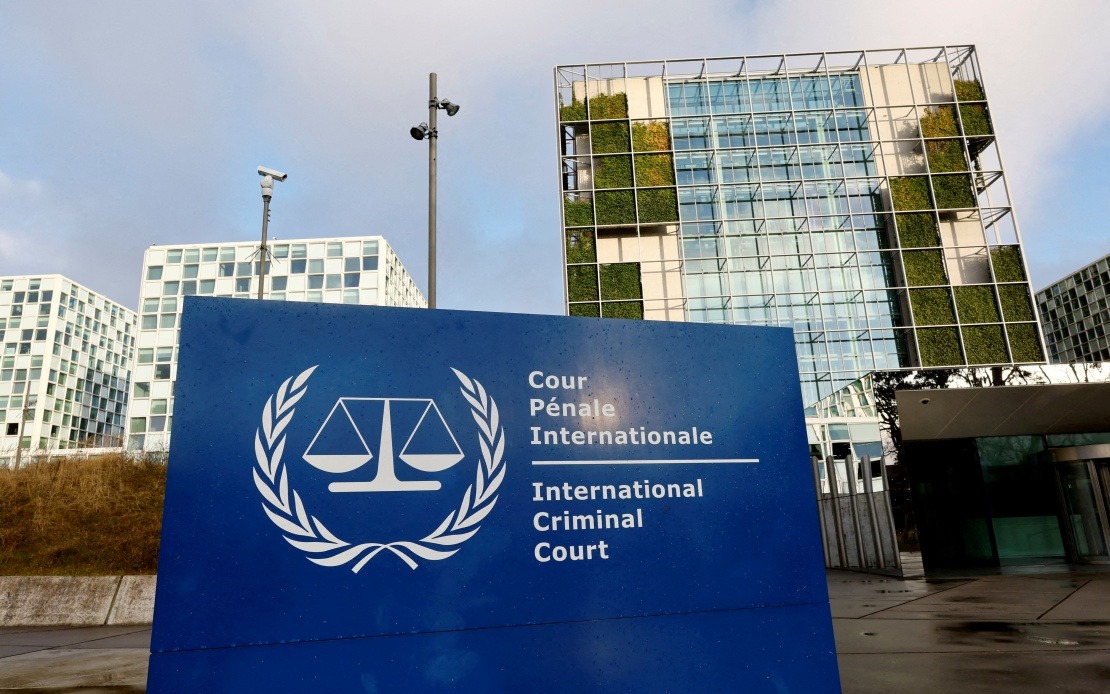
Venezuela has formally announced its withdrawal from the International Criminal Court following weeks of escalating tension with the multilateral institution. The government submitted its notification to the United Nations on Friday through Foreign Minister Felix Plasencia, who described the decision as one made on the direct orders of acting President Delcy Rodriguez and representing the nation's "firm and irrevocable" departure from the court's jurisdiction.
The timing of the withdrawal is significant given the ICC's active investigation into Venezuela's government for alleged crimes against humanity. Caracas has consistently rejected these accusations, and the withdrawal effectively removes Venezuela from the court's legal reach, at least temporarily. The move represents a dramatic escalation in the Venezuelan government's confrontational stance toward international accountability mechanisms at a moment when domestic and international scrutiny of its governance has intensified dramatically.
In articulating the rationale for departure, Plasencia pointed to what he characterised as a demonstrable pattern of geographical bias embedded within the ICC's operations. He argued that the court's investigative and prosecutorial focus has disproportionately concentrated on African nations and Latin American countries, creating what he described as an inequitable distribution of international justice resources that disadvantages Global South nations relative to wealthier and more powerful regions. This framing reflects a broader critique circulating among developing nations regarding the structures and application of international law.
Venezuela's argument extends beyond mere statistical observation of case distribution. The government contends that the ICC, rather than serving as a neutral arbiter of international law, has been instrumentalised as a mechanism to deepen existing inequalities among nations and undermine the sovereignty of developing countries. This perspective suggests a view of international justice institutions as tools through which powerful nations and their allies consolidate control over weaker states' internal affairs, framing the withdrawal as an act of defending national self-determination against external interference.
For Malaysia and other Southeast Asian nations, Venezuela's withdrawal carries implications worth monitoring. Several ASEAN members have similarly expressed scepticism toward international criminal institutions and interventions framed as humanitarian or justice-oriented, particularly when such actions involve scrutiny of governments aligned with other major powers. The precedent of a nation simply withdrawing when facing investigation may resonate with governments concerned about accountability mechanisms they view as politically motivated or reflecting the interests of particular geopolitical blocs.
The investigation into Nicolas Maduro's government predates the current withdrawal notice and represents years of accumulated allegations regarding systematic violence, arbitrary detention, torture, and extrajudicial killings during political unrest in Venezuela. The ICC opened its preliminary examination in 2018 and has been gathering evidence from civil society organisations, human rights groups, and alleged victims regarding state conduct during periods of domestic instability. Maduro's government has maintained that such allegations represent politically motivated attacks orchestrated by hostile international actors intent on regime change.
Venezuela's withdrawal mechanism operates within the Rome Statute's established procedures, which allow state parties to terminate their participation through formal notification to the United Nations Secretary-General. Such withdrawals typically become effective one year from the date of notification, providing a transition period during which the court retains theoretical jurisdiction over crimes committed while the state remained a member. However, this timeline may shift depending on how Venezuela and the ICC interpret the legal requirements governing the withdrawal process.
The ideological positioning of this move connects to Venezuela's broader diplomatic orientation and rhetorical strategy. The government frames itself as defending principles of sovereignty and self-determination against what it depicts as neo-colonial impositions by Western-dominated institutions. This narrative appeals to broader constituencies across the Global South that harbour grievances regarding international law's application and question whether neutrality is achievable within structures established primarily by former colonial powers and their successors.
Within Latin America, Venezuela's action reflects deepening divisions regarding international accountability. While some nations view ICC involvement as essential for protecting human rights and addressing systematic abuses, others increasingly view such interventions with suspicion, particularly when they target governments of a certain ideological orientation while leaving others untouched. These fault lines have become increasingly visible in regional forums and voting patterns at the United Nations, where consensus regarding international justice mechanisms has fractured considerably.
For the ICC itself, Venezuela's withdrawal represents another erosion of the institution's already limited global reach and credibility. The court's jurisdiction depends on voluntary state participation, and each withdrawal weakens its legitimacy as a truly universal mechanism. The court currently faces criticism from multiple quarters regarding its effectiveness, funding constraints, and perceived selectivity in prosecution decisions. A wave of withdrawals could significantly compromise its operational capacity and international standing.
The investigation into Venezuelan state conduct will not automatically terminate following the formal withdrawal taking effect. The ICC may potentially pursue cases involving crimes committed during Venezuela's membership period, though doing so would require navigating complex jurisdictional questions and likely face fierce diplomatic resistance from Caracas. The practical implications remain to be determined as legal experts parse the technical requirements governing post-withdrawal authority.
Regional observers note that Venezuela's withdrawal occurs amid a broader recalibration of relationships between Latin American governments and international institutions. Several nations have reasserted emphasis on regional mechanisms for dispute resolution and accountability, potentially reflecting waning confidence in globally-oriented frameworks. This shift may influence how Southeast Asian governments approach similar questions regarding international court involvement in their domestic affairs.

