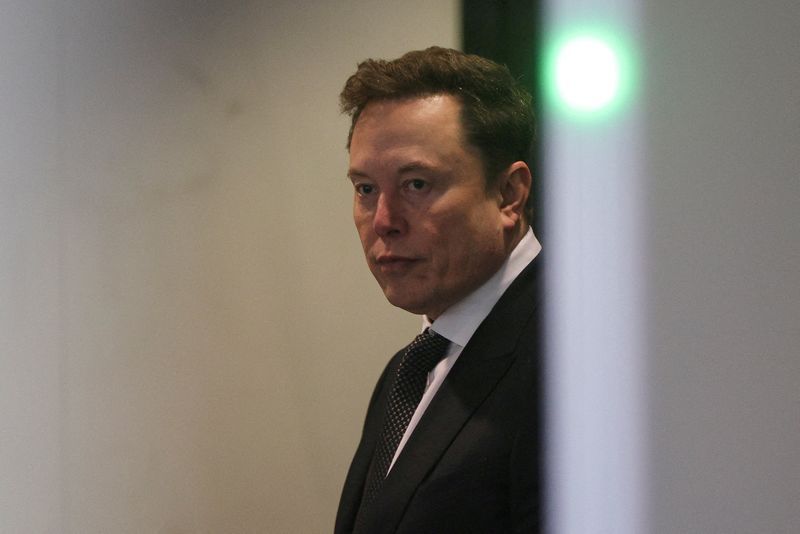
A federal judge in Washington, D.C., has given formal approval to a settlement between billionaire entrepreneur Elon Musk and the US Securities and Exchange Commission, though her decision came laden with scepticism about the accord's fairness and potential implications for regulatory enforcement. U.S. District Judge Sparkle Sooknanan granted the motion on Wednesday to resolve SEC allegations that Musk improperly delayed disclosing his early purchases of Twitter shares in March and April 2022, but her written opinion reveals deep reservations about whether the settlement adequately addresses the underlying violations or sets a troubling precedent for how wealthy individuals are treated by financial regulators.
The crux of the SEC's case against Musk centred on an 11-day gap between his initial share acquisitions and the legally required public disclosure of his growing stake. The commission argued that this concealment allowed Musk to accumulate Twitter shares at artificially depressed prices before market participants became aware of his involvement, resulting in estimated savings of approximately $150 million. The settlement requires a trust established in Musk's name to remit $1.5 million to resolve these claims. Musk has consistently maintained that the delay was unintentional rather than a calculated strategy to manipulate prices or mislead investors. He subsequently completed his acquisition of the social media platform for $44 billion in October 2022, which he subsequently rebranded as X and folded into his broader business empire.
Judge Sooknanan's decision highlights a fundamental tension in regulatory settlements: courts must determine whether the agreed terms represent genuine accountability or an inadequate resolution that undermines public confidence in enforcement mechanisms. In her formal opinion, the judge acknowledged the limited scope of judicial review for consent judgments, noting that while courts serve as gatekeepers against manifestly unfair agreements, they do not function as ombudsmen scrutinizing every aspect of prosecutorial discretion. Nevertheless, she articulated substantial reservations about whether the Executive Branch, acting through the SEC, had sufficiently held Musk accountable for his alleged violation, ultimately concluding that such determinations ultimately rest with voters and the democratic process rather than the judiciary alone.
Among the judge's most pointed criticisms was her questioning of why the SEC abandoned its customary demand for disgorgement, wherein defendants must surrender ill-gotten gains to compensate harmed parties. The SEC justified this decision by asserting that it had not historically pursued disgorgement remedies in comparable cases. Judge Sooknanan found this rationale unconvincing, suggesting that the absence of precedent for a particular enforcement approach does not necessarily validate settling a case on lenient terms. Her scepticism extended to the structural arrangement of the settlement, which designated Musk's trust rather than the individual himself as the paying party, thereby allowing Musk to publicly claim vindication and freedom from wrongdoing despite the trust's financial obligation.
The timing of the settlement adds another layer of complexity to the judge's concerns. The agreement was announced in May, shortly after Margaret Ryan departed from her position as the SEC's enforcement chief in March after serving for merely six months. Ryan's tenure had been marked by internal friction over the agency's enforcement priorities, suggesting that the settlement negotiations may have proceeded during a period of institutional uncertainty and shifting leadership. Judge Sooknanan expressed particular concern that SEC lawyers handling the litigation appeared genuinely surprised during a prior hearing when Musk's counsel revealed that settlement discussions had already commenced with agency leadership, raising questions about whether the legal team prosecuting the case maintained adequate input into resolution negotiations.
The judge's most provocative observation centred on whether Musk received special treatment unavailable to other alleged securities-law violators. She explicitly wondered whether the SEC would extend similar solicitude to other defendants or whether this represented a uniquely favourable arrangement negotiated specifically for Musk. This concern resonates beyond the immediate case, touching on broader questions about regulatory capture, differential enforcement, and the extent to which wealth and political connections influence how financial authorities police violations. Musk's documented association with Republican President Donald Trump, combined with his leadership of Tesla and SpaceX alongside his status as the world's richest person with a net worth exceeding $927 billion, inevitably colours perception of whether comparable figures would receive comparable treatment.
The SEC responded to judicial scepticism by defending the settlement's adequacy in a court filing, emphasizing that the $1.5 million penalty represents the largest of its type and that the agreement includes an injunction effectively binding Musk when he operates through his trust. The agency contended that this arrangement produces genuine public benefit, given that Musk appears to use the trust as a primary vehicle for managing substantial portions of his wealth. The SEC also explicitly denied that collusion influenced the settlement negotiations, though such denials necessarily invite further scrutiny when institutional arrangements and timing raise legitimate questions about whether the normal enforcement process functioned as intended.
For Malaysian and Southeast Asian observers, this case illuminates how even sophisticated regulatory systems in developed democracies struggle with consistent enforcement against wealthy, politically connected individuals. The settlement's apparent leniency contrasts sharply with the substantial consequences typically imposed on ordinary citizens and smaller corporations for comparable securities violations. Judge Sooknanan's concerns about preferential treatment mirror broader anxieties across the region regarding whether regulatory frameworks adequately protect market integrity when enforcement discretion intersects with wealth and influence. The decision to approve the settlement despite expressed misgivings demonstrates the limited judicial tools available to challenge prosecutorial settlements, even when fairness appears questionable.
The case also underscores tensions inherent in modern regulatory design, particularly regarding whether administrative agencies can simultaneously serve prosecutorial and negotiating roles without compromising either function. The apparent disconnect between SEC litigators and leadership in settlement discussions suggests institutional fragmentation that could affect the consistency and perceived legitimacy of enforcement across different matters. As financial markets become increasingly integrated across borders, questions about regulatory capture and differential enforcement in major economies like the United States acquire significance for investors and policymakers throughout Southeast Asia.
Looking forward, Judge Sooknanan's decision, while formally approving the settlement, essentially signals that the case represents an outlier in how regulatory violations are typically resolved. Her pointed criticism creates an implicit pressure on the SEC to justify its enforcement practices and may embolden future defendants to negotiate settlements with renewed confidence that courts will scrutinize agreements for fairness. The decision validates concerns that wealth and prominence can influence regulatory outcomes, even in jurisdictions with established separation of powers and judicial independence. For the broader regulatory community, the judgment serves as a cautionary reminder that settlements must satisfy not merely technical legal standards but also public perception of fairness, accountability, and equal treatment under law.

