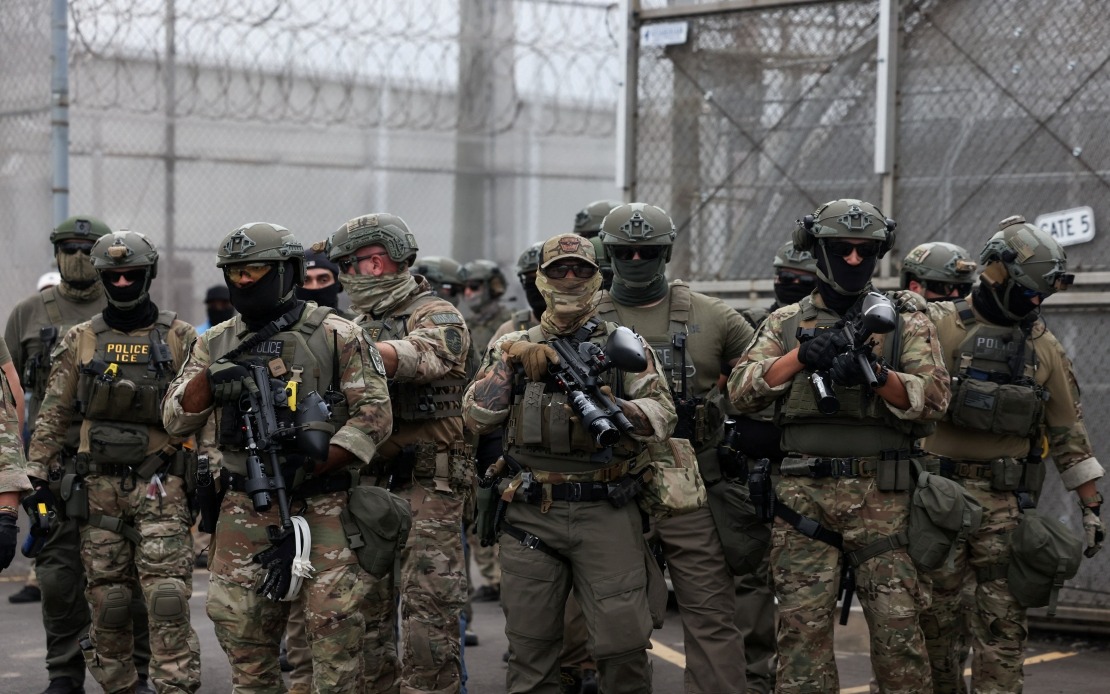
A federal judge in California has issued a sweeping order preventing Immigration and Customs Enforcement (ICE) officers from carrying out arrests of migrants at immigration courthouses across the entire United States, effectively dismantling a controversial enforcement tactic introduced during President Donald Trump's second term. The ruling represents a significant legal setback for the administration's aggressive deportation agenda and reflects growing judicial concern over the intersection of immigration enforcement and the judicial process.
The practice being blocked has allowed ICE agents to detain migrants at courthouses and their surrounding areas, sometimes before their legal proceedings had concluded. This approach has drawn intense criticism from immigrant advocacy groups, legal professionals, and civil rights organizations who argue that the tactic fundamentally undermines the right to due process and creates a chilling effect that discourages migrants from appearing in court to defend themselves against deportation charges.
Immigration courts handle the legal cases of migrants who face potential removal from the United States. When ICE agents conduct arrests at these venues, they effectively disrupt the judicial process itself, creating circumstances where individuals may not receive fair hearings or have adequate opportunity to present their legal defense. The courthouse arrest strategy represents an evolution in enforcement tactics that emerged during the early months of Trump's second administration as part of a broader shift toward more aggressive immigration enforcement policies.
According to the federal judge's written decision, ICE revised its operational guidelines at the beginning of Trump's second term, explicitly incorporating new policies that emphasized the enforcement benefits of conducting arrests within courthouse facilities. However, the court found this shift deeply problematic from a legal standpoint. The judge determined that the agency had not adequately analyzed or addressed the significant concerns surrounding courthouse arrests, nor had it provided a reasoned explanation grounded in law and evidence for abandoning previous restraint on such practices.
The decision highlights a critical gap in the government's administrative process. Federal law requires agencies to follow specific procedural requirements when implementing new policies, including assessing potential negative consequences and explaining why changes are necessary. The judge found that ICE's introduction of courthouse arrests as a deliberate enforcement strategy violated these procedural safeguards, essentially bypassing the careful deliberation required when altering agency practice in ways that affect fundamental legal rights.
For Southeast Asian readers and policymakers, this ruling carries particular relevance given the region's own complex relationships with immigration enforcement and regional migration patterns. Malaysia, as a significant hub for migrant workers and asylum seekers, faces similar tensions between security concerns and protection of migrant rights. The US court decision offers a cautionary example of how aggressive enforcement, when implemented without proper legal guardrails, can face judicial intervention and undermine confidence in the legal system itself.
The practice of arresting individuals at courthouses raises profound questions about judicial independence and access to justice. When enforcement agencies operate within courthouse settings, they effectively transform judicial spaces into enforcement zones, potentially compromising the neutrality and fairness that courts are meant to embody. The judge's concern reflects longstanding principles in jurisprudence that courts should be spaces where individuals can seek legal protection without fear of immediate detention by enforcement authorities.
Critics of the courthouse arrest policy argue it creates perverse incentives that discourage migrants from attending hearings, knowing they risk apprehension before their cases are heard. This dynamic means some individuals may choose to skip court appearances entirely, making it easier for immigration authorities to pursue deportation by default without any judicial scrutiny of the underlying case. By avoiding court, migrants forfeit their opportunity to present evidence, testify, or challenge deportation grounds—outcomes that ultimately serve neither justice nor orderly enforcement.
The ruling also reflects broader judicial skepticism toward the Trump administration's immigration enforcement approach. Courts across the United States have repeatedly found that while the government possesses authority to enforce immigration laws, that authority remains subject to constitutional and statutory constraints. This decision joins a line of recent cases in which judges have found that enforcement discretion, while broad, cannot be exercised in ways that arbitrarily discard previous legal standards without reasoned justification.
The nationwide scope of the ruling means ICE must immediately cease courthouse arrests in all fifty states and US territories. Immigration attorneys and advocacy organizations have hailed the decision as a significant victory for migrants' rights, though they acknowledge it represents only one battle within a much larger legal landscape surrounding immigration enforcement. The Trump administration may pursue appeals, potentially bringing the matter before higher courts that could overturn or narrow the ruling.
For migrants currently navigating the US immigration system and their legal representatives, the decision provides crucial breathing room. Individuals facing deportation proceedings can now attend court hearings without the immediate threat of ICE apprehension, at least as a matter of official policy. This restoration of basic due process protections may encourage more migrants to engage with the legal system and pursue available remedies rather than accepting deportation without challenge.
Longer term, the decision underscores the enduring tension between executive enforcement authority and judicial oversight in immigration matters. While presidents possess significant latitude in immigration policy, courts maintain the responsibility to ensure that enforcement remains grounded in law and administrative procedure. As immigration remains a globally contentious issue, the US court system continues to function as an important check on executive power, a role that carries implications for how other democracies approach similar challenges in their own jurisdictions.

