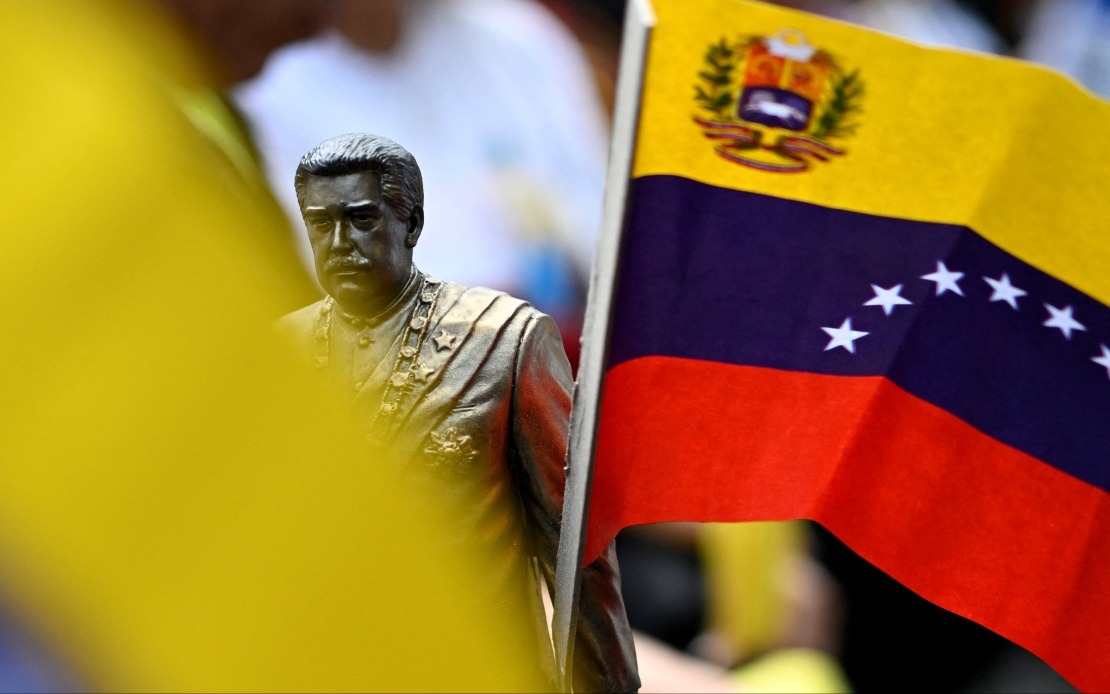
A United States federal judge has set June 1, 2027, as the trial date for Venezuelan President Nicolas Maduro and his wife Cilia Flores, marking a significant milestone in one of the most controversial international legal proceedings in recent years. Judge Alvin Hellerstein made the decision during a brief 15-minute hearing on Wednesday, following a joint request from attorneys representing both the prosecution and the defence. The couple have maintained their not guilty pleas to charges of drug trafficking and illegal firearms possession since their initial court appearance in January.
The circumstances surrounding Maduro's arrival in New York remain extraordinarily contentious. On January 3, US military forces executed a large-scale operation that resulted in the forcible seizure of Maduro and Flores from Caracas, Venezuela's capital, before they were transported to the United States. This military action has generated widespread diplomatic fallout and condemnation from numerous nations and international observers who view the operation as a violation of Venezuela's sovereignty and established principles of international law. The incident has raised profound questions about the limits of extraterritorial jurisdiction and the appropriate conduct between nations.
Since their arrest in early January, Maduro and Flores have been held at the Metropolitan Detention Centre in Brooklyn, New York. They appeared in court for the third time on Wednesday, when the trial date was formally established. Maduro's legal team, led by attorney Barry Pollack, indicated plans to challenge the indictment's validity by invoking sovereign immunity arguments. If this legal challenge succeeds, it could potentially eliminate the need for further proceedings in the case, effectively derailing the prosecution before trial begins. This defence strategy represents a fundamental challenge to the court's jurisdiction rather than a refutation of the underlying charges.
The charges against Maduro encompass allegations of orchestrating international drug trafficking operations and unauthorised weapons smuggling. His initial arraignment occurred on January 5, when he formally entered his not guilty plea before the court. The prosecution's case appears to centre on claims that the Venezuelan president participated in or facilitated narcotics distribution networks, claims that have become a recurring accusation levelled against various Latin American leaders over the decades. The firearms charges similarly relate to alleged involvement in weapons trafficking schemes.
Wednesday's court proceedings attracted substantial public attention and organised protest activity outside the Manhattan courthouse. Demonstrators maintained a strong police presence as crowds gathered to voice opposition to both the trial and US military intervention in Venezuela. The protesters represented diverse constituencies united by concerns regarding American foreign policy and the treatment of elected leaders. Allison Gunderson, a demonstrator who travelled from Minneapolis to participate, characterised the proceedings as fundamentally illegitimate, arguing that the United States had effectively kidnapped the president of a sovereign nation and was now prosecuting him in violation of international norms.
Tom Burke, representing the steering committee of the Anti-War Action Network, drew parallels between the operation and criminal conduct, describing American actions as constituting armed robbery on a state level. Burke argued that the abduction, detention, and prosecution collectively violate international law and represent a dangerous precedent for international relations. His remarks reflected broader anxiety within anti-war movements that the successful execution of such an operation against one nation's leader could embolden similar actions elsewhere, fundamentally destabilising the international system's foundational principles of national sovereignty.
Sara Flounders, a political commentator and activist, used Wednesday's hearing to mark what she characterised as the 200th day since Maduro's seizure. She positioned Venezuela's situation within a broader pattern of what she described as American overseas military operations, citing historical and contemporary examples involving Iran and Cuba. Flounders' remarks connected the Venezuelan case to longstanding patterns of US intervention in Latin America and the Caribbean, suggesting that institutional memory of such operations remains sharp among activist communities and should inform contemporary assessments of American foreign policy.
The trial date's postponement to 2027 provides an extended timeframe for legal manoeuvring on both sides. Maduro's defence team appears to believe they possess viable legal arguments that could prevent the case from reaching trial proceedings. Meanwhile, prosecutors will have substantial opportunity to prepare their evidence and arguments regarding the alleged drug trafficking and weapons violations. The extended timeline also allows the international diplomatic situation to evolve, potentially influencing how the case develops or whether political negotiations might alter its trajectory.
For Southeast Asian observers, the Maduro case carries significant implications for understanding American approaches to international law and sovereignty. The operation's execution demonstrates that even heads of state of recognised nations cannot assume protection from forcible abduction by American military forces. This precedent affects regional calculations regarding relationships with Washington and assumptions about international legal protections. Several Southeast Asian nations, particularly those pursuing independent foreign policies or maintaining complicated relationships with the United States, are closely monitoring how this case develops and what its ultimate resolution might signal about American willingness to disregard traditional sovereign immunity principles in pursuit of its strategic objectives.

