A federal appeals court in New Orleans has delivered a significant setback to Texas's efforts to protect children from harmful online content, ruling that a key provision of the state's social media safety law cannot be enforced. The 5th U.S. Circuit Court of Appeals issued a 2-1 decision on Friday that prevents Texas from requiring social media operators to monitor and filter material that encourages self-harm, suicide, eating disorders, substance abuse, stalking, bullying, and sexual abuse, among other harmful behaviours.
The dispute centers on a collision between state regulatory ambitions and entrenched federal protections for the technology industry. Texas lawmakers had passed the Securing Children Online through Parental Empowerment Act, commonly known as the SCOPE Act or House Bill 18, which took effect in September 2024. The law was designed to place affirmative obligations on platforms to identify and remove content that could endanger minors, representing one of the most aggressive state-level attempts to hold tech companies accountable for user-generated material.
Industry groups including the Computer & Communications Industry Association and NetChoice challenged the law immediately after its passage. These trade associations count Amazon, Google, Meta Platforms (which owns Facebook and Instagram), and numerous other technology firms among their members. Their legal strategy hinged on invoking Section 230 of the federal Communications Decency Act, a 1996 provision that has become the cornerstone of internet intermediary liability law in the United States. The appeals court majority found that this federal statute preempts Texas's monitoring and filtering requirement, effectively shielding platforms from state-imposed obligations to police third-party content.
Circuit Judge Dana Douglas, writing for the majority, acknowledged the uncomfortable implications of this precedent. She noted that Section 230 may function as a "get-out-of-jail-free card" that immunizes the industry from accountability except in the most egregious circumstances. Nevertheless, the judge concluded that the protective scope of federal law left no room for Texas to impose its own content moderation mandates. This reasoning reflects a longstanding judicial interpretation that has consistently favoured broad immunity for platform operators over state attempts to regulate online speech and safety.
The decision is not entirely uniform on all provisions of the Texas law. The New Orleans-based court upheld an age-verification requirement that was also part of the SCOPE Act, suggesting that not all components of state regulation are foreclosed by federal preemption doctrine. Additionally, the court rejected claims that the nonprofit Students Engaged in Advancing Texas, which had also challenged the law, possessed legal standing to pursue its case, further narrowing the bases for opposition to the statute.
Circuit Judge James Ho issued a partial dissent that illuminates the ongoing doctrinal debate over Section 230's proper scope. Ho argued that the Texas law regulates platform curation rather than publication of third-party speech, a distinction he viewed as critical to understanding what falls within federal protection. By this logic, requiring platforms to curate their content feeds through filtering mechanisms should be permissible even under Section 230, as it involves first-party editorial choices rather than liability for user contributions. This framing has gained traction in recent years among judges and scholars questioning whether Section 230 was ever intended to shield platforms from requirements to exercise editorial judgment.
The technology industry's legal representatives hailed the decision as vindicating fundamental principles of internet freedom. Matthew Schruers, Chief Executive of the Computer & Communications Industry Association, characterized the ruling as confirmation that "federal law bars Texas from impressing websites and services into the role of state censors." Paul Taske, director of the NetChoice Litigation Center, similarly framed the outcome as protecting Texans' ability to decide independently what they read and view online, inverting the child safety narrative by emphasizing individual liberty concerns.
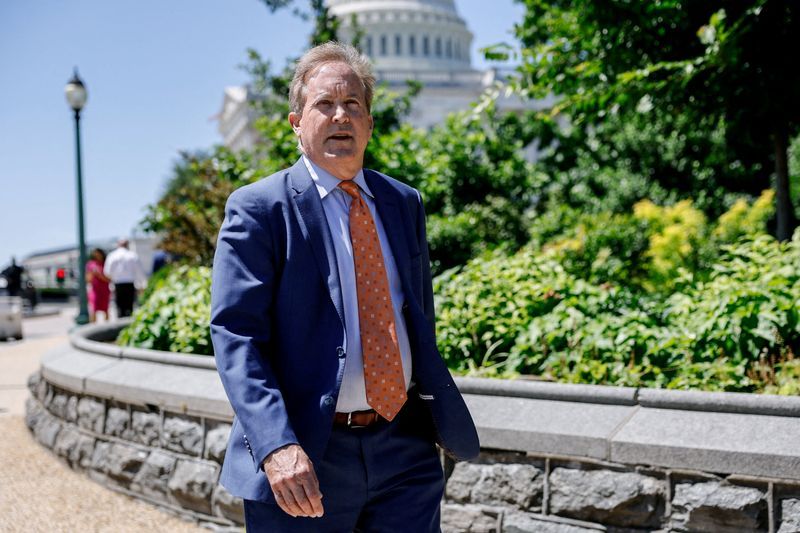
Texas Attorney General Ken Paxton's office, which defended the SCOPE Act, declined immediate comment on the decision. Paxton, a Republican and the party's nominee for a U.S. Senate seat in November's election, has made aggressive action against technology platforms a signature issue. The ruling complicates his political messaging on protecting Texas values and children, though it may also reflect broader ideological alignment within conservative circles regarding skepticism toward expanding federal and state power over private companies.
This decision arrives amid an emerging patchwork of state-level child safety legislation that challenges the uniformity Section 230 has historically provided. In March, a different federal appeals court substantially undermined an injunction that had blocked California from enforcing its Age-Appropriate Design Code Act, suggesting that courts may be reconsidering whether state child protection measures automatically yield to federal preemption. The contrasting outcomes in Texas and California reflect genuine uncertainty in the judiciary about how to balance platform immunity with legitimate state interests in child welfare, even as precedent nominally favours the industry's position.
The broader implications extend beyond Texas and California to the entire Southeast Asian region, where policymakers are developing their own frameworks for addressing online harms to minors. Malaysia and other ASEAN nations have observed the American legal landscape while crafting their own regulatory approaches, including requirements for content moderation and age verification. The Texas ruling demonstrates that even in the United States, where Section 230 enjoys deep historical roots, the tension between platform immunity and state protection mandates remains unresolved, suggesting that international regulatory divergence will likely intensify as different jurisdictions chart independent courses.
The fundamental question at stake transcends any single statute or court decision. It concerns whether technology platforms should retain near-total immunity for user-generated content or whether they should bear some responsibility for algorithmic amplification and inadequate moderation of demonstrably harmful material. Section 230 has provided certainty and enabled the internet economy's explosive growth, but it has also insulated platforms from consequences that their business models might otherwise incentivize them to address. As courts, legislatures, and public opinion grapple with the social costs of this arrangement, particularly regarding child safety, the Texas and California cases signal that the legal consensus supporting broad platform immunity may be beginning to fracture.

