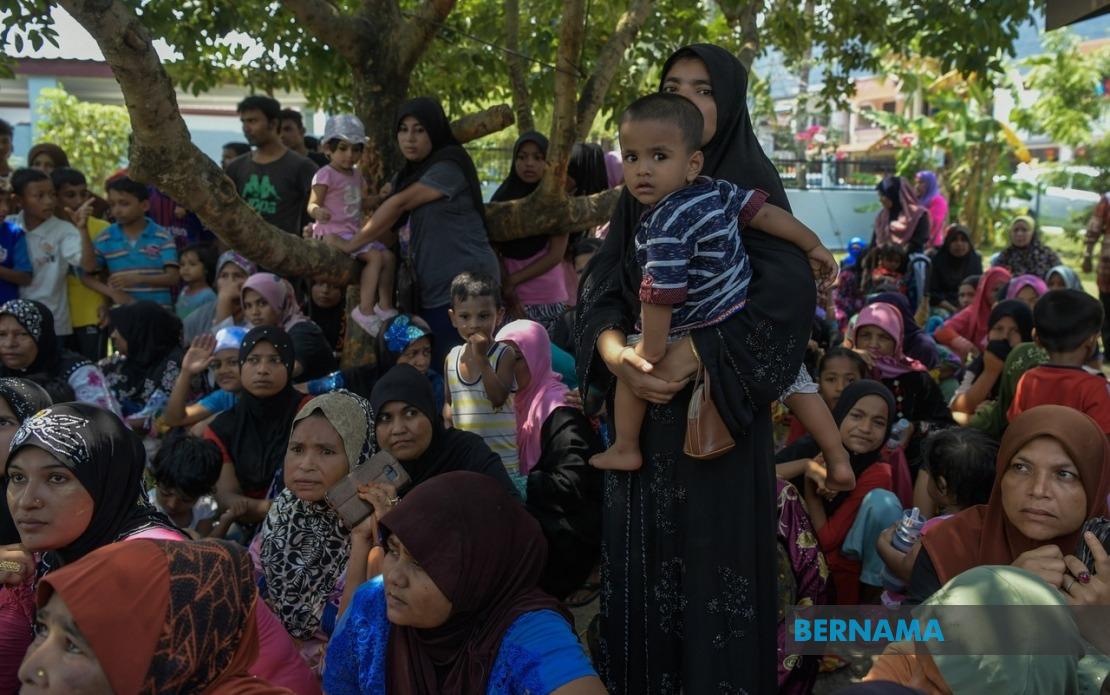
The government of Malaysia has moved to dispel public misconceptions about the status of United Nations refugee documentation, with Economy Minister Datuk Akmal Nasrullah Mohd Nasir issuing a clear statement that UNHCR cards carry no special legal protections within the country's borders. Speaking during a briefing on economic matters on July 13, Akmal Nasrullah stressed that individuals holding such documents remain fully subject to Malaysian criminal law and enforcement procedures, a clarification prompted by mounting community concerns over refugee administration and security implications.
The minister's announcement came during remarks delivered at the Global Supply Crisis Briefing, which was broadcast live through the Ministry of Economy's social media channels. His statement directly addressed growing public anxiety surrounding how Malaysia manages its refugee populations and the documentation systems in place. The timing of the announcement reflects mounting pressure on authorities to reassure citizens about security protocols and the legal standing of non-citizen populations within the country's jurisdiction.
According to Akmal Nasrullah, the matter had been formally presented by the Home Ministry during that day's National Economic Action Council meeting, signalling that refugee management concerns now rank among the government's priority policy areas. The discussion at the council was driven by public unease touching on several interconnected issues: the nature of refugee documentation, vulnerability to human trafficking operations, and the potential security risks posed to local communities. This elevated discussion at the MTEN level demonstrates the multi-agency coordination now being deployed to address refugee-related challenges.
A key initiative referenced by the minister is the Refugee Registration Document programme, known locally as the DPP Programme, which the Immigration Department is actively rolling out across the country. This system incorporates biometric registration technology to establish secure identification records for refugee populations. The programme encompasses comprehensive screening procedures, database controls, and enhanced enforcement capabilities designed to create a more transparent and accountable system for tracking and managing non-citizen populations.
Beyond documentation improvements, the government is significantly ramping up operational efforts against organised criminal activities linked to refugee movements. Integrated enforcement operations targeting human smuggling networks, document fraud, and trafficking syndicates are being intensified, according to the minister. These coordinated actions reflect recognition that refugee flows can be exploited by criminal organisations for profit, creating dual vulnerabilities that compromise both migrant safety and community security.
Technological advancement is playing a central role in Malaysia's updated approach to refugee management. Data analytics platforms and sophisticated monitoring systems are now being deployed to identify emerging risks and support law enforcement decision-making. This represents a shift towards predictive and intelligence-led enforcement rather than purely reactive responses, allowing authorities to detect suspicious patterns and concentrate resources where threats are greatest.
The financial commitment to these initiatives is substantial. The government has allocated RM1.2 billion across multiple agencies dedicated to border control and security enhancement projects. This investment encompasses not only personnel and technology but also infrastructure improvements and inter-agency coordination mechanisms. The scale of this allocation underscores the seriousness with which authorities are treating border management challenges amid broader regional migration pressures.
Organisational restructuring is also underway to strengthen Malaysia's capacity for effective border administration. The Malaysian Border Control and Protection Agency is experiencing accelerated expansion of its operational scope and mandate. This expansion is intended to create a more unified and streamlined approach to border management, reducing administrative fragmentation and enabling more coordinated enforcement across land, sea, and air entry points.
The clarification on UNHCR card status carries particular significance for Malaysia given the country's hosting of one of Southeast Asia's largest refugee populations. Misconceptions about legal immunity could undermine enforcement efforts and create tension between refugee communities and host populations. By explicitly stating that UNHCR documentation confers no exemption from local criminal law, authorities are establishing clear legal boundaries that protect both community safety and the integrity of Malaysia's immigration systems.
For Malaysian residents and businesses, the government's message provides important reassurance about how the legal system handles non-citizen populations. Whether an individual holds UNHCR documentation or standard immigration permits, Malaysia's courts and law enforcement agencies retain full jurisdiction to investigate alleged offences and pursue prosecutions under existing statutes. This principle ensures that the country's legal system operates uniformly regardless of citizenship or refugee status.
The announcement also reflects broader tensions in Malaysian society surrounding immigration, security, and social integration. Public concerns about refugee populations have intensified in recent years, driven by economic anxieties, crime reporting, and social media narratives. The government's coordinated response across the MTEN demonstrates an effort to address these concerns through visible institutional action, technological modernisation, and clear legal clarification rather than rhetorical reassurance alone.
Beyond refugee-specific matters, the National Economic Action Council meeting also addressed food security and manufacturing sector resilience amid global supply chain disruptions. These parallel discussions, chaired by Prime Minister Datuk Seri Anwar Ibrahim, illustrate how refugee and migration management has become integrated into broader economic policy discussions. The interconnection reflects recognition that refugee populations affect resource allocation, labour markets, and community services alongside immediate security considerations.
Moving forward, Malaysia's approach to refugee management will likely combine more sophisticated documentation systems with enhanced enforcement capacity and technological monitoring. The distinction between humanitarian obligations to provide refuge and the imperative to maintain law and order within national borders remains delicate, but the government's position is increasingly clear: refugee status or UNHCR protection neither exempts individuals from legal accountability nor creates separate legal frameworks within Malaysia's jurisdiction.

