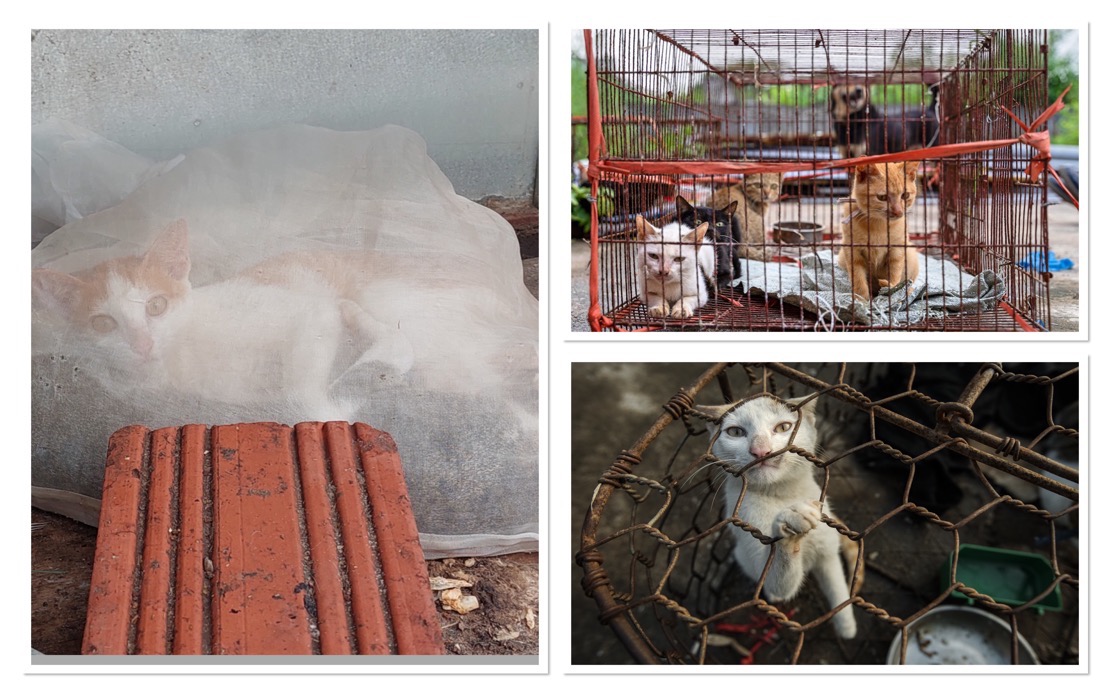
The clandestine slaughter of cats continues to flourish across parts of Indochina, fuelled by deeply rooted cultural beliefs linking feline meat to good fortune and healing properties, according to investigations by international animal welfare organisations. In Vietnam alone, estimates suggest approximately one million cats are killed annually through this illicit trade, with smaller but significant numbers also reported in Cambodia and Laos. The persistence of this brutal practice underscores the challenge of combating customs entrenched in local tradition, even as awareness campaigns and governmental efforts spanning decades have attempted to eradicate the activity throughout the region.
The demand for cat meat draws largely from superstitious beliefs rather than dietary necessity, according to Jon Rosen Bennett, who directs dog and cat welfare initiatives at FOUR PAWS, the global animal protection organisation. In Vietnamese communities, certain cultural traditions associate consuming cat meat during specific lunar calendar periods with reversing bad fortune or attracting prosperity. Beyond luck-centred beliefs, sections of the population attribute medicinal and health-promoting qualities to feline meat, viewing it as a therapeutic substance. Bennett emphasised that cat meat consumption is fundamentally a cultural and social phenomenon rather than a mainstream nutritional practice across Southeast Asia.
The scale of the underground operation became apparent in June when Ho Chi Minh City police dismantled a trafficking ring involved in inter-provincial smuggling operations. The enforcement action resulted in the rescue of approximately 500 cats and the detention of nine individuals suspected of stealing and trafficking felines for commercial purposes over a three-year period. This single operation illustrates the systematic nature of the trade, organised across multiple provinces and involving coordinated networks that systematically extract cats from urban and rural settings. The incident highlights how authorities have begun intensifying efforts to disrupt supply chains, though prosecutions remain hampered by the absence of comprehensive legal prohibitions.
A critical gap in Southeast Asian legislation facilitates the continuation of this trade. Vietnam currently maintains no nationwide prohibition against the slaughter, sale, or consumption of cat meat, creating a regulatory vacuum that permits suppliers to operate with minimal legal risk. This legal ambiguity contrasts sharply with evolving public sentiment within the region. According to FOUR PAWS research, approximately 90 percent of Vietnamese respondents expressed support for implementing a ban on both dog and cat meat trading. Even more striking, over 90 percent of surveyed Vietnamese rejected the notion that consuming cat meat constitutes part of authentic Vietnamese cultural heritage, suggesting a significant generational and values-based shift among local populations.
Economic incentives underpin the trade's persistence despite weakening cultural justification. FOUR PAWS investigations conducted in 2020 documented live cats trading at between US$6 and US$8 per kilogramme, with processed meat commanding premium prices ranging from US$10 to US$12 per kilogramme. Black cats attract exceptionally high valuations due to widespread beliefs attributing special luck-enhancing or medicinal properties to their colouring. This pricing structure creates profit opportunities for trafficking networks willing to operate outside legal constraints, with the price differential between live animals and finished meat products incentivising the organisation of smuggling operations across provincial boundaries.
The welfare dimensions of this trade extend beyond animal cruelty concerns, encompassing significant public health risks that resonate throughout the region and beyond. The unregulated movement of cats across borders creates ideal conditions for disease transmission, particularly concerning zoonotic pathogens including rabies and other pathogens capable of jumping to human populations. Bennett warned that the mass undocumented trafficking of animals facilitates the spread of communicable diseases without epidemiological surveillance, creating unpredictable health vulnerabilities. For Malaysian readers and policymakers in Southeast Asia, the transnational nature of these trafficking networks means that cat meat trade activities in Vietnam or Cambodia directly generate public health risks extending across national boundaries.
The feline trade represents merely one component of a broader pattern of animal exploitation across Southeast Asia. Estimates suggest that more than 10 million dogs face slaughter for meat consumption annually throughout the region, though like cat meat consumption, dog meat consumption commands declining support among younger generations and urban populations. The convergence of these parallel trades demonstrates systematic patterns of wildlife trafficking and informal animal exploitation that persist despite growing modernisation and urbanisation. However, dog meat consumption remains considerably more sensitive politically across certain societies, requiring careful navigation of cultural sensitivities when advocacy organisations pursue reform agendas.
Recognising the gap between public opinion and actual consumption patterns, international welfare organisations have intensified regional campaigns targeting legislative reform and cultural change. FOUR PAWS launched a digital public reporting platform in early June specifically focused on Cambodia, enabling residents to report suspicious trading activities through online channels. This technological approach acknowledges that enforcement capacity remains limited in many jurisdictions, making crowdsourced information collection a practical supplement to formal policing mechanisms. The platform strategy also reflects calculations that engaging local communities directly may prove more effective than top-down government interventions, particularly in contexts where informal enforcement and corruption undermine formal regulatory efforts.
For Malaysian stakeholders and Southeast Asian policymakers, the persistence of cat and dog meat trades in neighbouring jurisdictions warrants attention beyond animal welfare considerations. The transnational trafficking networks documented across Indochina share organisational characteristics with other smuggling operations, including human and drug trafficking, suggesting that disrupting these networks could yield intelligence and enforcement capacity benefits extending to broader public safety objectives. Additionally, Malaysia's role as a regional economic and technological hub positions it to influence adjacent societies through digital platforms, educational initiatives, and policy dialogue that encourage legislative harmonisation around animal welfare standards. The evident disconnect between public opinion and actual practice suggests that targeted campaigns emphasising local values rather than external pressure may prove more effective in accelerating reform across the region.

