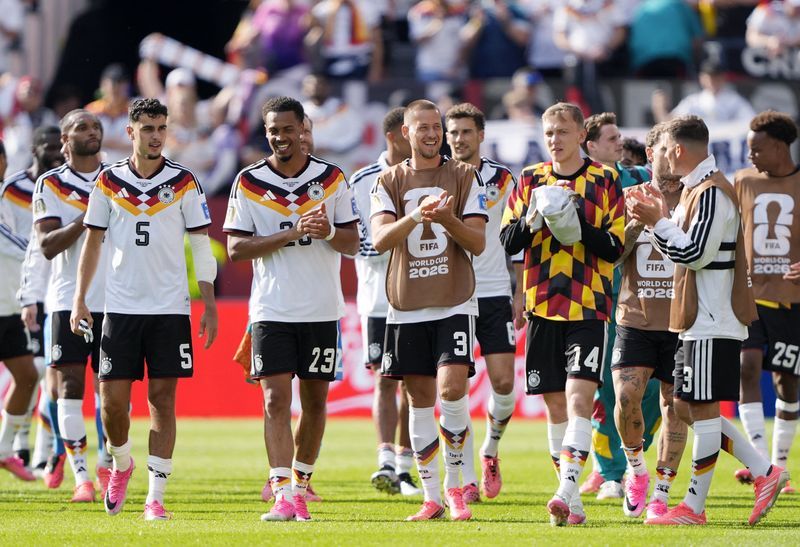
Germany's hopes of returning to the World Cup knockout stages faced considerable uncertainty until Deniz Undav's decisive intervention off the bench transformed their fortunes in Toronto on Saturday. The substitute striker netted twice in the second half to overturn a one-goal deficit and secure a 2-1 victory over Ivory Coast that earned the Germans passage to the last 32 for the first time since winning the tournament in 2014. The result leaves Germany atop Group E with maximum points from two matches, though their path to this outcome proved considerably more fraught than their commanding position suggests.
The match at BMO Field showcased two contrasting approaches to attacking football. Germany's methodical, possession-based style clashed with Ivory Coast's more direct and energetic approach, creating a pulsating encounter that kept both sets of supporters engaged throughout. The West African side's willingness to push forward and break quickly repeatedly tested the German defence, while the Europeans' patient build-up play and intricate passing patterns created space in the opposition's defensive shape. This tactical tension produced a compelling spectacle that reflected the unpredictable nature of tournament football at this level.
Ivory Coast struck first through Franck Kessie's clinical opportunism in the opening half. The midfielder capitalised on a loose rebound after Amad Diallo's initial shot, converting after Yan Diomande had orchestrated the move from the left flank with a well-delivered cross. This breakthrough came despite Germany's dominance in possession and territory, illustrating a familiar frustration for Julian Nagelsmann's squad. The German outfit had fashioned eight attempts on goal by the interval but found themselves trailing, their inability to convert chances compounded by two disallowed goals that tested the team's composure and concentration.
Germany's first controversial goal came when midfielder Aleksandar Pavlovic rose above the Ivory Coast defence at a short corner routine in the 25th minute, only for the referee to adjudge the midfielder had fouled goalkeeper Yahia Fofana in the process. The decision visibly exasperated Pavlovic and drew audible disapproval from the substantial German support in the stadium, where over 100,000 residents of German heritage created a distinctly partisan atmosphere. Shortly thereafter, Jamal Musiala's finish was similarly ruled out for a foul in the build-up, compounding German frustration as they dominated proceedings without reward.
The transformation arrived swiftly after halftime when Undav emerged from the bench to alter the match's complexion entirely. His 68th-minute equaliser showcased technical composure, receiving possession and executing a controlled volley that restored parity and shifted momentum decisively toward the Europeans. Five minutes later, the striker demonstrated composure and movement to receive a turn pass, swivel past his marker, and fire past Fofana with clinical precision. This double strike elevated Undav's extraordinary run to nine goals across his last eight international appearances, testament to his form and versatility in attack.
Ivory Coast mounted spirited resistance despite conceding the decisive goal, with Simon Adingra fashioning a late opportunity that failed to materialise into a genuine chance. The West African outfit's inability to carve out a clear-cut scoring opportunity in the closing stages reflected Germany's defensive tightening, though they remained vulnerable to counterattack. Nathaniel Brown's shooting opportunity late in the match came to nothing as Fofana prevented Germany from extending their advantage, a moment that highlighted the individual moments separating victory from defeat at this competitive level.
The result carries significant implications for both nations' tournament trajectories. Germany's six points from two matches place them in a commanding position entering their final group fixture against Ecuador in New Jersey on Thursday. The Germans' recovery from early frustration demonstrates resilience and composure under pressure, qualities essential for sustained tournament success. Ivory Coast, meanwhile, remained on three points from their first two outings despite their attacking intent and quality, leaving them in a precarious position with a must-win fixture against Curaçao in Philadelphia.
Ivory Coast's ability to score consistently throughout the tournament represents a notable achievement. Their goal against Germany marked their seventh consecutive match with at least one goal, establishing the longest such scoring streak in their World Cup history. This offensive capability suggests the squad possesses genuine attacking potential, yet defensive vulnerabilities and an inability to capitalise on set-piece opportunities have cost them dearly. For a nation still building sustained tournament competitiveness, such missed opportunities against a traditional powerhouse prove costly in a demanding group stage format.
The victory underscores German football's enduring quality and adaptation under Nagelsmann. Despite disallowed goals and periods of frustration, the squad maintained focus and intensity, eventually breaking through when fresh legs entered the contest. This tactical flexibility and ability to impact the game from the bench demonstrates squad depth that will prove valuable as the tournament progresses toward knockout football, where single-match elimination adds intense pressure to every decision and moment.
For Southeast Asian observers and Australian viewers, this match offered instructive lessons in how tournament experience and technical quality ultimately prevail against spirited opponents lacking similar resources. Germany's return to the knockout stages is neither surprising nor inevitable, yet their path highlighted both their quality and the thin margins separating progression from elimination in modern tournament football. As group play continues in Kansas City and throughout North America, the Germans' booking of their last-32 place represents an important early statement of intent from one of the tournament's traditional heavyweights.

