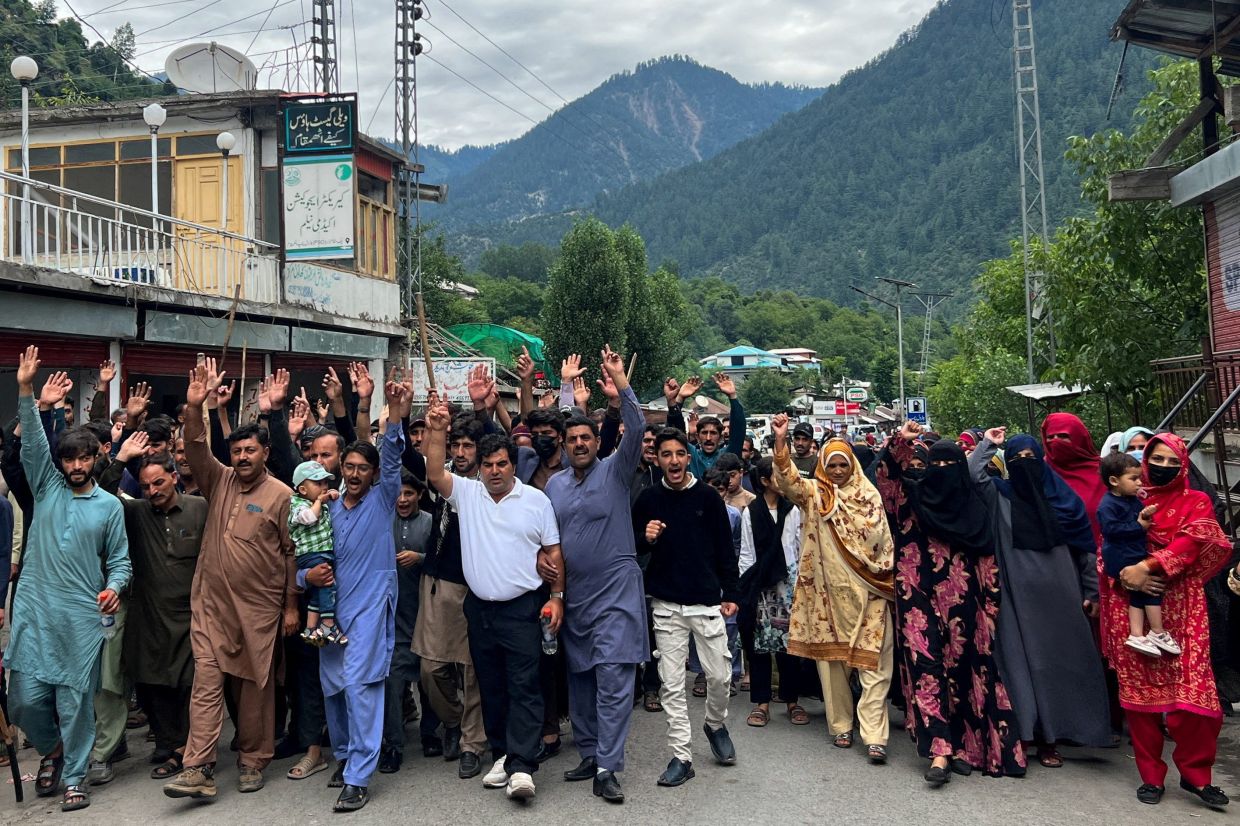
The United Nations has stepped into a volatile political situation in Pakistan-administered Kashmir, calling for transparent and independent investigations into a reported wave of fatalities connected to escalating civil unrest. UN High Commissioner for Human Rights Volker Turk made the appeal through his office in Geneva on Friday, responding to mounting casualties that have accumulated since June, with elections for the regional legislative assembly scheduled for July 27. Turk's intervention reflects growing international concern about the trajectory of governance in one of South Asia's most contentious territories, particularly as the electoral period intensifies political tensions.
The scale of the reported deaths underscores the severity of the situation unfolding in the Himalayan region. According to UN officials, dozens of people have lost their lives during the period of unrest, encompassing both civilians engaged in protest activities and members of Pakistan's security apparatus. The breadth of casualties across different segments of society suggests widespread confrontation rather than isolated incidents, indicating a significant breakdown in public order that extends beyond typical pre-election contestation. The UN's specific emphasis on deaths among law enforcement personnel indicates recognition that the violence has affected multiple communities, a nuance that distinguishes this crisis from straightforward security operations.
At the heart of the upheaval lies the Joint Awami Action Committee, an anti-government coalition that has mobilised considerable public sentiment around demands for economic restructuring and governance improvements. The JAAC represents civil society frustration with the political and economic status quo in the region, channelling grievances into organised protest movements. Their ability to sustain momentum despite official restrictions demonstrates the depth of underlying discontent among local populations. However, the Pakistani government designated the JAAC as an illegal organisation last month under anti-terrorism provisions, citing threats to public order and security—a classification that fundamentally altered the legal terrain for dissent and transformed peaceful activism into criminally prosecutable conduct.
The designation of JAAC as a terrorist organisation marks a significant escalation in state response to civic mobilisation. By employing anti-terrorism legislation to ban a civil society body advocating for policy reforms, authorities have arguably crossed a threshold that concerns international human rights monitors. The UN's office specifically flagged this development as problematic, warning that criminalising civil organisations and imposing restrictions on public gatherings create a chilling effect on fundamental freedoms. The move effectively repositioned protesters from the status of citizens exercising democratic rights to the status of law-breaking operatives, justifying more aggressive enforcement measures and complicating any future reconciliation between the government and aggrieved communities.
Information control has emerged as a complementary strategy to the ban on JAAC activities. Pakistani authorities have implemented internet restrictions throughout the region, limiting both the capacity of residents to communicate internally and their ability to reach international audiences. The UN's human rights office characterised these digital blackouts as disproportionate infringements on freedom of expression, particularly damaging during periods of high tension when transparent information flows become essential for de-escalation. The timing and scope of internet shutdowns have historically served to suppress documentation of state security operations, prevent coordination among protest movements, and limit the ability of journalists and activists to report on unfolding events to external observers.
The historical context surrounding Kashmir amplifies concerns about the current trajectory. The region witnessed significant violence in September of the previous year, when confrontations between law enforcement and protesters resulted in at least nine confirmed deaths. That episode demonstrated that cycles of protest and crackdown can recur periodically in the territory, suggesting structural conditions that periodically inflame tensions. The geographic and political sensitivity of Kashmir within Pakistani national security thinking compounds these local dynamics. The territory occupies an outsized place in Pakistani strategic consciousness due to decades of military rivalry with India, lending a militarised character to governance approaches that might elsewhere rely more heavily on civilian administration and political negotiation.
The Kashmir dispute itself remains a foundational source of regional instability. Both India and Pakistan claim the entire territory, yet neither exercises complete control, with the Line of Control serving as the de facto border since independence from British colonial rule. Muslim-majority Kashmir's status as a contested region means that internal stability concerns intersect with international geopolitical dimensions. Any significant destabilisation within Pakistani-administered sectors can attract wider regional attention and complicate bilateral relations. This structural reality informs Pakistani security perceptions and explains why the government approaches internal dissent through a lens emphasising territorial integrity and prevention of separatist movements.
The UN's appeal for detained JAAC leaders to receive legal representation and family access reflects concern about due process violations during the crackdown. The rights office emphasised that fair trial guarantees and proper legal procedures must be maintained even when organisations face terrorism designations. This represents a tension between states' legitimate security interests and the maintenance of rule-of-law principles. The UN's position essentially argues that security objectives cannot justify abandoning procedural protections that distinguish democratic governance from authoritarian control. For Malaysian observers, this principle carries particular relevance given Malaysia's own experiences with internal security legislation and the ongoing debate about appropriate balance between security needs and civil liberties.
Turk's broader call for inclusive political dialogue to address underlying grievances signals the UN's assessment that the current trajectory of enforcement and restriction will prove insufficient for restoring stability. By framing the solution in terms of addressing root causes rather than managing symptoms, the UN implicitly diagnoses the unrest as rooted in substantive governance failures and economic dissatisfaction. This diagnostic approach suggests that security operations alone cannot resolve the situation, requiring instead political engagement with the legitimate concerns animating protest movements. Such dialogue would presumably need to encompass the JAAC's stated objectives around economic reform and governance improvement, areas where structural change might address sources of discontent.
The timing of these developments relative to the July 27 elections raises questions about how the electoral process itself will proceed amid security concerns and information restrictions. Elections conducted under conditions of heightened enforcement and limited information availability operate differently than those held under normal circumstances. The capacity of voters to make informed choices, the ability of opposition candidates to campaign effectively, and the legitimacy of electoral outcomes all potentially suffer when fundamental freedoms face restriction. International observers monitoring the election will likely scrutinise whether the security environment has permitted genuine competitive contestation or whether restrictions have tilted outcomes toward establishment preferences.
For Southeast Asian democracies grappling with internal security challenges, Kashmir offers cautionary lessons about the trajectory of emergency governance. Once security legislation expands to encompass civil society organisations and once internet restrictions become normalised, reversing these measures presents political difficulties even after crises resolve. The UN's intervention suggests that external pressure from international human rights bodies can sometimes moderate state responses, though enforcement ultimately depends on domestic political conditions. Malaysia's own experiences with internal security acts and periodic restrictions on assembly suggest the relevance of these governance questions to the region more broadly.

