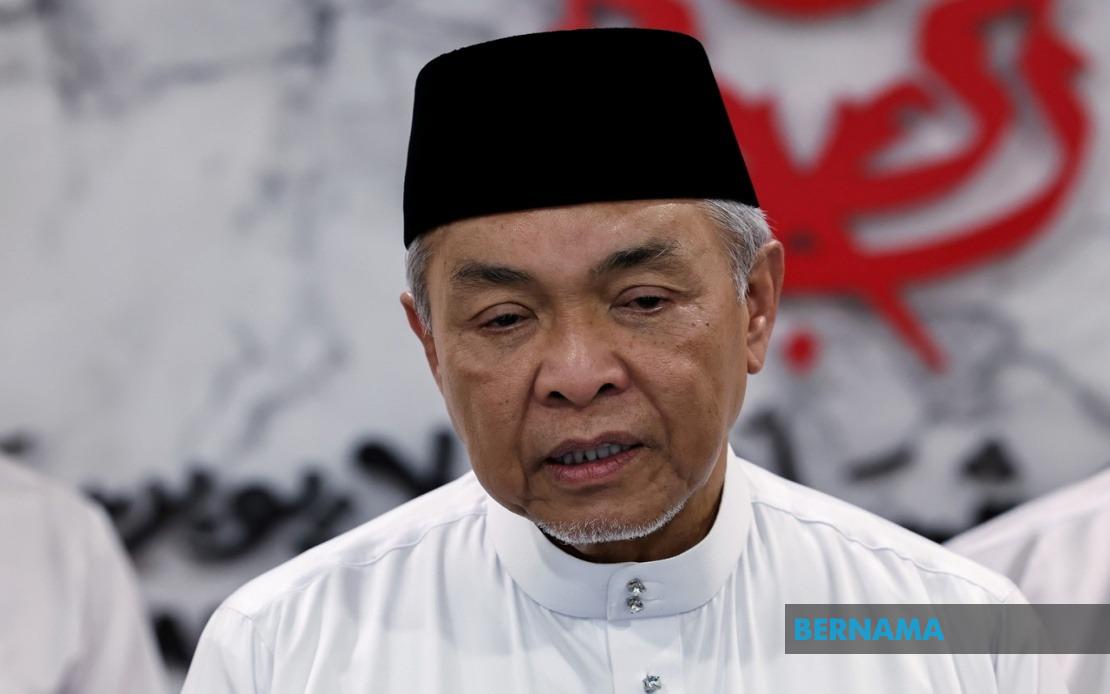
UMNO has signalled its readiness to enter formal negotiations on potential electoral partnerships for the upcoming Melaka state election, contingent upon the dissolution of the state legislative assembly. Party President Datuk Seri Dr Ahmad Zahid Hamidi, who also serves as Deputy Prime Minister, made the announcement in Kuala Lumpur, outlining the sequencing and leadership structure for the coalition discussions that lie ahead.
The responsibility for steering these negotiations has been delegated to Chief Minister Datuk Seri Ab Rauf Yusoh, a move that reflects UMNO's intent to position the state-level executive at the forefront of coalition-building efforts. According to Ahmad Zahid, while preliminary and informal discussions may already be occurring among party operatives, any substantive negotiating positions and formal engagement with other political entities will commence only after the statutory dissolution of the Melaka state assembly takes effect.
This procedural stance reflects a deliberate political strategy, distinguishing between exploratory conversations and official party positions. Ahmad Zahid's clarification underscores UMNO's preference for maintaining internal coherence and avoiding premature public commitments that could complicate negotiations once formal discussions begin. The timing distinction—between informal soundings and formal talks—is significant in Malaysian coalition politics, where public perception of negotiating flexibility versus party principle remains contentious.
The announcement addresses mounting speculation about UMNO's willingness to cooperate with Perikatan Nasional (PN) in the Melaka contest. This question reflects deeper rifts within Malaysia's broader political coalition landscape, where relationships between federal and state coalitions frequently diverge. Perikatan Nasional, led by PAS and Bersatu, has emerged as a significant political force in several states, and the prospect of collaboration or competition with UMNO carries implications for Malaysian politics at multiple levels.
Ahead of the public declaration, Ahmad Zahid conducted extensive consultations with UMNO's Melaka Political Bureau, during which party officials presented comprehensive preparations and strategic assessments for the forthcoming state election. This internal exercise proved sufficiently detailed and substantive to warrant escalation to the party's highest decision-making body, the UMNO Supreme Council (MKT). The council subsequently undertook a thorough examination of intelligence gathered through UMNO Melaka's campaign war room, encompassing electoral data, demographic trends, and candidate viability assessments.
This multi-layered consultation process reflects the seriousness with which UMNO approaches the Melaka contest and the need to achieve consensus among the party's leadership hierarchy before engaging external parties. By channelling information through the war room, analysing it at the political bureau level, and then subjecting findings to Supreme Council scrutiny, UMNO seeks to ground its coalition strategy in empirical evidence rather than factional preferences or personalised ambitions.
The Melaka state election carries particular significance for UMNO's broader political trajectory. Melaka remains a traditional UMNO stronghold, and electoral performance there serves as a barometer of the party's organisational strength and grassroots support. Any loss of ground in Melaka would signal vulnerability to rivals both within the coalition and in opposition ranks. Conversely, a commanding performance would reinforce UMNO's claim to leadership within any federal or state coalition configuration.
For Malaysian political observers, the question of whether UMNO will ultimately ally with Perikatan Nasional or contest independently in Melaka has ramifications extending beyond state-level politics. Such decisions influence the architecture of national coalition politics and signal to voters and party members the governing logic underlying alliance formation. A decision to cooperate with PN would suggest that ideological or programmatic considerations outweigh personal rivalries or intra-Malay competition. Conversely, a decision to contest alone or with alternative partners would emphasise UMNO's confidence in its independent capacity to retain the state.
The Deputy Prime Minister's emphasis on waiting for assembly dissolution also reflects constitutional propriety and procedural order. Malaysian electoral law and political convention establish clear boundaries regarding the timing and nature of coalition discussions during different phases of the electoral cycle. Respecting these boundaries enhances the legitimacy of eventual coalition arrangements and avoids the appearance of backroom manoeuvring conducted outside proper institutional channels.
For Malaysian political observers and international analysts tracking regional coalition dynamics, UMNO's approach to the Melaka election offers insight into how Malaysia's major parties navigate competing pressures: maintaining internal unity, responding to grassroots sentiment, pursuing optimal electoral outcomes, and managing relationships with coalition partners whose interests do not always align. The sequence of informal and formal discussions outlined by Ahmad Zahid provides a roadmap through which such navigation occurs in practice.
The coming weeks will prove critical as the Melaka assembly dissolution becomes imminent and the timeline for formal negotiations commences. Chief Minister Ab Rauf Yusoh's conduct of these discussions and the coalition architecture that eventually emerges will shape not only Melaka's political trajectory but also broader perceptions of UMNO's strategic direction and its position within Malaysia's evolving political ecosystem.

