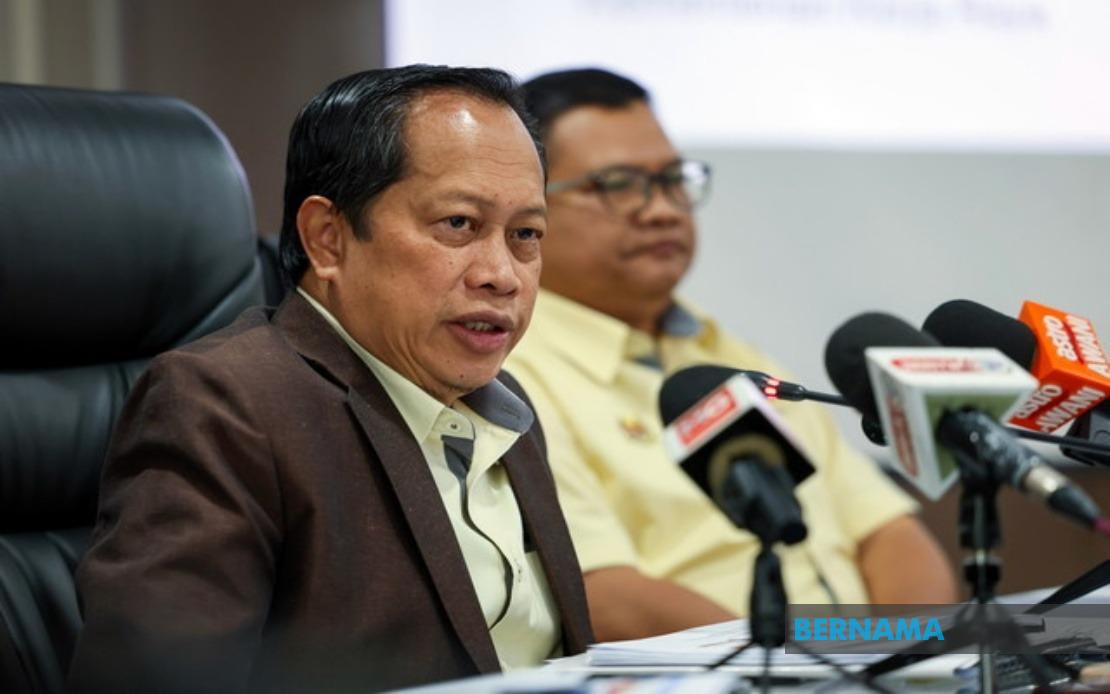
UMNO's top decision-making body will gather later this month to settle a critical question hanging over Malaysian politics: whether the party will fight the imminent Melaka state election as part of the Barisan Nasional alliance alone, or potentially forge a partnership with either Pakatan Harapan or Perikatan Nasional. The August 28 Supreme Council meeting, chaired by party president Datuk Seri Dr Ahmad Zahid Hamidi, represents a watershed moment for how the venerable coalition approaches one of its traditional strongholds at a time of considerable political flux.
Datuk Seri Dr Ahmad Maslan, a senior UMNO figure serving as Deputy Works Minister, confirmed that no definitive determination has yet been reached on the party's electoral positioning. He emphasised that the upcoming gathering would focus on identifying the most effective approach to securing victory in the state poll, taking into consideration the broader strategic imperatives facing the BN at this juncture. The emphasis on strategy rather than ideology reflects the pragmatic calculations dominating Malaysian political discourse, where coalition configurations increasingly depend on perceived electoral advantage rather than ideological affinity.
The lack of a settled consensus at this stage reveals the complexity of Melaka's political environment and the competing pressures within UMNO's ranks. Dr Ahmad Maslan noted that while no formal decision exists, various party figures and media commentary have already floated different possibilities, ranging from closer coordination with PH—which is part of the federal Unity Government—to potentially working with PN, the opposition Malay-Muslim coalition. This open debate, conducted partly in public, suggests internal disagreement about the optimal path forward, with different factions within UMNO apparently advocating distinct approaches based on their reading of voter sentiment and electoral arithmetic.
The political landscape in Melaka has shifted considerably since the last state election. The current state government was formed by BN after claiming 21 of 28 seats, with PH taking five and PN securing two. However, the composition of the state executive council reflects the federal-level arrangement: it incorporates assemblymen from PH, mirroring the broader Unity Government framework established nationally. This arrangement has blurred traditional lines between government and opposition at the state level, creating a hybrid political structure that complicates conventional electoral strategy.
The impending expiration of the state government's mandate on December 31 establishes a clear deadline, though the timing of when elections are actually called remains discretionary. This window permits UMNO and its allies or rivals to conclude their strategic deliberations while also allowing for positioning and negotiation among potential coalition partners. The stakes are substantial: Melaka has long been a BN bastion, and losing ground here would signal deeper erosion of the coalition's support base, while maintaining dominance would provide momentum heading into other electoral contests.
Dr Ahmad Maslan's statement that the political approach must account for "the situation and suitability in each state" represents an important acknowledgment that Malaysia's coalition politics now operates on a state-by-state basis rather than according to a single national formula. This decentralised approach reflects the fragmentation of Malaysian politics across multiple competing blocs and the difficulty of maintaining unified strategies across diverse constituencies with distinct local dynamics. Melaka's particular character—its ethnic composition, economic structure, and recent political history—will determine which coalition strategy optimises BN's chances.
The possibility of cooperation between BN and PH in Melaka would represent a continuation of the federal Unity Government at the subnational level, potentially strengthening the narrative of political stability and consensus-building. Conversely, a BN-PN alignment would represent a significant reconfiguration, potentially signalling a rupture in the federal arrangement or at minimum a competitive rather than cooperative stance. The third option—BN contesting alone—would position the coalition as confident in its independent strength, though it risks vote fragmentation if other blocs field candidates in multiple constituencies.
UMNO's internal dynamics will substantially influence the Supreme Council's decision. The party encompasses significant personality-driven factions and regional interests, with Melaka-based leaders potentially holding considerable sway over deliberations. Senior figures like Dr Ahmad Maslan may serve as mediators or advocates for particular approaches, though the formal decision-making power rests with the full Supreme Council membership. The meeting will likely involve extended discussion of polling data, assessment of ground sentiment, and calculation of which coalition option delivers the best probability of retaining state control.
From a broader Southeast Asian perspective, the Melaka decision carries implications beyond the state itself. Malaysia's largest democracy continues to experiment with various coalition configurations after years of political instability, and demonstrating that coalitions can function effectively and make strategic decisions transparently strengthens regional confidence in democratic institutions. How UMNO resolves this question may provide lessons—positive or negative—for political parties across the region navigating coalition politics.
The August 28 meeting represents more than a technical discussion about electoral tactics. It reflects fundamental questions about UMNO's identity and future positioning in Malaysian politics. The party that dominated the country for decades now must calibrate its approach state by state, occasionally cooperating with parties it has historically opposed or marginalised. The decision UMNO reaches on Melaka will reverberate across Malaysia's political establishment, signalling to other parties, observers, and voters how the coalition is likely to position itself in future contests and whether the current federal arrangement is durable or merely expedient.

