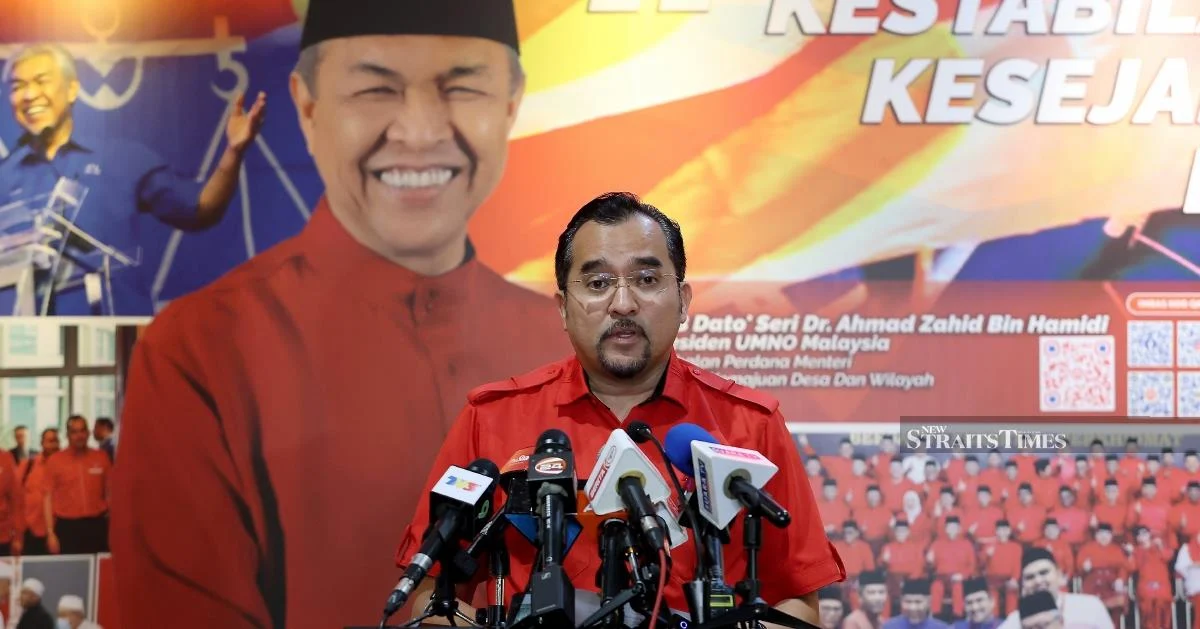
Umno's leadership has signalled a strategic shift towards substance over personal attacks as the party gears up for state-level contests in Johor and Negri Sembilan. Party secretary-general Datuk Dr Asyraf Wajdi Dusuki made the commitment from party headquarters in Kuala Lumpur, setting clear expectations for how Umno intends to conduct itself during the campaign periods ahead.
The assurance reflects growing concerns within Malaysian politics about the rising temperature of electoral discourse. Recent state and federal elections have witnessed increasingly heated exchanges, with critics arguing that personality-driven attacks and character assassination have begun to overshadow substantive policy debates. By publicly committing to a cleaner approach, Umno appears to be positioning itself as the more mature political force willing to elevate the conversation.
Umno's declared focus on policy offerings represents a deliberate pivot that could resonate with middle-class and educated voters who have expressed fatigue with negative campaigning. The party plans to centre discussions around what it can deliver for Johor and Negri Sembilan residents—two states with distinct economic profiles and voter priorities. For Johor, which has undergone significant economic transformation and attracts both domestic and international investors, Umno may emphasise continuity in development and business-friendly governance. Negri Sembilan, meanwhile, has traditionally been more tightly contested and may require different messaging around rural development and community welfare initiatives.
The emphasis on tangible benefits rather than character attacks also suggests Umno recognises that Malaysian voters, particularly in urban areas, are increasingly sophisticated in their electoral choices. They want to understand how policies will affect their lives—whether through job creation, education quality, healthcare access, or infrastructure investment. By framing the campaign around these bread-and-butter issues, Umno hopes to demonstrate that it remains the competent administrative force capable of translating electoral mandates into concrete improvements.
This positioning gains significance within the broader context of Malaysian coalition politics. With Umno serving as the anchor party in federal and various state administrations, the party faces pressure to maintain both its grassroots support and its appeal to swing voters. A campaign that stays above the personal fray may help insulate Umno from accusations of desperation or loss of confidence in its own track record. When parties resort extensively to mudslinging, observers often interpret it as a sign that they lack confidence in their own achievements and must therefore attack opponents rather than defend their own record.
The pledge also carries implications for Umno's partners in the Barisan Nasional coalition and its broader positioning relative to other groupings. By voluntarily limiting the campaign to policy discussions, Umno potentially sets a standard that could embarrass coalition partners if they engage in personal attacks. Conversely, if opposition parties resort to negative tactics, Umno can claim to hold the moral high ground—a valuable asset in influencing undecided voters and attracting disaffected opposition supporters.
However, maintaining such a commitment throughout extended campaign periods presents practical challenges. Grassroots party members and local candidates often feel pressure to hit back when attacked, and controlling messaging across thousands of Umno activists and supporters requires discipline and clear communication from the top. The party leadership's public commitment suggests awareness of this risk and an intention to enforce standards through party mechanisms.
For Malaysian voters evaluating their electoral choices, Umno's stated approach offers an opportunity to assess whether it can back its words with action. How the party handles inevitable provocations—whether from opposition parties or from rough-and-tumble local politics—will ultimately determine whether this campaign pledge carries credibility. Such tests typically emerge in the final weeks of campaigns when stakes feel highest and emotions run hottest.
The commitment also reflects the maturing expectations of Malaysian civil society. Media outlets, academic institutions, and civic organisations have increasingly called for higher standards in political discourse. Umno's willingness to make such a public undertaking suggests awareness that voters and observers alike are keeping score on how politicians behave, not merely what they promise to deliver. This shift, if sustained across multiple campaigns, could gradually influence overall standards within Malaysian politics and make mudslinging less central to how parties compete for support.