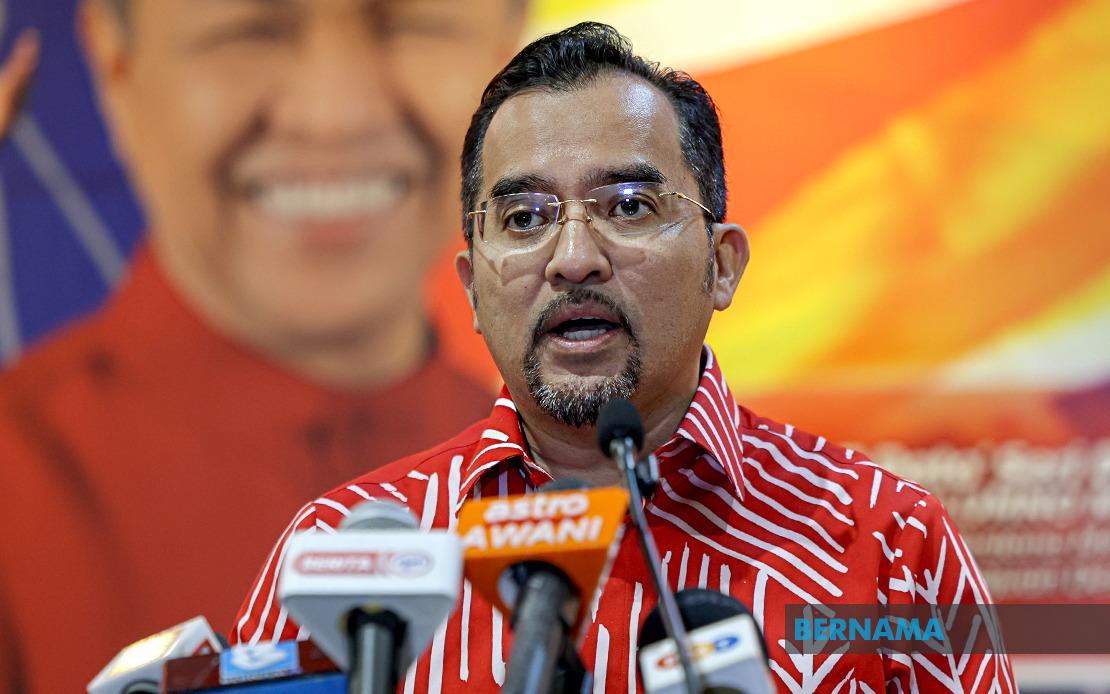
UMNO's leadership has taken a significant step toward electoral preparations by granting its state organizations broad authority to explore political partnerships ahead of the next national election. At a late-night Supreme Council meeting in Kuala Lumpur on August 28, the party resolved to empower its regional divisions to engage in substantive negotiations with any interested political organization, marking a pivotal shift in how the party intends to navigate coalition-building strategies.
Datuk Dr Asyraf Wajdi Dusuki, the party's secretary-general, articulated the parameters of this newly granted autonomy during remarks following the gathering. He stressed that while state branches now possess the mandate to pursue cooperation arrangements, such negotiations must proceed on foundations of genuine mutual commitment and confidence. The messaging was notably pointed: Asyraf Wajdi explicitly cautioned against coercive tactics or ultimatums, suggesting that UMNO wishes to position itself as a principled partner rather than one operating from a position of desperation or weakness. This framing carries significance in Malaysia's current political landscape, where coalition arrangements often face public scrutiny regarding the motivations and pressure tactics involved.
The decision to devolve negotiating authority to state-level leadership reflects a structural adaptation within UMNO's organizational approach. Historically, such significant political alignments have been centralized and controlled from the party's federal headquarters. By allowing state branches greater discretion, UMNO appears to be acknowledging regional political complexities that may require more localized decision-making. Different states face distinct electoral mathematics, demographic compositions, and existing political relationships with other parties. Granting state leaders negotiating power enables more flexible and context-sensitive responses to coalition opportunities that may emerge in specific geographical areas.
The meeting was presided over by UMNO president Datuk Seri Dr Ahmad Zahid Hamidi, with participation from deputy president Datuk Seri Mohamad Hasan and other Supreme Council members. The gathering extended beyond routine party business, incorporating broader strategic considerations. Notably, the council extended an official invitation to PAS leadership to participate in UMNO's 2026 General Assembly, scheduled for September 9 to 12. This outreach gesture signals ongoing efforts to strengthen the relationship between Malaysia's two largest Malay-Muslim political organizations, even as negotiations with other potential partners proceed.
UMNO's coordination with PAS represents a crucial dimension of contemporary Malaysian politics. The two parties have occupied complex relationships—sometimes aligned, sometimes competitive—throughout Malaysia's democratic history. By formally inviting PAS leaders to a significant party gathering, UMNO reinforces the centrality of this partnership while demonstrating openness to broader political dialogue. The timing of this invitation alongside the broader negotiating mandate suggests that UMNO views coalition-building as an ongoing process requiring continuous dialogue and relationship maintenance across multiple political entities.
Accompanying the 2026 General Assembly, UMNO has scheduled three distinct programmes for September 8 intended to appeal to specific constituencies and demonstrate the party's engagement with multiple aspects of Malaysian society. The Malay Education Convention addresses concerns within the Malay-speaking community regarding educational policy and development. The Malaysian Islamic Scholars Convention provides a platform for religious intellectuals and thought leaders to discuss contemporary issues relevant to Malaysia's Muslim population. The Laman Wanita Kreatif initiative targets female party members and supporters, recognizing women's increasingly important role within UMNO's organizational structure and electoral base. These complementary programming decisions suggest strategic messaging around national unity, cultural preservation, and inclusive participation.
Beyond the coalition negotiations, UMNO's Supreme Council addressed governance and accountability principles. The party reiterated its commitment to the rule of law, emphasizing that no individual should face presumptions of guilt absent formal legal proceedings. This statement carries particular resonance given Malaysia's recent political history, during which high-profile figures have faced corruption investigations and legal challenges. UMNO's explicit stance affirms that the party will not shield members or leaders from prosecution or judicial scrutiny, nor will it defend misconduct or deviation from legal and ethical standards. This positioning attempts to distinguish UMNO from perceptions that party loyalty supersedes legal accountability.
The emphasis on legal process and due diligence reflects broader efforts within Malaysian politics to rebuild institutional credibility following periods marked by corruption allegations and accountability concerns. By publicly committing to transparent legal processes rather than internal party protection, UMNO seeks to present itself as an organization governed by principle rather than patronage or self-preservation. This messaging is particularly important as the party attempts to regain public confidence and position itself as a viable governing force in future elections.
The authorization for state-level negotiations represents a pragmatic acknowledgment of political realities facing UMNO and its potential coalition partners. Malaysia's electoral system, combined with the fragmentation of the political landscape, typically necessitates coalition arrangements for any party to command a parliamentary majority. UMNO's empowerment of its state structures reflects recognition that electoral victory requires flexible, responsive coalition strategies adapted to regional political circumstances. The explicit framework requiring sincerity and trust-based engagement, rather than coercive arrangements, suggests UMNO wishes to construct coalitions capable of governing effectively and maintaining public legitimacy.
From a regional perspective, UMNO's coalition-building activities carry implications beyond Malaysia's borders. As Southeast Asia's largest Muslim-majority democracy continues navigating complex political transitions, the mechanisms through which major parties construct governing coalitions influence regional political stability and cooperation patterns. UMNO's approach to partnership negotiations, emphasizing trust and mutual commitment while respecting legal processes, models political engagement strategies that other Southeast Asian democracies observe and potentially adapt. The party's balancing act between strategic flexibility and principled governance reflects broader tensions within contemporary Asian democracy regarding accommodation, competition, and institutional integrity.

