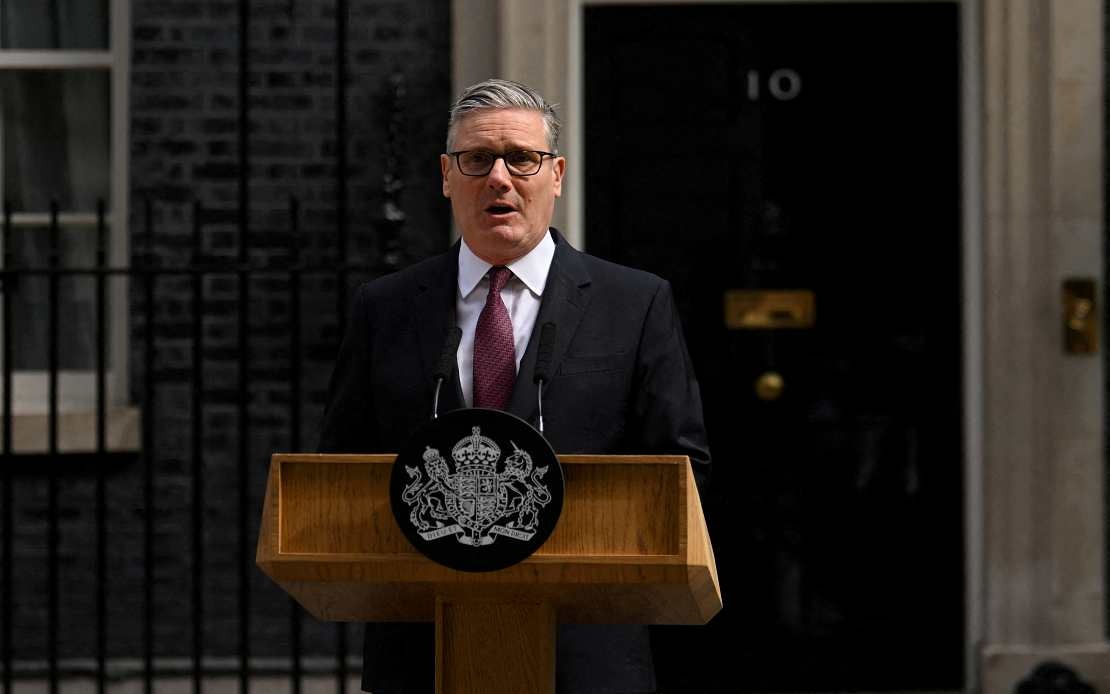
Prime Minister Keir Starmer has announced that he will resign from his position, though he will remain in office until a replacement is selected through a formal party leadership contest. The announcement came as Starmer faces unprecedented pressure within the Labour Party following a sharp decline in public confidence, less than two years after he secured a landslide election victory that was meant to restore stability to British governance.
The party leadership transition is expected to conclude before parliament reconvenes in September, ensuring minimal disruption to government operations. This timeline, observers suggest, allows the incumbent prime minister to attend a scheduled UK-European Union reset summit in July before relinquishing office, while giving his successor adequate time to prepare for the transition to Number 10.
The deterioration of Starmer's position accelerated dramatically on Friday when Andy Burnham, the Mayor of Greater Manchester, won a parliamentary seat with a decisive victory that exceeded expectations. Burnham's triumph over a candidate representing Nigel Farage's Reform UK party—which has dominated national opinion polls for over a year—energized Labour MPs who had grown increasingly dismayed under Starmer's stewardship. The result demonstrated that a Labour politician with strong communication skills and regional influence could still mobilize voters in the current political environment, offering hope to party members seeking an alternative leader.
Burnham's profile as a seasoned career politician with demonstrated ability to connect with voters has made him the focal point of speculation about potential successors. His mayoral track record and parliamentary experience position him as a substantive figure capable of commanding authority in Westminster. However, the Greater Manchester mayor has not yet articulated comprehensive positions on critical policy areas including foreign affairs, economic management, and defence spending, raising questions about his readiness to tackle Britain's multifaceted challenges.
The British economy presents an extraordinarily difficult inheritance for any incoming prime minister. The country currently bears the highest borrowing costs among Group of Seven nations, a consequence of elevated debt levels, substantial interest payment burdens, and years of stagnant economic growth. Successive governments have struggled to reduce public expenditure while simultaneously meeting urgent investment requirements in defence and other critical sectors. These fiscal constraints severely limit the room for manoeuvre available to any new administration seeking to address the cost-of-living pressures and public service failures that have eroded voter confidence.
Bond market investors represent another constraint on policy flexibility. Financial institutions have grown wary of increased government borrowing and remain skeptical about expansionary fiscal measures. Citibank economists assessed that a Burnham government would inherit "a precarious fiscal situation with few tools to deliver meaningful change," cautioning that the new prime minister would need to prioritize market reassurance over ambitious reform. This tension between political expectations and financial reality has plagued Starmer's tenure and will persist for his successor, regardless of identity.
The broader political context reflects deep voter frustration with successive governments' inability to improve living standards and strengthen public services. Over the past decade, Britain has cycled through seven prime ministers since the 2016 Brexit referendum—a rate of turnover unmatched in almost two centuries of British political history. This chronic instability underscores the electorate's profound dissatisfaction with how national leadership has managed fundamental challenges including immigration control, economic stagnation, and the deterioration of health services, education, and infrastructure.
Starmer's decision to resign represents a striking reversal from his Friday position, when he had indicated willingness to contest a formal Labour leadership election. That shift over the weekend suggests mounting internal party pressure and a calculation that stepping aside cleanly would be preferable to fighting a divisive contest. By announcing his departure in advance, Starmer positions himself as a responsible steward of the transition rather than a wounded leader clinging to office, potentially preserving his standing within the party establishment.
The implications for Malaysia and Southeast Asia are instructive regarding broader democratic stability and the challenges facing mature economies in the developed world. Britain's experience demonstrates how cost-of-living crises and perceived governmental ineffectiveness can destabilize established political systems, even those with centuries of institutional continuity. The rapid succession of prime ministers and the fragmentation of the voter coalition suggest that advanced democracies are not immune to the populist backlash and leadership instability that have characterized politics elsewhere globally.
For Malaysian observers, the British case offers insights into how political parties attempt to manage leadership transitions during periods of public discontent. The Labour Party's focus on finding a candidate with superior communication skills and proven electoral appeal reflects a tactical calculation that presentation and political acumen matter when institutional legitimacy has been damaged. Yet Burnham and any alternative candidate will face the same structural constraints that undermined Starmer: limited fiscal room, voter skepticism accumulated over years of disappointment, and complex interdependent crises requiring sustained attention and difficult trade-offs.
The timeline for Starmer's departure—remaining in office until September—reflects the realities of governing during transition. Continuity in high office, even under a departing leader, provides some stability to foreign relations, financial markets, and government operations. This staged approach contrasts with more abrupt power transfers and suggests that British institutional norms, despite mounting strain, continue to channel political change through relatively orderly processes.

