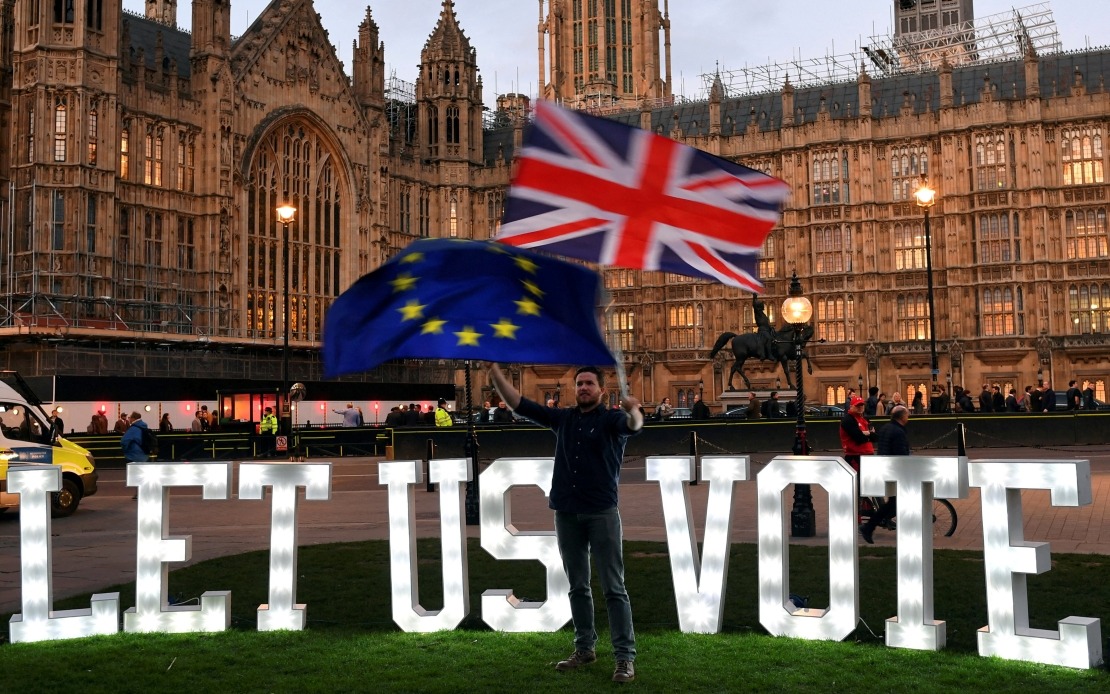
The United Kingdom faces little prospect of returning to the European Union regardless of which party occupies the political leadership, according to Richard Balfe, a long-serving Conservative member of the House of Lords. Speaking to media outlets, Balfe downplayed any realistic scenario in which a future administration might successfully navigate the complex diplomatic and legal pathways needed to restore full EU membership, suggesting such attempts would lack genuine commitment from those in power.
Balfe's assessment arrives amid significant turbulence in British politics. Prime Minister Keir Starmer announced his intention to step down as Labour Party leader while remaining in office during the transition period. The process to select his successor will commence on July 9 and conclude before Parliament returns in September, introducing fresh uncertainty into Westminster's corridors of power. This leadership vacuum raises questions about strategic direction across multiple policy domains, including Britain's relationship with continental Europe.
The political calculation underlying Balfe's remarks reflects deeper structural realities about British public opinion and geopolitical positioning. The 2016 referendum witnessed 52 percent of voters choosing to leave the European bloc, a decision that crystallised into formal withdrawal on January 31, 2020, after nearly five decades of membership. That plebiscite represented a watershed moment in contemporary British history, establishing a popular mandate that continues to constrain political leaders' room for manoeuvre on the European question.
The transition arrangements that initially softened the Brexit impact proved temporary. During this interim phase, EU regulatory frameworks continued operating in Britain while citizens enjoyed streamlined travel procedures. However, those mitigating measures expired on December 31, 2020. The subsequent trade and cooperation agreement between London and Brussels took effect on January 1, 2021, establishing the current framework governing bilateral relations. This agreement falls substantially short of EU membership, imposing additional friction on commerce, investment, and personal mobility across the Channel.
Economic consequences have accumulated since Britain's departure. The Financial Times reported that the UK has surrendered its previous standing as a significant international trade hub, a position accumulated over centuries of commercial dominance. Investment flows into British enterprises have contracted noticeably, reflecting both the regulatory complexity introduced by new arrangements and investor concerns about market access relative to European alternatives. These economic headwinds persist regardless of which political party holds office, creating incentives that might appear to favour EU realignment yet lack sufficient political force to overcome entrenched Brexit sentiment.
Balfe's prediction that Britain will continue its current trajectory rather than pivot toward European reintegration aligns with pragmatic assessments of political feasibility. He suggested that incoming governments will merely "muddle along," a characteristically British phrase denoting perpetuation of existing arrangements through incremental adjustments rather than comprehensive reversals. This characterisation acknowledges the constraints that democratic mandates impose on elected officials whilst recognising the genuine difficulties inherent in undoing established precedents.
The senior Conservative's remarks carry particular weight given his party's historical stewardship of the Brexit process. Where once European integration occupied consensual space within British politics, the Conservative Party under successive leaderships has anchored itself to Brexit permanence as a defining electoral and ideological commitment. Labour, whilst less enthusiastically pro-Brexit, has shown limited appetite for advancing EU rejoining as policy, recognising that such positions remain electorally fraught across much of the country. This cross-party consensus on Brexit irreversibility effectively forecloses serious political debate about reversal mechanisms.
Balfe also indicated that Britain's strategic orientation increasingly follows American rather than European leadership. This observation reflects the strengthened Atlantic relationship that Brexit paradoxically has facilitated, enabling Britain to pursue bilateral arrangements with the United States whilst negotiations with the EU proceed on more transactional footing. Such positioning affects how policymakers conceptualise national interests and international alignment, with implications extending beyond bilateral UK-EU dynamics toward broader questions about Britain's role within Western strategic architecture. The geopolitical tilt toward Washington establishes an alternative gravitational pull that reduces the relative attraction of deeper European integration.
For Malaysian and Southeast Asian observers, Britain's enduring departure from Europe carries instructive value regarding trade architecture and regional integration. Malaysia maintains active engagement with both individual European nations and the EU as a bloc, benefiting from differentiated relationships that accommodate commercial and diplomatic interests. Britain's experience demonstrates the complexities that emerge when major trading nations reorganise their fundamental institutional commitments, generating friction and adjustment costs that persist well beyond the initial transition period. The uncertainty surrounding British-EU relations creates variable conditions for third-party economies seeking optimal engagement strategies.
The June 23 anniversary of the 2016 referendum provides a symbolic moment for assessing trajectories established a decade ago. Democratic votes, once executed, create political realities that constrain subsequent decision-makers, even when economic consequences or geopolitical shifts might suggest alternative arrangements would prove advantageous. Britain's experience underscores how institutional ruptures acquire momentum of their own, developing constituencies and normalisation patterns that complicate efforts at reversal. The new Labour government, regardless of its ultimate leadership composition, inherits these structural constraints rather than enjoying genuine discretion regarding fundamental European orientation.
Moving forward, British political discourse will likely continue focusing on optimising existing arrangements rather than fundamentally reconceptualising them. Negotiations aimed at easing specific friction points in trade, mobility, and scientific cooperation may proceed gradually, but these manageable improvements operate within a framework that acknowledges permanent separation from EU institutional structures. For practical purposes, Britain's European question has transitioned from a matter of membership status toward one of managing a neighbour relationship characterised by proximity, historical connection, and significant economic interdependence alongside formal institutional separation.

